

 By
By At first, I thought it meant only one thing.
Trust.
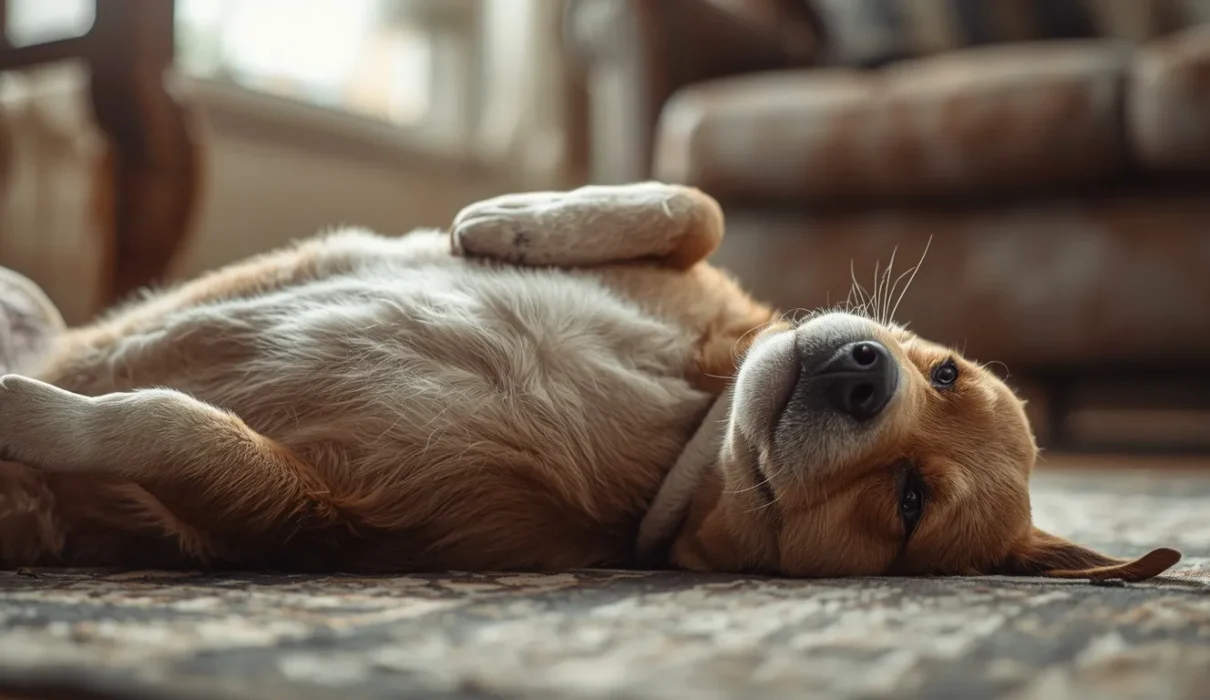
Every time my dog rolled over and showed his belly, I assumed it was basically his way of saying:
I trust you completely.
But over time, I realized the answer was not always that simple.
Sometimes it happened during play.
Sometimes before naps.
Sometimes when he wanted attention.
And sometimes, the body language felt completely different.
That made me curious:
Why do dogs show their belly?
As it turns out, dogs expose their belly for several different reasons and context matters much more than most people realize.
In this guide, I’ll walk through what belly exposure can actually mean, what I noticed with my own dog and how to better understand what your dog may be trying to communicate.
Belly Exposure Does Not Always Mean the Same Thing
This was probably the biggest thing I misunderstood at first.
I used to think:
Belly showing = happy dog.
Eventually, I realized dogs show their belly in very different situations.
The same position can sometimes mean:
- relaxation
- affection
- excitement
- wanting attention
- playfulness
- uncertainty
- emotional comfort
The bigger clue usually comes from:
Everything else happening around the moment.
Body language.
Timing.
Mood.
Energy.
That bigger picture often explained much more.
Common Reasons Dogs Show Their Belly
1. Feeling Safe and Relaxed
This is probably the reason most people think of first.
And honestly?
Sometimes it really is that simple.
Dogs often expose their belly when they feel:
- comfortable
- calm
- relaxed
- emotionally safe
I noticed my dog often rolled over during quiet moments.
After dinner.
On the couch.
During calm evenings.
Almost like the dog version of completely relaxing after a long day.
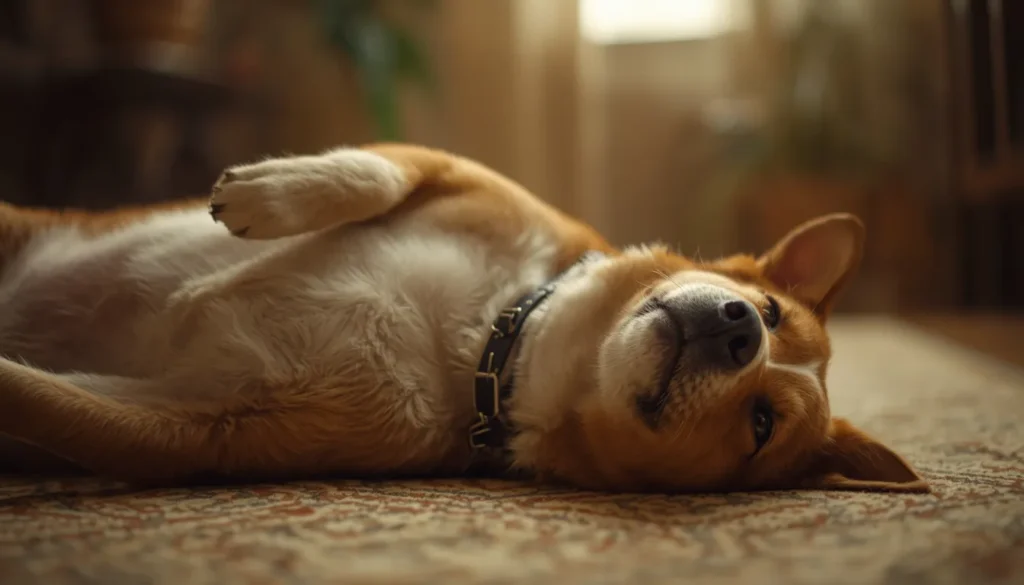
A relaxed belly-up position often looks loose, soft, and comfortable.
2. Asking for Belly Rubs
Sometimes the message feels pretty obvious.
Especially when the look says:
Well? Are you going to rub my belly or not?
I noticed my dog sometimes rolled over and clearly expected attention.
And honestly, he was usually right.
Some dogs quickly learn belly exposure often leads to:
- affection
- attention
- cuddles
- belly rubs
If your dog seems to love tummy scratches too, you may also want to read:
Why Do Dogs Like Belly Rubs? What Your Dog Is Really Telling You
3. Playfulness and Excitement
This surprised me.
Sometimes dogs show their belly during playful moments.
Especially during:
- goofy zoomies
- play sessions
- greetings
- excitement
I noticed my dog occasionally flopped over dramatically in the middle of being excited.
Almost like part of the fun.
Not sleepy.
Not serious.
Just happy energy.
Happy greetings can show up through other behaviors too:
Why Do Dogs Stretch When They See You?
4. Wanting Attention or Connection
Honestly?
Some dogs seem to know belly exposure gets a reaction.
I noticed this especially during quiet moments when my dog clearly wanted interaction.
Sometimes belly showing felt less like:
I want belly rubs.
And more like:
Pay attention to me for a minute.
Especially after being apart for a while.
Or during slower evenings.
Dogs often have funny ways of asking for closeness.
Some dogs also show affection by staying physically close to their owners:
Why Does My Dog Lay on Me? Common Reasons and What It Really Means
5. Cooling Down or Getting Comfortable
This one caught me off guard.
Sometimes dogs roll over simply because it feels comfortable.
Especially on:
- cool floors
- warm days
- soft blankets
- cozy sleeping spots
I noticed belly-up sleeping happened more during warmer weather.
Which honestly made sense.
The stomach area has less fur and may feel cooler.
Sometimes comfort explains more than emotions.
Dogs often have other small comfort habits before resting too:
Why Do Dogs Circle Before They Lay Down? Common Reasons Explained
6. Feeling Unsure or Showing Social Discomfort
This was the part I misunderstood most.
At first, I assumed belly exposure always meant confidence.
But sometimes dogs expose their belly when feeling:
- nervous
- uncertain
- overwhelmed
- uncomfortable
The difference usually showed up in body language.
A relaxed dog often looks:
- loose
- soft
- comfortable
- playful
A nervous dog may seem:
- stiff
- frozen
- avoiding eye contact
- tense
That distinction changed how I responded completely.
Sometimes space mattered more than touch.
Signs Your Dog Is Comfortable When Showing Their Belly
This honestly became easier once I stopped focusing only on the belly.
Things that helped me understand comfort included:
- relaxed posture
- loose tail movement
- soft eyes
- playful behavior
- staying close afterward
- calm breathing
The more relaxed everything else looked, the more comfortable my dog usually seemed.
When Belly Showing May Feel Different
Usually, belly exposure is harmless.
But I learned to pause when body language suddenly felt unusual.
Especially if my dog seemed:
- tense
- uncomfortable
- frozen
- avoiding interaction
- suddenly behaving differently
Sometimes the bigger message is not:
Touch me.
Sometimes it is:
I’m unsure right now.
That subtle difference mattered much more than I expected.
What Helped Me Understand My Dog Better
The biggest shift came when I stopped assuming every belly roll meant the same thing.
Instead, I started asking:
What is happening right now?
That question helped a lot.
I Watched Body Language First
Relaxed dog?
Usually happy.
Tense dog?
Completely different story.
Small details explained more than the position itself.
I Paid Attention to Timing
Did belly exposure happen:
- during play?
- after excitement?
- before naps?
- around unfamiliar people?
Patterns started making more sense over time.
I Stopped Assuming Every Belly Roll Needed Touch
This honestly helped more than I expected.
Sometimes my dog wanted belly rubs.
Sometimes he simply wanted comfort.
And sometimes?
He just wanted to lie there dramatically.
Reader Questions
Why does my dog show their belly but not want belly rubs?
Some dogs expose their belly without actually asking for touch. Belly showing can sometimes mean comfort, stretching, cooling down or simply relaxing. The best clue usually comes from body language. A relaxed dog often stays soft and comfortable, while a tense dog may prefer space.
Why does my dog show their belly when I come home?
Some dogs roll over during greetings because of excitement, affection or wanting attention after time apart. Belly exposure during reunions may sometimes be part of a dog’s happy greeting routine. If your dog becomes overly attached or struggles when left alone, this guide may also help:
Separation Anxiety in Dogs: The Complete Guide
Why does my dog sleep on their back with their belly up?
Sleeping belly-up often happens when dogs feel safe, comfortable or warm. Since the belly has less fur coverage, some dogs naturally choose this position to cool down or relax more deeply.
Why does my dog show their belly to strangers?
This behavior can mean different things depending on body language. Some dogs are friendly and social, while others may roll over when feeling unsure or cautious in new situations. A relaxed body usually looks very different from nervous body language.
Why does my dog become extra clingy at bedtime?
Some dogs naturally seek more closeness during quiet evening routines, especially when settling down for sleep. If your dog seems unusually restless, needy or unsettled at night, you may also want to read: Dog Anxiety at Night: Complete Guide to Help Your Dog Sleep Calmly
A Small Thing I Eventually Realized
For a while, I thought showing the belly always meant the exact same thing.
But over time, I realized dogs communicate in much more flexible ways than I expected.
The same behavior could mean comfort one day, playfulness the next and attention-seeking during another moment entirely.
What helped most was learning to look beyond the belly itself and pay attention to the whole picture.
That usually gave me much better answers.
This experience is part of my journey with Pet Calm Care, where I share what I’m learning while trying to better understand sensitive, emotional and wonderfully unpredictable dogs.
