

 By
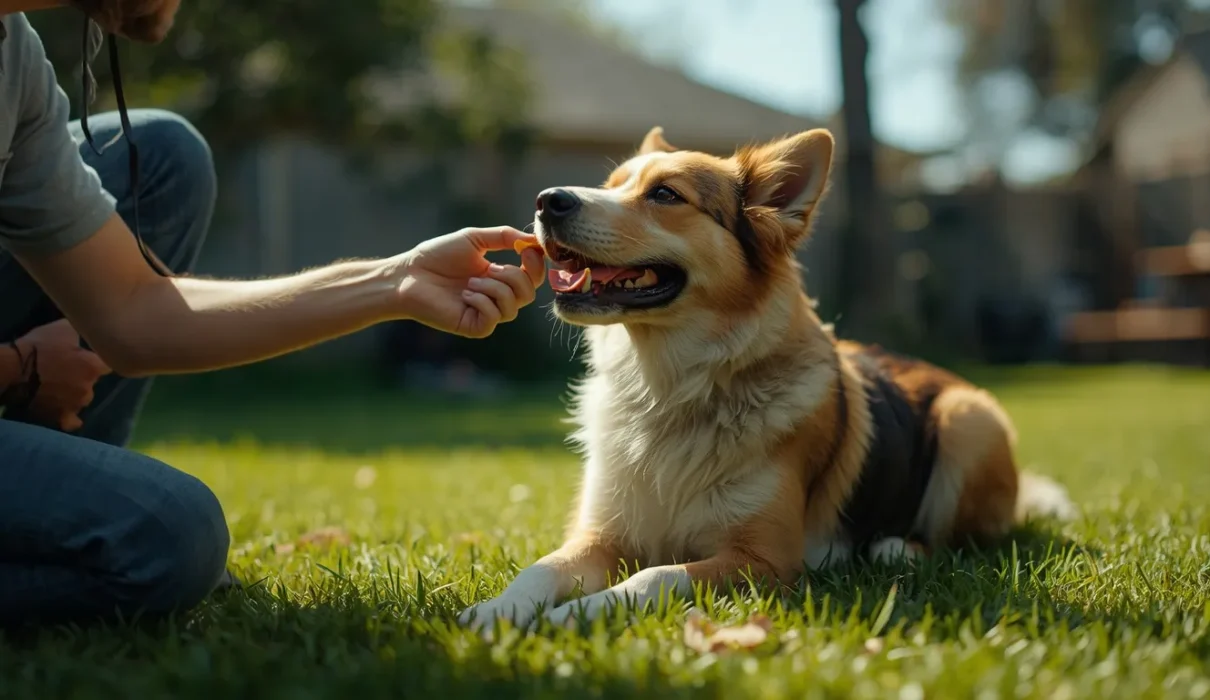
By Teaching your dog to sit is one of the first and most valuable skills you can work on together.
It may seem like a simple command, but “sit” is much more than a trick. It helps your dog learn self-control, improves communication and makes everyday situations much easier to manage.
Whether you’re welcoming a new puppy or teaching an older dog, the “sit” command creates a strong foundation for future training.
Many owners think they need to repeat the command over and over or physically push their dog’s back into a sitting position.
In reality, that often slows learning.
Dogs learn best when they understand that their own actions lead to positive rewards.
The goal isn’t to force your dog into position.
The goal is to help them discover the behavior naturally and reward it at exactly the right moment.
If you’re wondering how can I train my dog to sit, this guide will walk you through the process step by step, explain why each step works and show you how to avoid common training mistakes.
Why Teaching “Sit” Should Be Your Dog’s First Command
Professional trainers often begin with “sit” because it’s one of the easiest natural behaviors for most dogs to learn.
Unlike more advanced commands, you’re not asking your dog to perform something unusual.
You’re simply teaching them to perform a behavior they already know how to do – but on cue.
Teaching “sit” can also help in everyday situations like:
- Greeting visitors politely
- Waiting before meals
- Staying calm before walks
- Veterinary visits
- Grooming sessions
- Meeting other people or pets
Once your dog understands this command, learning others like stay, down and wait usually becomes much easier.
Teaching basic commands like “sit” can also make it easier to manage behaviors such as excessive barking.
Learn more about how to stop a dog from barking.
Before You Start Training
A little preparation can make training much more successful.
1. Choose a Quiet Place
Dogs are easily distracted.
TV sounds, children playing, other pets and traffic noises can all compete for your dog’s attention.
Choose a quiet room or backyard where your dog can focus on you.
As training improves, you can gradually practice in more distracting environments.
2. Use Small, Tasty Treats
Rewards help your dog understand exactly which behavior earns something good.
The treats should be:
- Small
- Soft
- Easy to chew
- Something your dog really enjoys
Tiny treats keep the training moving without long breaks.
3. Keep Sessions Short
Long training sessions usually lead to frustration for both you and your dog.
Instead, aim for:
- 5–10 minutes per session
- 2–3 sessions each day
Short, positive sessions help dogs stay interested and remember what they’ve learned.
A consistent routine doesn’t just improve training – it can also help reinforce other
good habits around the home. Learn more about how to stop a dog from peeing in the house.
4. Train When Your Dog Is Calm
Timing matters.
Avoid training when your dog is:
- Extremely excited
- Very tired
- Hungry enough to become distracted
- Busy playing
A calm but alert dog is much more likely to learn quickly.
Follow These Steps to Teach Your Dog the “Sit” Command
Step 1: Get Your Dog’s Attention
Before asking your dog to do anything, make sure they are focused on you.
Hold a treat in your hand where your dog can smell it.
Wait until they look at you.
Don’t rush this part.
If your dog’s attention keeps wandering, simply wait quietly.
The better your dog’s focus is now, the smoother the rest of the training session will be.
Step 2: Hold the Treat Just Above Your Dog’s Nose
Bring the treat close enough for your dog to sniff.
Now slowly raise it upward and slightly backward over the top of their head.
Move slowly.
If you move too fast, your dog may jump or lose interest.
Most dogs naturally lift their head to follow the treat.
As their head moves upward, their back end often begins to lower toward the floor.
This natural movement is exactly what you’re encouraging.
Step 3: Let Your Dog Sit Naturally
One of the biggest mistakes owners make is trying to force the sit.
Avoid:
- Pushing your dog’s hips down
- Pulling on the leash
- Pressing on their back
Instead, simply allow your dog to follow the treat.
For many dogs, sitting becomes the easiest way to keep their nose pointed toward the reward.
The moment your dog’s bottom touches the floor…
Pause for just a second.
This is your opportunity to teach.
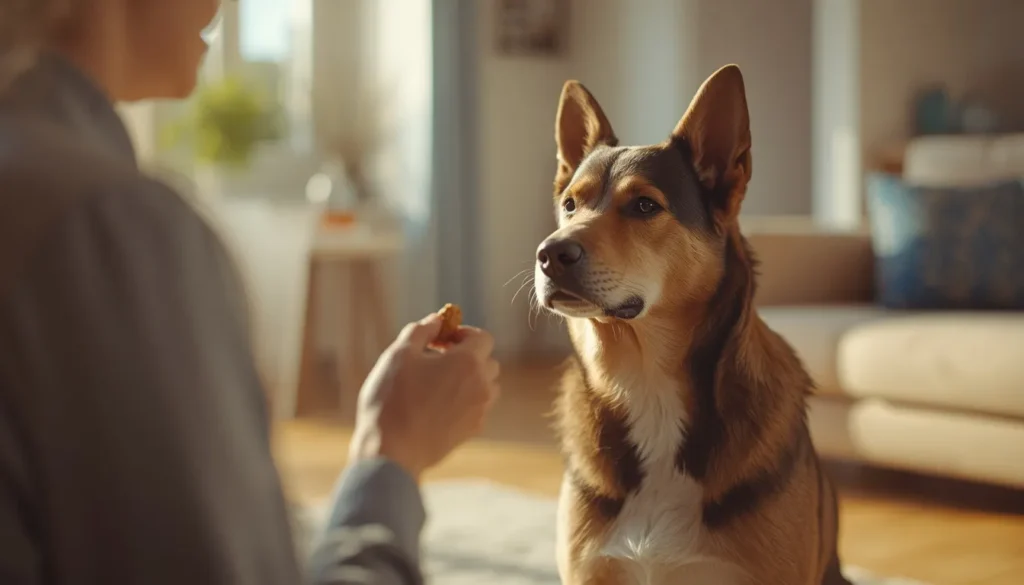
Step 4: Say “Sit” Once and Reward Immediately
As soon as your dog’s bottom touches the ground:
- Calmly say “Sit.”
- Immediately give the treat.
- Praise your dog in a happy voice.
For example: “Sit… Good dog!”
Timing is extremely important.
If you wait too long to reward, your dog may not understand which behavior earned the treat.
Just as importantly, avoid repeating the command over and over.
Instead of saying: Sit… Sit… Sit… Sit…
say it once.
Then wait.
Dogs learn much faster when the cue stays clear and consistent.
Step 5: Repeat the Process Several Times
Dogs don’t usually learn a new command after one successful attempt.
Practice the same exercise several times during each session.
Aim for:
- 5 to 10 successful repetitions
- Plenty of praise
- Short breaks if your dog loses interest
If your dog becomes distracted or frustrated, end the session on a positive note and try again later.
Even a few successful repetitions each day can lead to steady progress.
Step 6: Gradually Stop Using the Treat as a Lure
Once your dog begins sitting consistently by following the treat, it’s time to reduce the lure.
Many owners accidentally keep waving a treat in front of their dog’s nose forever.
The result?
The dog only sits when they see food.
Instead, start making a small change.
Hold your hand exactly the same way you did before, but don’t always keep a treat in it.
When your dog sits:
- Praise immediately.
- Then take a treat from your pocket or treat pouch.
- Reward your dog right away.
This teaches your dog that the reward comes after the behavior -not before it.
Over time, your hand signal becomes more important than seeing the treat itself.
Step 7: Practice Without Treats Every Time
Treats are great for teaching a new behavior, but they shouldn’t become a permanent requirement.
Once your dog understands the “sit” command, begin rewarding unpredictably.
For example:
- First sit → treat
- Second sit → praise only
- Third sit → treat
- Fourth sit → petting and praise
- Fifth sit → treat
This keeps your dog motivated because they never know when the next reward is coming.
However, never stop praising your dog.
Even when treats become less frequent, positive feedback should continue.
Praise, patience, and positive interactions strengthen more than just training –
they also help build trust. Learn more about how dogs know you love them.
Step 8: Practice in Different Places
A mistake many owners make is believing their dog has learned the command simply
because they perform it perfectly in the living room.
Dogs don’t naturally generalize commands.
Your dog may understand “sit” in your house but seem completely confused outside.
That’s normal.
Once your dog responds reliably at home, gradually practice in different environments:
- Backyard
- Front yard
- Quiet park
- During walks
- Around trusted friends
- Near mild distractions
Start with easier locations before moving to busier places.
The more places you practice, the more reliable the command becomes.
Step 9: Increase Distractions Slowly
After your dog succeeds in quiet places, it’s time to make training a little more challenging.
Introduce one distraction at a time.
Examples include:
- Another family member walking nearby
- A toy on the ground
- Mild outdoor noises
- Other dogs at a distance
If your dog struggles, don’t assume they’ve forgotten the command.
The environment simply became more difficult.
Move back to an easier setting and build confidence again.
Common Mistakes That Slow Down Training
Even with the right method, small mistakes can make learning take much longer.
1. Repeating the Command Too Many Times
One of the most common mistakes sounds like this: “Sit… Sit… Sit… Sit… Sit…”
Your dog eventually learns they don’t need to respond the first time.
Instead, say the command once.
Give your dog a chance to think and respond.
2. Rewarding Too Late
Timing is everything.
If your dog sits…
…then stands up…
…and only then receives the treat…
they may not understand what earned the reward.
Try to reward within one or two seconds of the correct behavior.
3. Training for Too Long
Dogs become mentally tired.
A short, successful session is much better than a long, frustrating one.
If your dog begins losing focus:
- End the session positively.
- Play for a few minutes.
- Try again later.
4. Practicing Only Indoors
Dogs don’t automatically understand that “sit” means the same thing everywhere.
Practice in different locations to build reliability.
5. Becoming Frustrated
Training should feel rewarding for both you and your dog.
If either of you becomes frustrated, take a break.
Learning happens much faster when sessions stay positive.
What If My Dog Won’t Sit?
Sometimes owners follow every step correctly, but the dog still refuses.
Don’t panic.
There are usually simple explanations.
Your Dog Is Distracted
If your dog is watching birds, people, or other dogs, they may simply be unable to focus.
Move to a quieter location and try again.
Your Dog Isn’t Motivated
Not every dog is excited by the same reward.
Experiment with:
- Different treats
- Favorite toys
- Praise
- Short play sessions
Find what your dog enjoys most.
Your Dog Doesn’t Understand Yet
Learning takes repetition.
Some dogs need more practice than others.
Be patient and keep sessions consistent.
Your Dog May Be Uncomfortable
If your dog suddenly refuses to sit after previously doing so, discomfort could be a factor.
Pain in the hips, knees, back, or joints may make sitting difficult.
If you notice limping, stiffness or other unusual changes, it’s a good idea to speak with your
veterinarian before continuing training.
Physical discomfort can affect training in different ways. If you’ve noticed your dog
repeatedly chewing their paws, our guide on why dogs chew their paws may help you identify possible causes.
How Long Does It Take to Teach a Dog to Sit?
Every dog learns at a different pace.
Some puppies begin understanding the command within a few days.
Others may take several weeks of consistent practice.
Progress depends on factors such as:
- Age
- Personality
- Previous training
- Motivation
- Consistency
- Training environment
The goal isn’t speed.
The goal is helping your dog understand the command clearly and respond reliably over time.
Frequently Asked Questions
At what age can I teach my dog to sit?
Most puppies can begin learning simple commands as early as 8 weeks of age, provided training sessions are short, gentle, and reward-based.
Should I say “sit” before or after my dog sits?
When first teaching the behavior, many trainers introduce the cue as the dog performs the action. Once your dog understands the movement, you can begin saying “sit” just before expecting the behavior.
Can I train my dog without treats?
Yes, but treats usually make the learning process faster, especially in the beginning.
As your dog becomes more reliable, you can gradually replace treats with praise, toys or affection.
How many times should I practice each day?
Two or three short sessions of 5–10 minutes each day are usually more effective than one long session.
Consistency matters much more than duration.
Final Thoughts
Teaching your dog to sit isn’t about getting the command perfect in one afternoon.
It’s about building communication.
Every successful repetition helps your dog understand what you’re asking and strengthens the trust between you.
Some dogs learn quickly.
Others need a little more time.
Both are completely normal.
Stay patient.
Keep your training sessions short, positive, and consistent.
Celebrate small improvements along the way, because those small wins often lead to big results.
Before long, “sit” won’t just be a command- it will become a reliable habit that makes everyday life easier for both of you.
At PetCalmCare, I believe the best training happens through patience, understanding and positive experiences. Every dog learns differently, but with the right approach, every training session is another step toward a happier and more confident companion.
Teaching your dog to sit calmly can make grooming much easier, especially during nail trims. Learn more in our guide on
how to trim dog nails without stress.
