

 By
By There’s something that hits differently when your dog suddenly changes.
Not slowly. Not gradually.
Just… one day, they’re not the same.
That’s exactly what happened to me.
My dog, who used to relax without a second thought, started pacing for
no clear reason. He became clingy, restless and oddly alert –
like something was wrong, but I couldn’t see it.
And honestly, that’s the hardest part.
When there’s no obvious reason, your mind starts racing.
Did I miss something?
Is he sick?
Did I do something wrong?
If you’re here, you’re probably feeling that same confusion.
Let me walk you through what I learned – because sudden
anxiety in dogs is rarely random. There’s always a reason…
it’s just not always obvious.
What Sudden Anxiety Really Means
When a dog becomes anxious out of nowhere, it usually means one thing:
👉 Something changed – even if you didn’t notice it.
Dogs don’t need big events to feel unsafe.
Sometimes, it’s the smallest shift in their environment, routine or body
that triggers everything.
The mistake I made early on was assuming:
“If nothing changed for me, nothing changed for my dog.”
That’s not how it works.
The Hidden Causes Most People Miss
1. Subtle Environmental Changes
You might not notice it, but your dog does.
It could be:
- A new sound in the neighborhood
- Different smells (new furniture, cleaning products)
- Construction nearby
- Even a new neighbor or animal
Dogs live through their senses. What feels normal to you can feel
completely unfamiliar to them.
I once spent days trying to figure out my dog’s anxiety –
turned out, it started the same week a neighbor got a new dog.
I never saw it.
But my dog heard and smelled it every day.
2. A Single Negative Experience
Sometimes it takes just one moment.
- A loud noise
- A bad interaction
- A stressful outing
- A rough vet visit
And suddenly, your dog starts associating normal situations with stress.
If your dog recently had a vet visit, this is very common.
👉 You might find this helpful:
Dog Anxiety After a Vet Visit: Why It Happens and How to Help
What surprised me was how long these moments can stick.
Dogs don’t move on the way we expect.
3. Changes in Routine (Even Small Ones)
Dogs rely on predictability.
If something in your daily flow changed – even slightly – it can affect them.
- Different walk time
- You leaving more often
- Sleep schedule changes
- Less interaction than usual
I didn’t realize how sensitive my dog was to routine until I shifted my work hours.
Nothing dramatic.
But for him, everything felt off.
4. Your Energy (Yes, This Matters More Than You Think)
This one is uncomfortable, but important.
Dogs pick up on your emotional state constantly.
If you’ve been:
- Stressed
- Distracted
- Overwhelmed
Your dog feels it even if you don’t say a word.
There were days I thought my dog was randomly anxious
but when I looked honestly… I wasn’t calm either.
They mirror more than we realize.
5. Physical Discomfort or Health Issues
Sometimes anxiety isn’t behavioral – it’s physical.
- Pain
- Digestive issues
- Hormonal changes
- Aging-related discomfort
If the anxiety feels intense, sudden or out of character, always consider this.
Especially if you also notice:
- Loss of appetite
- Unusual sleep patterns
- Sensitivity to touch
When I ruled everything else out, I realized this is something you can’t ignore.
Signs Your Dog Is Feeling Anxious
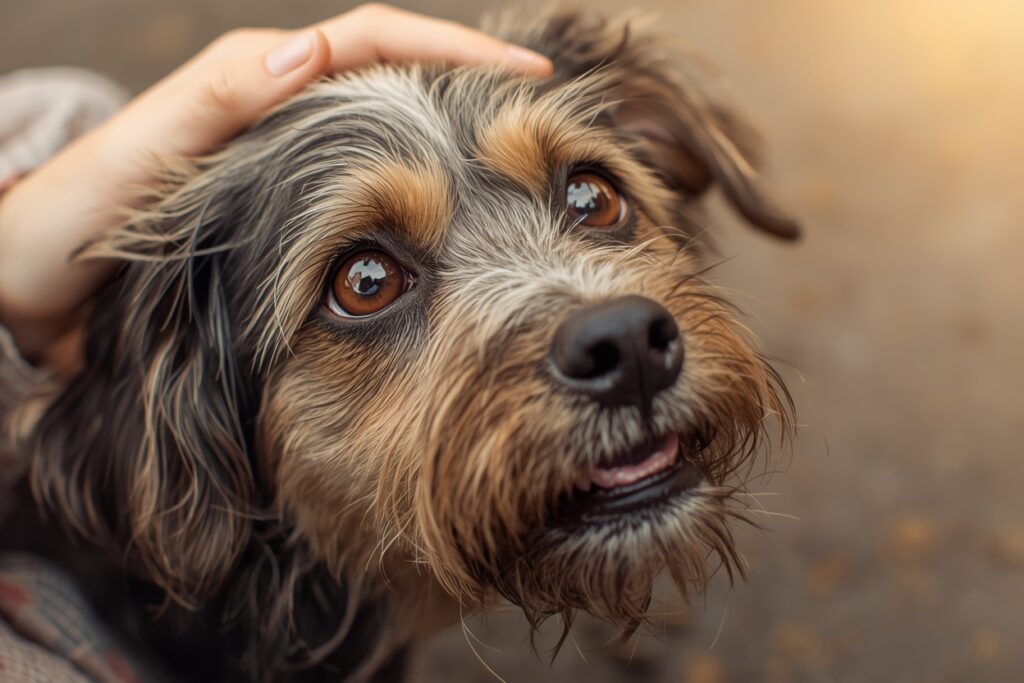
Sudden anxiety doesn’t always look dramatic.
Sometimes it’s quiet.
Watch for:
- Restlessness or pacing
- Clinginess
- Excessive licking or yawning
- Sudden barking or alertness
- Difficulty settling down
- Following you everywhere
The biggest sign I noticed was this:
👉 My dog couldn’t relax anymore
Even when nothing was happening.
What Actually Helps (From Real Experience)
This is where most advice online feels too generic.
So I’m going to tell you what actually made a difference.
1. Stop Trying to Fix It Fast
This was my biggest mistake.
I kept trying different things quickly – more walks, more stimulation, more training.
It didn’t help.
It made things worse.
An anxious dog doesn’t need more pressure.
They need stability.
2. Rebuild a Predictable Routine
This is where everything started to shift.
I focused on:
- Same wake-up time
- Same feeding schedule
- Same walk timing
- Calm evenings
Nothing fancy.
Just consistent.
Within days, I noticed small changes.
Within weeks, real progress.
3. Create a Safe, Calm Space
Your dog needs a place where nothing unexpected happens.
Not just a bed – a true safe zone.
For my dog, it was a quiet corner with:
- His bed
- A familiar blanket
- No sudden noise or disturbance
Over time, he started choosing that space on his own.
That’s when I knew he was starting to feel safe again.
4. Reduce Stimulation (Temporarily)
This part is often overlooked.
When a dog is anxious:
👉 more exposure is not always better
I pulled back on:
- Busy environments
- New experiences
- Over-socializing
Instead, I gave him space to decompress.
And honestly that’s when he started improving.
5. Stay Calm Even When It’s Hard
Your reaction matters more than your actions.
If you panic, your dog feels it.
If you stay steady, your dog learns to trust again.
I stopped reacting to every anxious behavior.
Not ignoring – just not amplifying it.
That shift changed everything.
When You Should Be Concerned
There’s a difference between temporary anxiety and something deeper.
Pay attention if:
- It’s getting worse over time
- Your dog can’t settle at all
- There are physical symptoms
- Behavior feels extreme or unusual
In those cases, don’t wait too long.
Getting professional guidance early can make a big difference.
One Thing I Wish I Knew Earlier
Sudden anxiety doesn’t mean something is broken.
It usually means your dog is trying to cope with something they don’t understand.
And once I stopped looking for a quick fix…
and started focusing on helping my dog feel safe again…
That’s when things actually started to improve.
Reader Questions
1. Why is my dog suddenly anxious for no reason at all?
This is actually more common than most dog owners realize. What feels like no reason usually has a hidden trigger.
It could be something subtle like a change in routine, a new smell in the house, construction noise nearby or even
your own stress levels. Dogs are incredibly sensitive to their environment.
In my experience, the key is not to assume it’s random. Instead, start observing patterns.
When does the anxiety happen? After walks? At night? When you’re about to leave?
Once you spot the pattern, the no reason usually starts making sense.
2. Can sudden anxiety in dogs be a sign of a health problem?
Yes — and this is something many people overlook.
If your dog’s anxiety appears suddenly and intensely, it can sometimes be linked to pain or discomfort. Things
like ear infections, joint pain, digestive issues or even neurological changes can trigger anxious behavior.
If you notice signs like:
- Restlessness without clear trigger
- Hiding or avoiding touch
- Sudden aggression or fear
It’s always worth checking with a vet first.
Rule out health issues before assuming it’s purely behavioral.
3. How can I calm my dog when they suddenly become anxious?
In that moment, your job is not to fix the anxiety – it’s to reduce pressure.
What has worked best for me:
- Lower your own energy (slow movements, calm voice)
- Give them space instead of forcing comfort
- Create a quiet, predictable environment
- Use something familiar (bed, blanket, favorite spot)
One mistake I made early on was trying too hard to comfort – which actually made things worse.
Calm presence works better than constant reassurance.
4. Will my dog’s sudden anxiety go away on its own?
Sometimes it does… but relying on that is risky.
If the root cause isn’t addressed, anxiety can quietly become a long-term habit. What starts as mild
uneasiness can turn into:
- Separation anxiety
- Fear of specific places
- Reactivity on walks
I’ve seen this happen gradually and it’s much harder to fix later.
Early support, routine stability and gentle exposure make a huge difference in recovery.
5. Why is my dog suddenly anxious after moving to a new home?
This is one of the most common triggers of sudden anxiety.
From your dog’s perspective, everything has changed:
- New smells
- New sounds
- New layout
- Loss of familiar territory
Even if they seem fine at first, anxiety can show up days or weeks later.
What helped me personally was treating the new home like a completely new environment:
- Rebuilding routine from scratch
- Creating one safe zone first
- Slowly introducing new areas
If you’re dealing with this, I’ve shared a deeper step-by-step approach here:
👉 Dog Anxiety After Moving to a New Home: Why It Happens and How to Help
Before You Go
If your dog’s anxiety started after a specific experience
especially something stressful like a New place visit –
it’s worth understanding that separately.
👉 You can read this next:
Why Some Dogs Become Anxious in New Places
Because sometimes it’s not just anxiety –
it’s something your dog is still trying to recover from.
This experience is part of my journey with Pet Calm Care —
learning that helping an anxious dog isn’t about control…
it’s about creating safety, one small step at a time.
