

 By
By (What actually helps when sounds trigger anxiety)
After dealing with
one thing became very clear to me.
Loud noises don’t just scare dogs.
They overwhelm them.
And once I understood that,
my entire approach changed.
This post is not about quick tricks.
It’s about what actually helped my dog feel safer over time.
First, I stopped trying to fix the fear
This was the biggest mindset shift.
Earlier, I tried to:
• Stop the shaking
• Distract my dog immediately
• Make the noise go away
None of that worked.
Because fear isn’t a behavior problem.
It’s an emotional response.
So instead of fighting the fear,
I focused on reducing overwhelm.
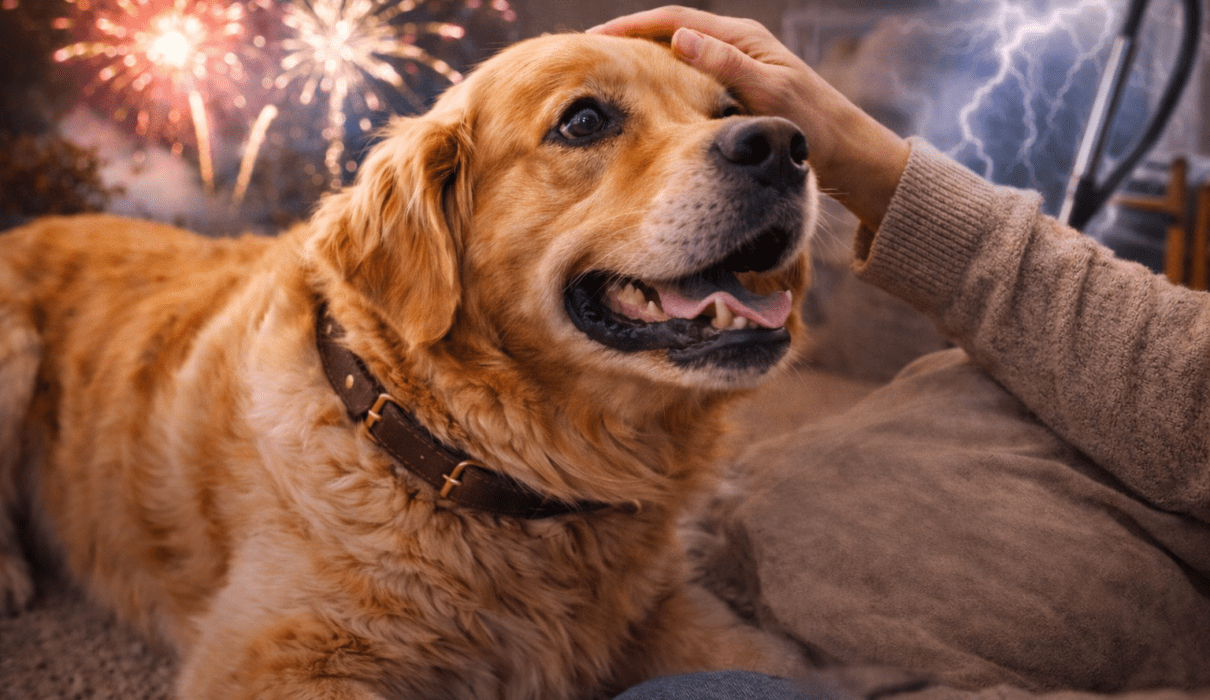
I learned that loud noise anxiety has patterns
Not all noises triggered the same reaction.
I noticed stronger anxiety when sounds were:
• Sudden
• Unpredictable
• Repetitive
• Combined with vibration or flashing light
That’s why fireworks, thunderstorms and vacuums felt so intense.
Once I saw this pattern,
my solutions became more intentional.
What actually helped my dog stay calmer
(This is the part that made the biggest difference)
I didn’t do everything at once.
I added changes slowly.
Here’s what worked.
1. I step in at the first small sign
One thing I learned the hard way is that it’s easier to calm early stress than full panic.
I don’t wait for shaking or hiding.
The moment I notice:
- ears going back
- sudden alertness
- freezing
- lip licking
- looking toward the sound
I begin the calming routine.
Once fear crosses a threshold, recovery takes much longer.
Helping early changed everything for us.
2. I focused on predictability, not silence
Trying to create complete silence is unrealistic.
Instead, I worked on making the environment predictable.
Before loud noises:
• I closed windows and curtains
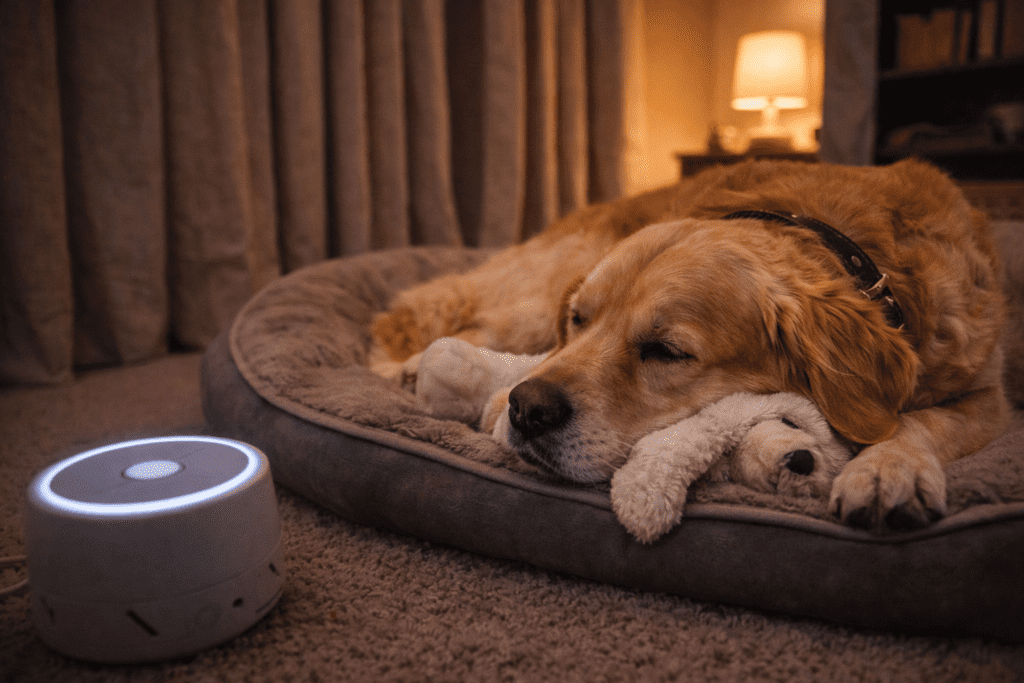
• I turned on consistent background sound
• I avoided sudden changes
A steady environment feels safer than a quiet one.
3. I used background sound the right way
This surprised me.
Not all sounds help.
What worked best:
• TV at low, steady volume
• Fan or white noise
• Calm music with no sudden changes
What didn’t help:
• Loud music
• Sudden volume changes
• Sound that turned on and off
The goal is masking, not distraction.
4. I created a true safe room
This was a game changer.
I chose one room and kept it consistent.
That room had:
• Closed curtains
• Familiar bedding
• Dim lighting
• Minimal foot traffic
My dog learned: “When noise starts, this is where I feel safest.”
Over time, he went there on his own.
5. I stopped forcing closeness and let my dog choose
This was hard emotionally.
Sometimes my dog wanted to be close.
Sometimes he wanted space.
I respected both.
I noticed something important:
When dogs feel they have a choice, anxiety reduces.
Control brings calm.
6. I stayed emotionally neutral (this matters more than people think)
Dogs read us constantly.
So during loud noises, I made sure to:
• Move slowly
• Speak normally
• Avoid sudden reactions
I didn’t over-comfort.
I didn’t ignore him either.
Calm presence worked better than words.
7. I prepared before noise started, not after
Waiting until panic starts is too late.
Now, if I know noise is coming:
• I set up the safe room early
• I close curtains before sounds begin
• I create calm before fear starts
Prevention reduced intensity dramatically.
8. I avoided common mistakes that make anxiety worse
These things actually increased fear:
• Forcing exposure
• Yelling or correcting fear
• Acting overly worried
• Dragging my dog from hiding
Fear doesn’t disappear through pressure.
It deepens.
9. I keep things calm even after the sound stops
Loud noise stress doesn’t end when the sound ends.
My dog often stayed tense for 20–30 minutes afterward.
So I keep the environment soft and predictable even after things get quiet.
No sudden movement.
No loud TV.
No excited talking.
I let his body fully come down from stress.
This recovery period helps prevent the fear from lingering into the rest of the day or night.
How long did it take to see improvement?
Not overnight.
But slowly, I noticed:
• Less intense shaking
• Faster recovery after noise
• More confidence indoors
Progress was gradual,
but very real.
Consistency mattered more than perfection.
When calming techniques aren’t enough
If a dog:
• Panics hours before noise
• Destroys things
• Stops eating
• Remains fearful long after noise stops
That’s a sign anxiety is severe.
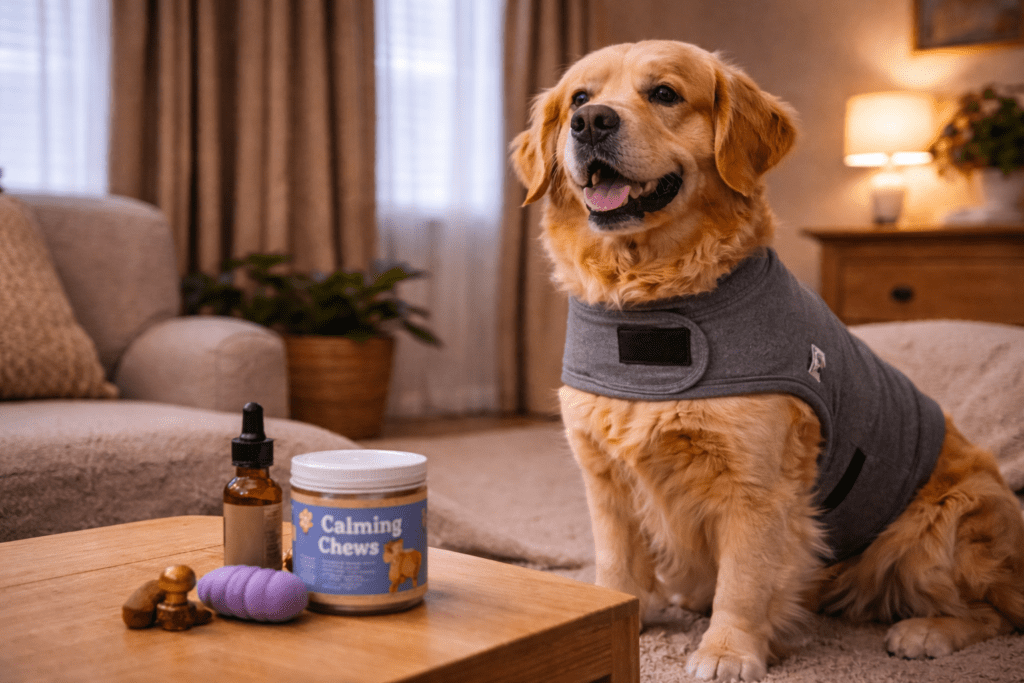
Professional support can help a lot in these cases.
A gentle reminder for dog parents
Loud noises don’t feel logical to dogs.
They feel dangerous.
Once I stopped trying to make my dog brave
and focused on making him feel safe,
everything changed.
Calm isn’t taught through noise disappearing.
It’s built through trust and consistency.
And that made all the difference.
This journey became an important part of what I continue sharing through Pet Calm Care.
