

 By
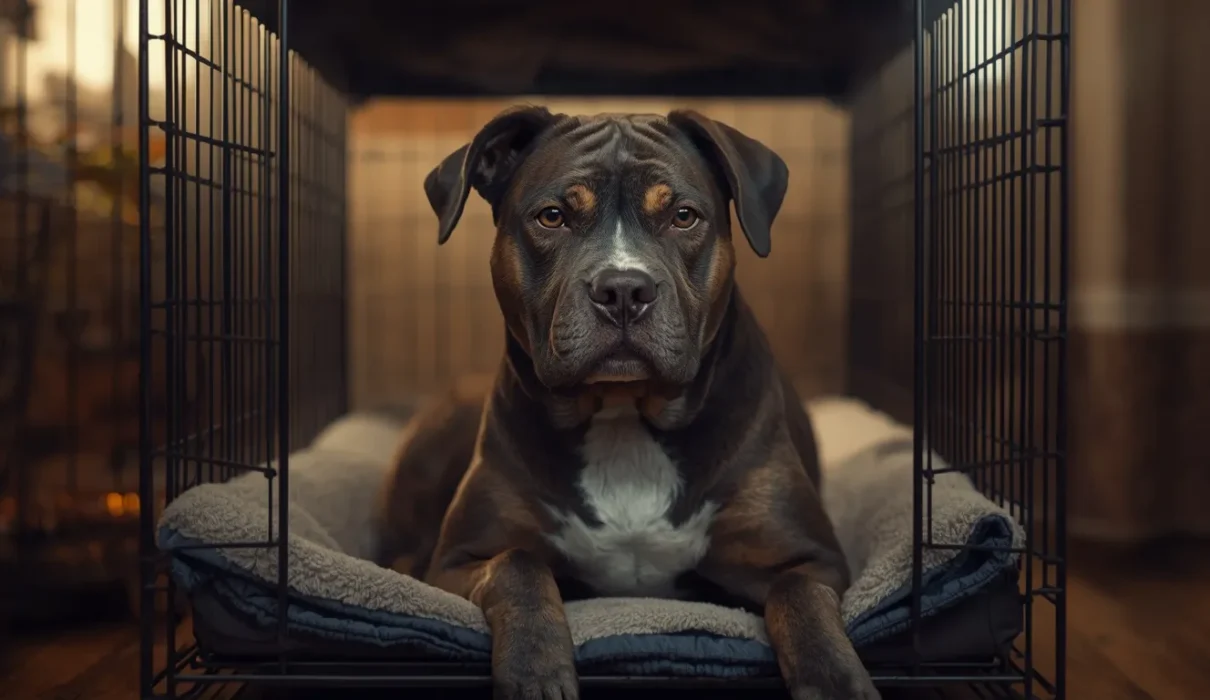
By If you have ever wondered, why is my dog anxious in the crate, you are definitely not alone.
Crate anxiety can be exhausting for both dogs and owners.
I remember thinking the crate was supposed to help my dog feel safe. But instead, there were moments of whining, pacing, barking, refusing to settle and looking genuinely stressed.
At first, I assumed my dog simply hated the crate.
But over time, I realized crate anxiety usually has a reason behind it.
Sometimes it is fear. Sometimes separation anxiety. Sometimes moving too fast during crate training. And sometimes, the crate itself is not actually the problem.
In this guide, I’ll share the common causes of dog anxiety in a crate, signs to watch for and what genuinely helped my dog feel calmer and safer over time.
Signs Your Dog May Be Anxious in the Crate
Not every dog shows crate anxiety the same way.
I noticed some signs were subtle at first.
Things like:
- whining or barking constantly
- pacing before entering the crate
- panting when not hot
- drooling excessively
- scratching or chewing crate bars
- refusing to enter the crate
- trembling or shaking
- trying to escape
- inability to settle down
The biggest thing I learned?
Stress often starts before the crate door even closes.
Common Reasons Dogs Become Anxious in the Crate
1. Your Dog Associates the Crate With Being Left Alone
This turned out to be a huge factor for many dogs.
Sometimes the crate itself is not scary.
Being alone is.
I noticed some dogs only panic when the owner leaves.
Not when the crate stays open.
Not when someone is nearby.
This can sometimes overlap with separation anxiety.
If your dog becomes distressed the moment you leave, the crate may
simply be where the anxiety shows up.
2. Crate Training Moved Too Fast
This honestly surprised me.
A lot of dogs are expected to suddenly spend long hours inside a crate
without slowly learning that the space feels safe.
Looking back, I realized many dogs need gradual exposure.
Not forced adjustment.
Signs training may have moved too quickly:
- immediate panic
- refusal to enter
- stress around the crate area
- worsening anxiety over time
For some dogs, slowing down makes a huge difference.
3. The Crate Feels Uncomfortable or Unsafe
Sometimes the issue is not emotional.
It is environmental.
I noticed dogs settle differently depending on:
- crate size
- location in the house
- temperature
- bedding comfort
- noise level
- visibility
Some dogs relax better when:
- the crate feels cozy
- part of it is covered
- the room stays quiet
- familiar smells are nearby
Small setup changes sometimes helped more than expected.
4. Your Dog Has Negative Crate Associations
This one matters more than many people realize.
If the crate only appears when:
- owners leave
- punishment happens
- stressful situations occur
- long isolation happens
Dogs may start connecting the crate with bad feelings.
I learned dogs remember emotional patterns quickly.
Sometimes the goal is not teaching:
Stay in the crate.
But instead:
The crate is safe and predictable.
5. Your Dog Has Too Much Built-Up Stress
This became obvious during overstimulating days.
Sometimes dogs struggle in the crate because they are:
- overstimulated
- overtired
- stressed
- emotionally overwhelmed
I noticed tiredness did not always equal calmness.
Some anxious dogs actually struggle more when emotionally overloaded.
6. Sudden Crate Anxiety After Being Fine Before
This confused me at first.
Sometimes dogs suddenly become anxious in a crate after doing perfectly fine for months.
Things that may change behavior:
- routine changes
- moving homes
- stressful experiences
- illness or discomfort
- new environment
- aging changes
Whenever behavior suddenly changed, I learned to pay attention.
What Actually Helped My Dog Feel Safer in the Crate
This was the part I struggled with most.
I kept looking for quick fixes.
But what helped most was changing how my dog felt about the crate itself.
1. I Stopped Using the Crate Only When Leaving
This helped more than I expected.
I started making the crate feel normal during calm moments too.
Things that helped:
- short calm crate time while home
- resting with the door open
- quiet downtime nearby
- occasional naps inside voluntarily
I wanted the crate to stop meaning:
You’re leaving now.
2. I Slowed Everything Down
This mattered a lot.
Instead of forcing longer crate sessions, I worked slowly.
Sometimes only:
- a few minutes
- calm practice sessions
- short successes
I learned confidence builds much faster than pressure.
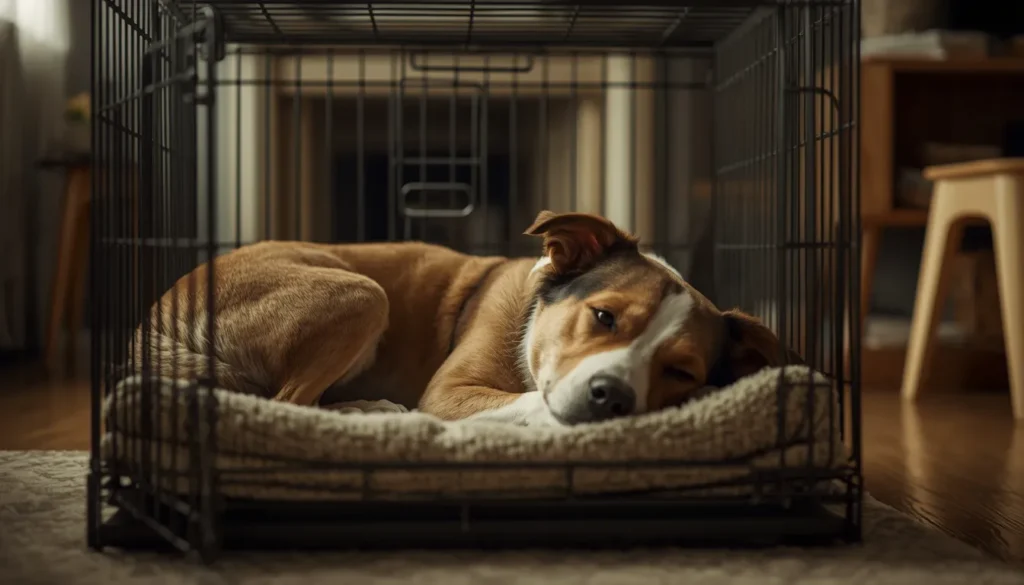
3. I Focused on Emotional Safety, Not Just Obedience
This completely changed my mindset.
At first, I kept asking:
How do I make my dog stay in the crate?
Eventually, I asked:
How do I help my dog feel safe in the crate?
That shift changed everything.
I focused more on:
- calm routines
- predictability
- emotional comfort
- confidence building
4. I Used Mental Calming Before Crate Time
This worked surprisingly well.
Not intense exercise.
Calm mental activity.
Things that genuinely helped:
- sniff walks
- enrichment games
- frozen lick mats
- short calm training sessions
An emotionally settled dog often settled in the crate more easily too.
5. I Stopped Accidentally Reinforcing Panic
This one felt hard emotionally.
If my dog panicked, I wanted to immediately rescue him.
But I also learned reacting dramatically sometimes increased stress patterns.
Instead, I worked on calm predictable responses and very gradual confidence building.
6. I Made the Crate Feel More Familiar
Small changes surprisingly helped.
Things I noticed mattered:
- familiar blanket smell
- favorite safe toy
- calmer location
- quieter environment
Tiny comfort details sometimes changed everything.
When Crate Anxiety May Need Extra Help
Sometimes crate anxiety improves slowly.
Other times, it feels bigger than simple training struggles.
I learned to pay closer attention when anxiety included:
- intense panic
- self-injury attempts
- nonstop distress
- severe destruction
- inability to settle even after slow training
Sometimes professional support becomes the kindest option.
Especially when separation anxiety is involved.
When You Probably Don’t Need to Panic
In my experience, mild crate stress early on is pretty common.
Especially with:
- rescue dogs
- puppies
- recent changes
- new routines
Some dogs simply need more time than others.
Progress often looked slower than I expected.
Reader Questions
Why does my dog suddenly hate the crate when they used to be fine?
This honestly confused me at first too. Sometimes dogs suddenly become anxious in the crate after routine changes, stressful experiences, moving homes, illness or emotional shifts. When behavior suddenly changes, I usually start looking at what changed around the same time.
Why does my dog cry in the crate but only at night?
Some dogs seem completely fine during the day but struggle more at night. Quiet environments, loneliness, nighttime anxiety or difficulty settling may sometimes make crate stress feel stronger after dark. If your dog also seems restless in the evenings, you may also want to read:
Dog Anxiety at Night: Complete Guide to Help Your Dog Sleep Calmly
Should I cover my dog’s crate if they seem anxious?
For some dogs, partial crate covers can help create a calmer, cozier environment with fewer distractions. But I noticed this really depends on the dog. Some dogs relax more with less stimulation, while others become more nervous if they feel closed in.
Why does my dog go into the crate but refuse to settle?
I noticed some dogs willingly enter the crate but still struggle to relax once inside. Sometimes this happens because the dog feels tired but emotionally unsettled, overstimulated or unsure about staying there for long.
Can separation anxiety make crate anxiety worse?
Sometimes, yes. If your dog panics mainly when you leave, the crate may not actually be the real problem. In some dogs, the distress comes more from separation itself than the crate environment.
What I Eventually Realized
I used to think crate anxiety meant my dog simply disliked the crate.
But after paying closer attention, I realized the crate was often where the stress showed up – not always where the problem started.
What helped most was slowing down, making the crate feel safer and focusing less on control and more on trust.
Progress was not instant, but once my dog started feeling safer, things slowly became easier for both of us.
This experience is part of my journey with PetCalmCare, where I share what I’m learning while trying to better understand anxious and sensitive dogs.
