

 By
By If your dog seems restless in the evening, you might wonder whether it’s normal behavior or evening anxiety in dogs.
I had the same confusion when my dog couldn’t relax at night.
Learning to recognize the difference between dog anxiety vs normal behavior completely changed how I handled it.
First, this is important to understand
Not every evening behavior means anxiety.
Dogs naturally slow down in the evening.
They also get a bit alert during transitions.
That’s normal.
Anxiety feels different.
And once you notice the difference,
you can’t unsee it.
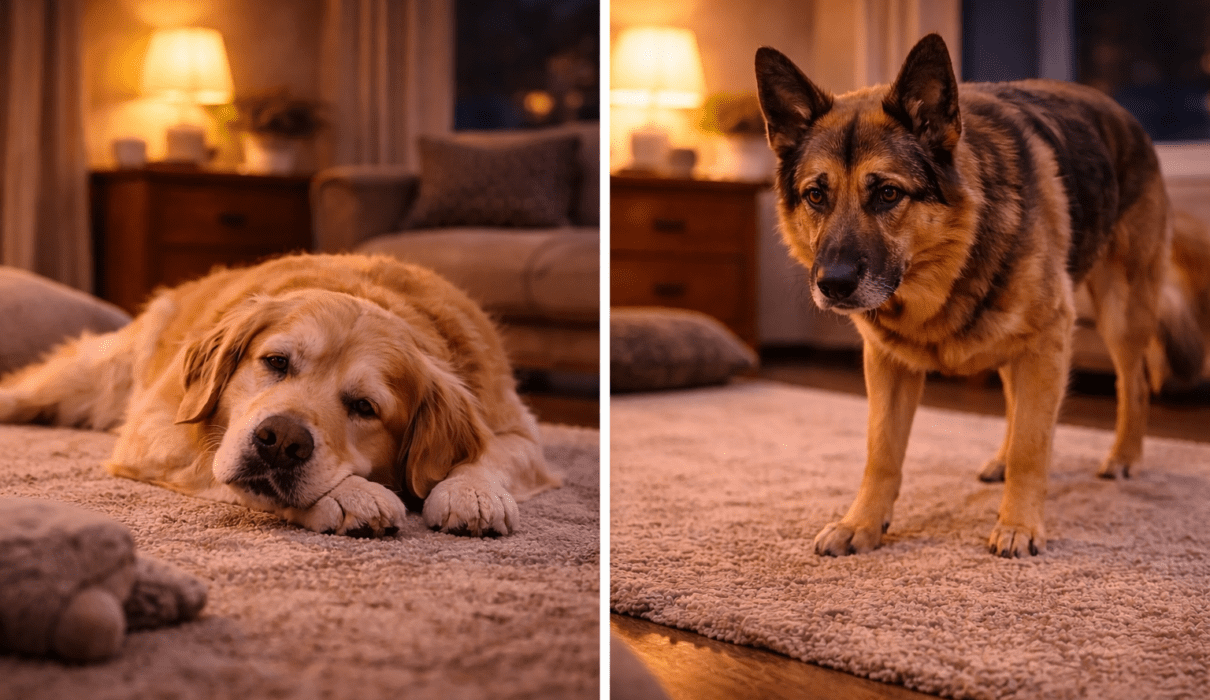
What normal evening behavior usually looks like
In my experience, normal evening behavior is settling behavior.
It may include:
•Following you calmly
• Light stretching
• Choosing a resting spot
• Watching what’s happening in the house
• Lying down, getting up once or twice
The key thing is this:
The dog eventually settles on its own.
No tension.
No urgency.
No confusion.
What anxiety-driven evening behavior looks like
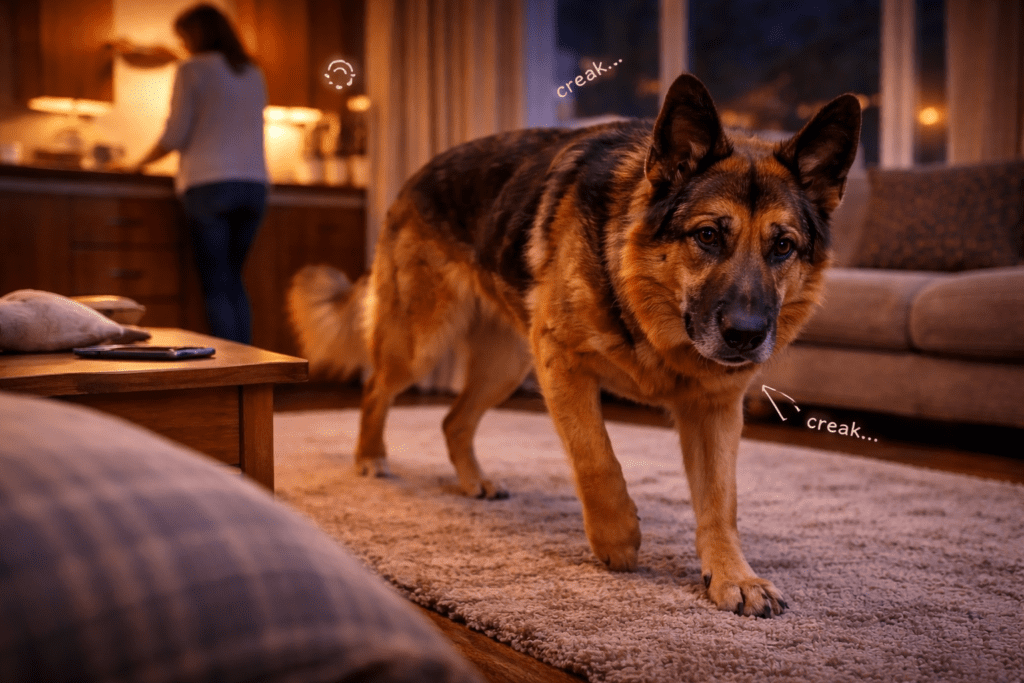
Anxiety doesn’t look calm.
It looks unresolved.
Here are signs that made me pause:
• Repeated pacing
• Walking without purpose
• Inability to settle at all
• Reacting to tiny sounds
• Following me with tension, not comfort
• Looking unsure or restless
The biggest clue?
There is no release.
The dog doesn’t calm down,
even when nothing is happening.
One simple question that helped me a lot
Whenever I felt confused, I asked myself:
“Is my dog slowly winding down,
or is he stuck in alert mode?”
That one question clarified everything.
Body language difference (very important)
This helped me more than behavior alone.
Normal evening body language:
• Loose body
• Relaxed tail
• Soft eyes
• Gentle movements
Anxiety body language:
• Tense muscles
• Stiff posture
• Ears constantly alert
• Shallow breathing
Anxious dogs don’t look comfortable in their own body.
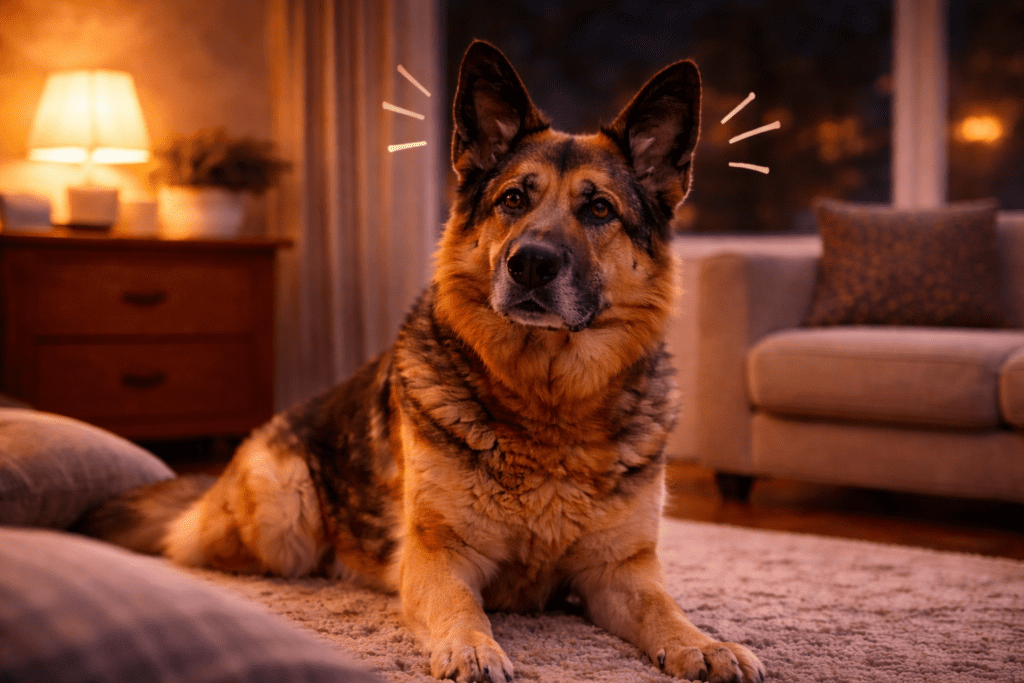
Sound sensitivity is another big clue
In the evening:
Normal dogs may notice sounds,
but they move on quickly.
Anxious dogs:
• React repeatedly
• Stay alert after the sound
• Seem to wait for the next noise
That waiting is anxiety.
Why evenings trigger anxiety more easily
Evenings remove distractions.
During the day:
• Movement
• Noise
• Activity
At night:
• Quiet
• Stillness
• Uncertainty
For anxious dogs,
quiet doesn’t feel peaceful.
It feels exposed.
What I stopped telling myself (and it helped)
I used to say:
“He’ll settle on his own.”
Sometimes that’s true.
But with anxiety,
waiting doesn’t help.
Understanding does.
How I responded differently once I knew it was anxiety
Once I identified anxiety,
I stopped reacting randomly.
I focused on:
• Predictable evening routine
• Calm environment
• Reducing stimulation gradually
• Supporting transition, not forcing calm
That shift made evenings easier.
When to take evening anxiety seriously
Normal behavior:
• Appears sometimes
• Resolves naturally
• Doesn’t escalate
Anxiety:
• Appears most evenings
• Gets worse over time
• Affects sleep
• Causes distress
That’s when it needs attention.
Reader Questions
Why does my dog act restless in the evening but seems fine the rest of the day?
Some dogs release built-up energy or stress during quieter hours, which can look like restlessness even if everything else seems normal.
How can I tell if my dog’s evening behavior is a pattern or just occasional?
Tracking when and how often the behavior happens can help you understand whether it’s a consistent pattern or just a one-time reaction.
Does breed or personality affect evening behavior in dogs?
Yes, some dogs are naturally more alert or active in the evening, which can influence how they behave during that time.
Can changes in my schedule affect my dog’s evening behavior?
Even small changes in timing, activity or environment can impact how a dog behaves in the evening.
Can separation anxiety affect how my dog behaves in the evening or at night?
Yes, dogs that struggle with being alone during the day may show signs of restlessness or difficulty settling later. Understanding separation anxiety in dogs can help you see how these behaviors may be connected.
How is evening restlessness different from night anxiety in dogs?
Evening behavior and nighttime anxiety can overlap, but they are not always the same. Learning more about dog anxiety at night can help you understand how these patterns differ.
What This Taught Me About My Dog’s Behavior
I used to think my dog’s evening behavior was either completely normal or something to worry about.
But what I learned is that the difference is often subtle and easy to miss.
Once I started paying attention to patterns instead of reacting to every moment, it became much
easier to understand what he actually needed.
And that changed how I responded, especially during the evenings.
This has been an important part of my journey with PetCalmCare.
