

 By
By (What helped my dog slow down before night)
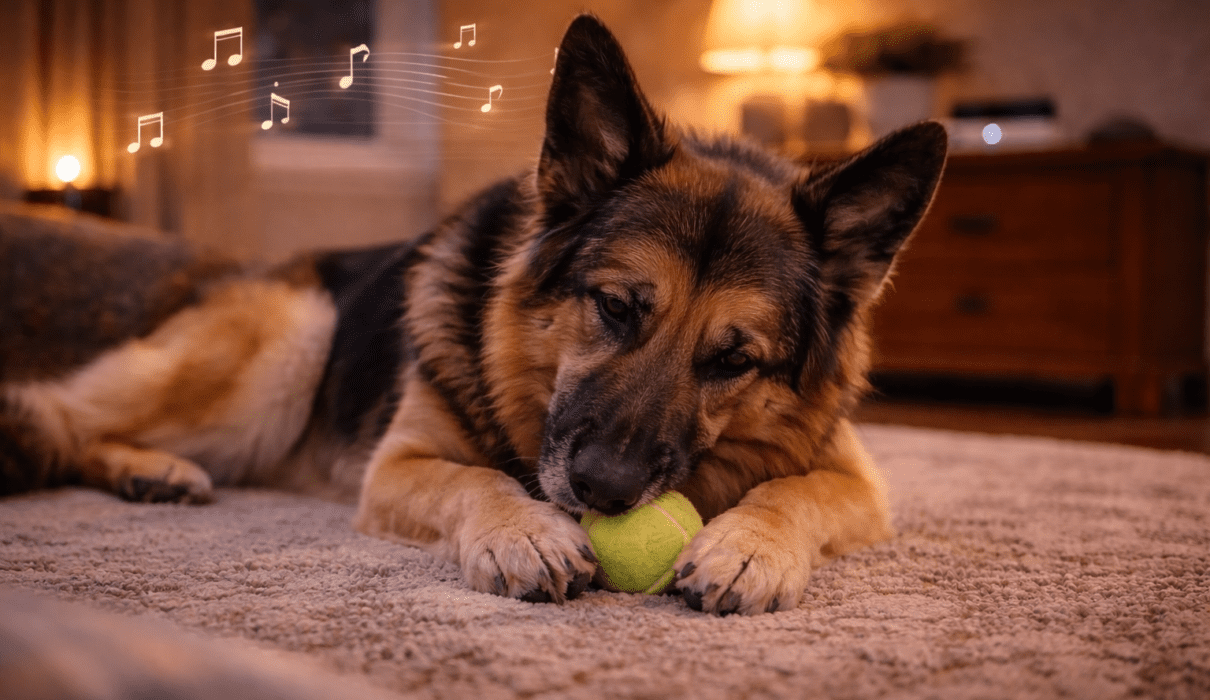
Evenings can quietly trigger anxiety in dogs.
If your dog becomes restless, follows you constantly or struggles to settle at night, the real
problem may not be bedtime- it’s the evening routine.
If your dog struggles more at night, you can also read this complete guide on dog anxiety at night
to understand deeper causes.
In this guide, I’ll share the exact indoor evening routine that helped my anxious dog feel
calm, safe and ready for sleep.
Evening is the most sensitive time for anxious dogs
Evening is when:
• Outdoor activity reduces
• The house starts quieting down
• Stimulation suddenly drops
• Dogs expect something next
For anxious dogs,
this transition can feel uncomfortable.
Not enough activity.
Not enough clarity.
That’s where anxiety sneaks in.
Why an indoor evening routine matters so much
Dogs don’t understand clocks.
They understand patterns.
If evenings feel unpredictable,
nights become restless.
An indoor evening routine gives your dog one clear message:
“The day is ending gently.
Nothing stressful is coming.”
What my dog used to do before I fixed evenings
This was eye-opening.
Before having a routine, I noticed:
• Pacing around sunset
• Following me everywhere
• Reacting to small sounds
• Difficulty settling later
He wasn’t tired.
He was uncertain.
The indoor evening routine that actually helped
(Step-by-step, realistic)
This routine is not strict.
It’s supportive.
1. I stopped abrupt transitions
Earlier, evenings looked like this:
Busy → suddenly quiet.
That was hard for my dog.
Now I slow things down gradually.
• TV volume reduces slowly
• Lights dim, not switch off
• Activity winds down, not stops
Gradual change = calmer nervous system.
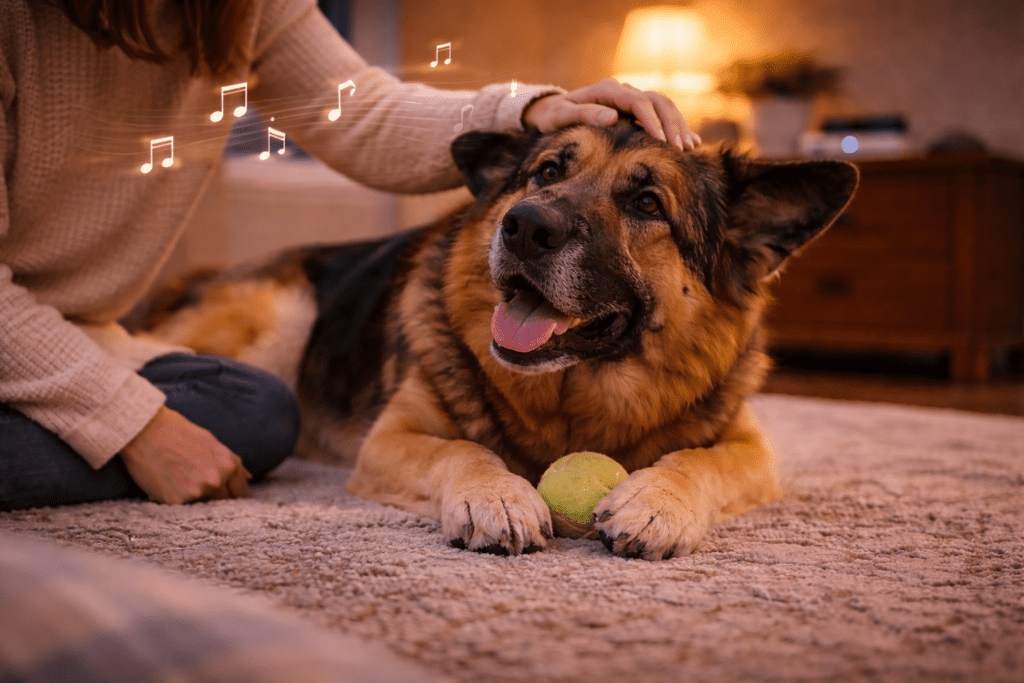
2. I added one calm anchor activity every evening
Dogs need something predictable.
For us, that anchor was one calm activity.
Examples that worked:
• Gentle sniffing game indoors
• Calm chewing time
• Lying together quietly
Not play.
Not training.
Just grounding.
3. I reduced sensory overload without making silence scary
Total silence made my dog more alert.
So I did this instead:
• Soft background sound
• No sudden phone notifications
• No loud TV shows
The goal wasn’t silence.
It was steady input.
4. I kept movement slow and intentional
This sounds small, but it matters.
In the evening, I avoided:
• Rushing around
• Sudden movements
• Loud footsteps
Dogs mirror our pace.
When I slowed down,
my dog followed.
5. I avoided exciting interactions late evening
I learned this the hard way.
Things I stopped late evening:
• Rough play
• Fetch indoors
• High-energy games
These spiked adrenaline
and showed up later as night restlessness.
6. I used light wisely
Bright lights kept my dog alert.
What helped:
• Warm lighting
• Same lights on every evening
• No sudden brightness changes
Consistent lighting helped his body recognize:
“The day is ending.”
7. I ended evenings the same way every day
This was powerful.
The last 20–30 minutes always looked similar.
Same room.
Same tone.
Same calm energy.
That consistency created emotional safety.
Example Indoor Evening Routine
- 6:00 PM → Light activity / walk
- 7:00 PM → Calm indoor time
- 8:00 PM → Chewing / sniffing activity
- 9:00 PM → Lights dim + slow environment
- 9:30 PM → Final calm interaction
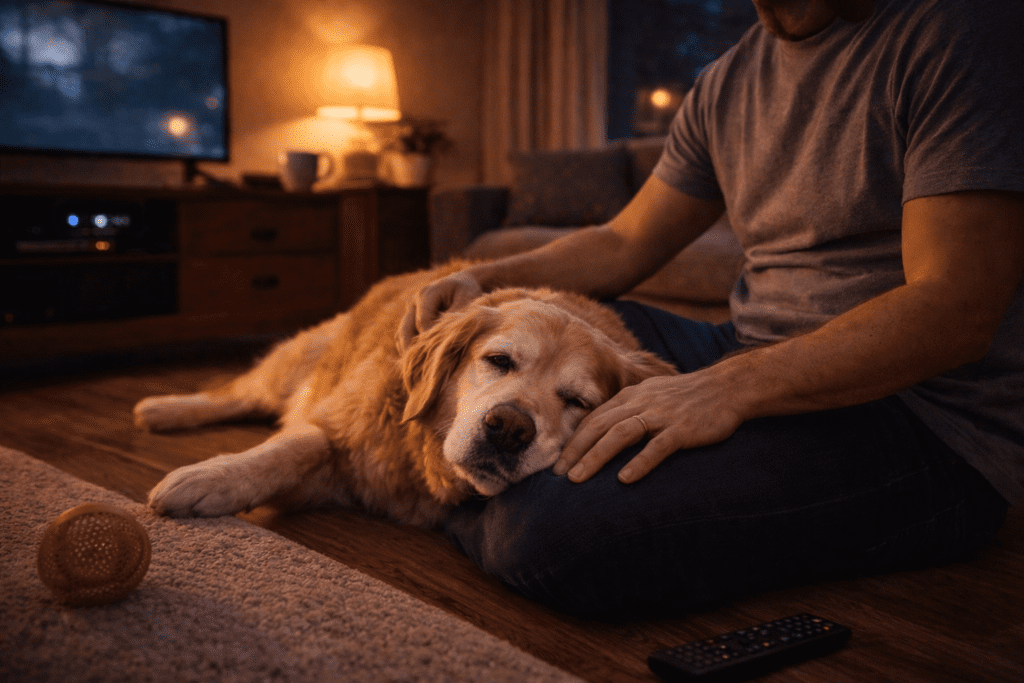
What changed once evenings became calm
Not instantly.
But gradually.
I noticed:
• Less pacing at night
• Faster settling
• Fewer startle reactions
• Calmer body language
Most importantly,
my dog stopped waiting anxiously for what’s next.
This routine is not about control
I want to be clear.
This routine is not about:
Forcing calm
Strict schedules
Training commands
It’s about supporting transition.
Common Mistakes in Evening Routines
- Sudden silence (creates alertness)
- Too much play before bed
- Inconsistent timing
- Bright lights at night
When evening routines aren’t enough
If your dog:
• Becomes anxious even in calm evenings
• Panics despite routine
• Shows worsening behavior
Anxiety may be deeper.
Professional guidance can help here.
Reader Questions
1. Can an indoor routine alone fully cure dog anxiety?
An indoor routine can significantly reduce anxiety, but it may not completely cure it if the root cause is deeper, such as separation anxiety or past trauma. Consistency and environment play a bigger role than just routine alone.
2. How long does it take for an evening routine to start working?
Most dogs begin showing small signs of improvement within a few days, but a stable and noticeable change usually takes 2 to 3 weeks of consistent routine.
3. Should I ignore my dog if they seem anxious in the evening?
Ignoring anxiety completely can sometimes make a dog feel more insecure. Instead, stay calm and present, but avoid reinforcing anxious behavior with excessive attention.
4. Is it okay to change the routine on weekends?
Frequent changes in timing can confuse anxious dogs. Even on weekends, it’s best to keep the evening routine as consistent as possible to maintain a sense of security.
A Calm Evening Starts With You
Evenings set the tone for nights.
Once I stopped focusing only on sleep
and started supporting the transition to sleep,
everything changed.
Calm nights start with calm evenings.
And calm evenings start with understanding.
