

 By
By My senior dog started showing anxiety at night and it was something I didn’t expect.
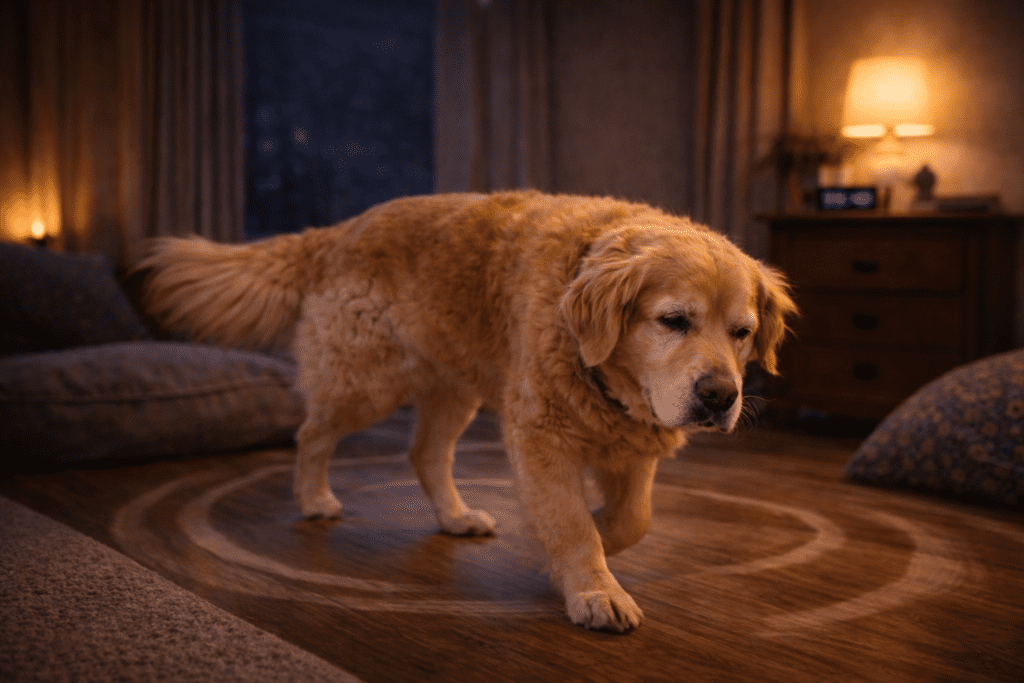
He would pace, stay restless and struggle to settle, even when everything seemed normal.
Over time, I realized that night anxiety in senior dogs has deeper reasons
and understanding them made a real difference.
Senior dog night anxiety doesn’t look dramatic
This is the first thing people miss.
It’s usually not panic.
Not loud barking.
It’s subtle.
Things I noticed:
• Getting up again and again
• Standing quietly in the dark
• Wandering without direction
• Looking lost or unsure
• Wanting reassurance but not knowing how
This isn’t misbehavior.
This is discomfort mixed with confusion.
Why nights feel harder for older dogs
Aging changes how dogs experience the world.
At night, those changes become more noticeable.
1. Reduced vision makes darkness unsettling
As dogs age,
their vision doesn’t fade suddenly.
It fades gradually.
At night:
• Shadows look unfamiliar
• Depth perception drops
• Rooms feel different
An older dog may wake up
and not immediately recognize where they are.
That moment of confusion triggers anxiety.
2. Hearing changes can increase alertness
Senior dogs don’t always hear less.
Sometimes, they hear differently.
Certain frequencies become harder to interpret.
So at night:
• Small sounds feel unclear
• The source of noise is confusing
• Silence feels uncomfortable
Uncertainty keeps the brain alert.
3. Physical discomfort shows up more at night
This is huge.
During the day, movement distracts from discomfort.
At night:
• Joints stiffen
• Muscles cool down
• Pain becomes more noticeable
An older dog may get up
not because of anxiety,
but because lying still doesn’t feel good anymore.
4. Cognitive changes affect night awareness
Some senior dogs experience mild cognitive decline.
This can look like:
• Forgetting familiar routines
• Delayed responses
• Nighttime disorientation
It’s not fear in the traditional sense.
It’s loss of clarity.
And loss of clarity creates anxiety.
Why senior dog night anxiety feels different emotionally
Younger dogs often react to external triggers.
Senior dogs react to internal discomfort and uncertainty.
That’s why normal anxiety fixes don’t always work.
What helped my senior dog sleep better
(This required more sensitivity than training)
This wasn’t about discipline or routines alone.
It was about supporting aging changes.
1. I stopped expecting deep sleep
This was a mindset shift.
Senior dogs don’t sleep like puppies.
Instead of expecting long, uninterrupted sleep,
I focused on comfort and ease.
That reduced frustration on both sides.
2. I adjusted lighting instead of turning everything off
Complete darkness made things worse.
What helped:
• Soft night light
• Consistent lighting placement
• No sudden light changes
Being able to see the environment reduced confusion.
3. I made the sleeping area easier to access
Small changes mattered a lot.
I focused on:
• Supportive bedding
• Easy entry and exit
• Familiar placement
If getting comfortable is hard,
anxiety naturally increases.
4. I stayed emotionally available at night
This is important.
Senior dogs often need reassurance, not independence.
When my dog woke up confused:
• I didn’t scold
• I didn’t ignore
• I didn’t overreact
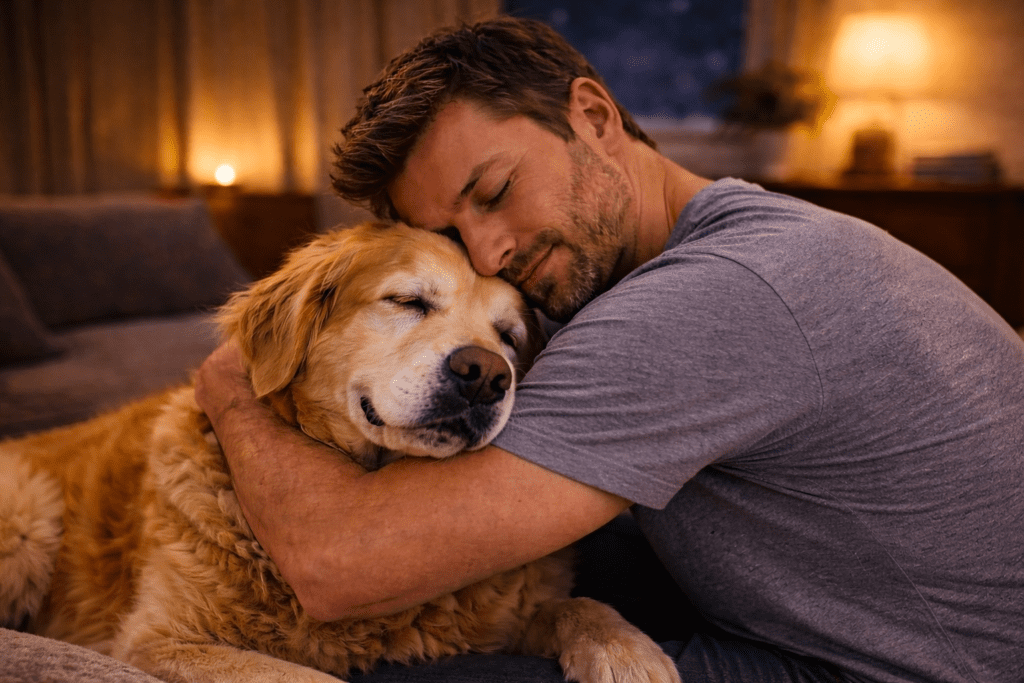
I stayed calm and present.
That presence mattered more than words.
5. I reduced night-time expectations
I stopped pushing:
• Fixed sleep times
• Strict routines
• “You should be asleep” mindset
Instead, I allowed flexibility.
Senior dogs need adaptation, not pressure.
6. I focused on comfort over correction
This was key.
I didn’t try to fix night behavior.
I supported comfort:
• Temperature balance (“Winter Made Nights Harder”)
• Quiet background sound
• Familiar smells
• Predictable environment
When comfort increased, anxiety reduced naturally.
What improvement looked like (realistically)
It wasn’t perfect.
But I noticed:
• Less wandering
• Faster settling
• Fewer confused moments
• More relaxed body language
Progress wasn’t dramatic.
It was gentle.
And that’s okay.
When senior night anxiety needs extra support
If your senior dog:
• Seems distressed most nights
• Cries or whines
• Appears lost or panicked
• Gets worse over time
That’s a sign anxiety may be layered with health changes.
Professional guidance can help a lot here.
Reader Questions
Is it normal for senior dogs to suddenly become anxious at night?
Yes, some senior dogs may develop nighttime anxiety due to age-related changes, even if they were calm earlier in life.
Why does my senior dog wake up multiple times during the night?
Frequent waking can be linked to restlessness, environmental sensitivity or age-related changes that affect sleep patterns.
Can aging affect my dog’s sleep cycle?
Yes, senior dogs may experience changes in their sleep-wake cycle, which can lead to more nighttime activity or difficulty settling.
Should I be concerned if my senior dog seems confused at night?
Occasional confusion can happen, but if it becomes frequent or worsens, it’s worth paying closer attention to changes in behavior.
Does keeping lights on help a senior dog at night?
Soft lighting can sometimes help senior dogs feel more comfortable, especially if they are sensitive to darkness or unfamiliar surroundings.
What This Experience Taught Me
Senior dog night anxiety isn’t a failure.
It’s a natural response to change.
Older dogs don’t need to be trained harder.
They need to be understood better.
Once I stopped expecting my senior dog
to behave like his younger self,
nights became calmer.
Not perfect.
But peaceful enough.
And at this stage of life,
peace matters more than perfection.
This continues to shape my journey with Pet Calm Care.
