

 By
By (What I noticed was different from simple restlessness)
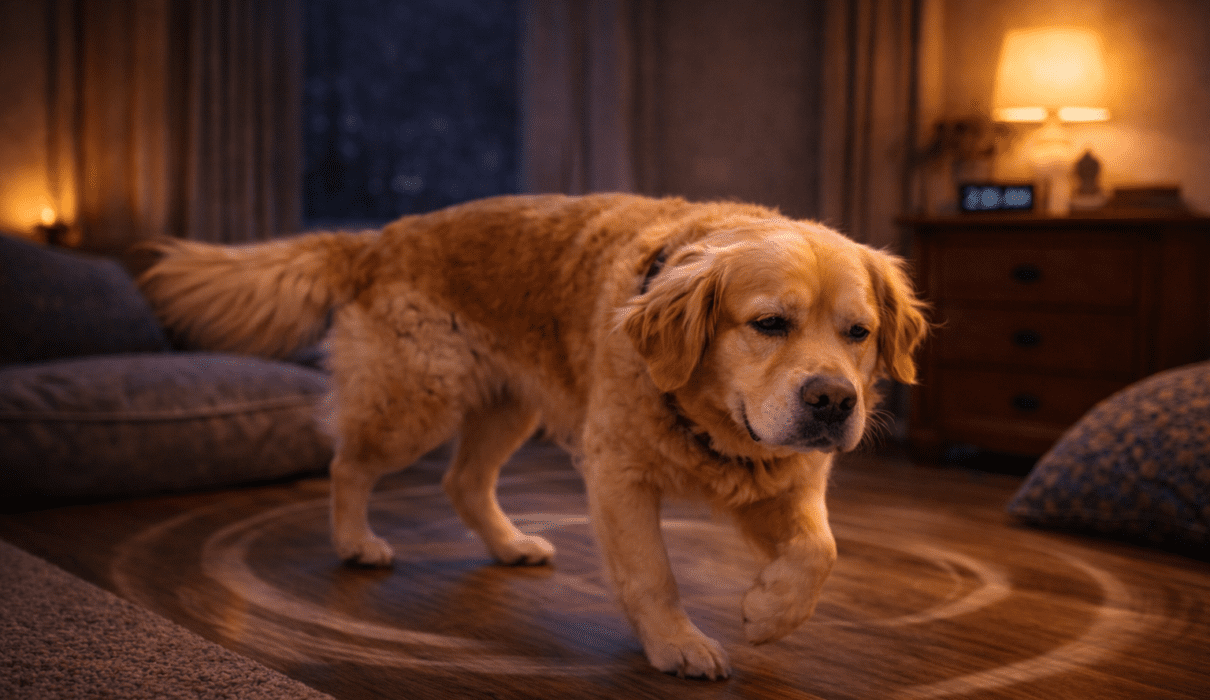
When my dog started pacing at night,
at first I thought it was the same thing as being restless.
But after watching closely,
I realized something important.
This wasn’t just not sleeping.
This was repeated movement,
as if his body wanted to stop,
but his mind wouldn’t let him.
Pacing is not the same as restlessness
This is where most people get confused.
Restlessness looks like:
• Changing positions
• Getting up and lying down
• Mild movement
But pacing looks like:
• Walking the same path again and again
• Circling the room
• Moving without purpose
• Not responding even when tired
That’s when I knew
this was something deeper.
What pacing at night usually means
From what I observed, pacing is often a sign of unresolved anxiety, not energy.
At night:
• There are fewer distractions
• The house becomes quiet
• The dog’s mind has nothing to focus on
So the brain stays alert,
and the body follows.
Movement becomes a coping mechanism.
Why night makes pacing worse
Night removes stimulation,
but it also removes reassurance.
Things that change at night:
• Lights go off
• Sounds feel sharper
• Familiar activity stops
• Humans become still
Dogs are naturally alert animals.
When everything slows down,
their awareness increases.
That’s why pacing often starts after everyone settles.
Common triggers I noticed behind night pacing
It was never just one reason.
Usually, it was a mix.
1. Anxiety that didn’t fully release during the day
Even if the day looked normal,
anxiety can stay stored in the body.
Triggers could be:
• Loud sounds earlier (The Approach I Started Using )
• Stressful events
• Changes in routine
By night, that tension looks for an outlet.
Pacing becomes that outlet.
2. Too much mental stimulation, too late
This surprised me.
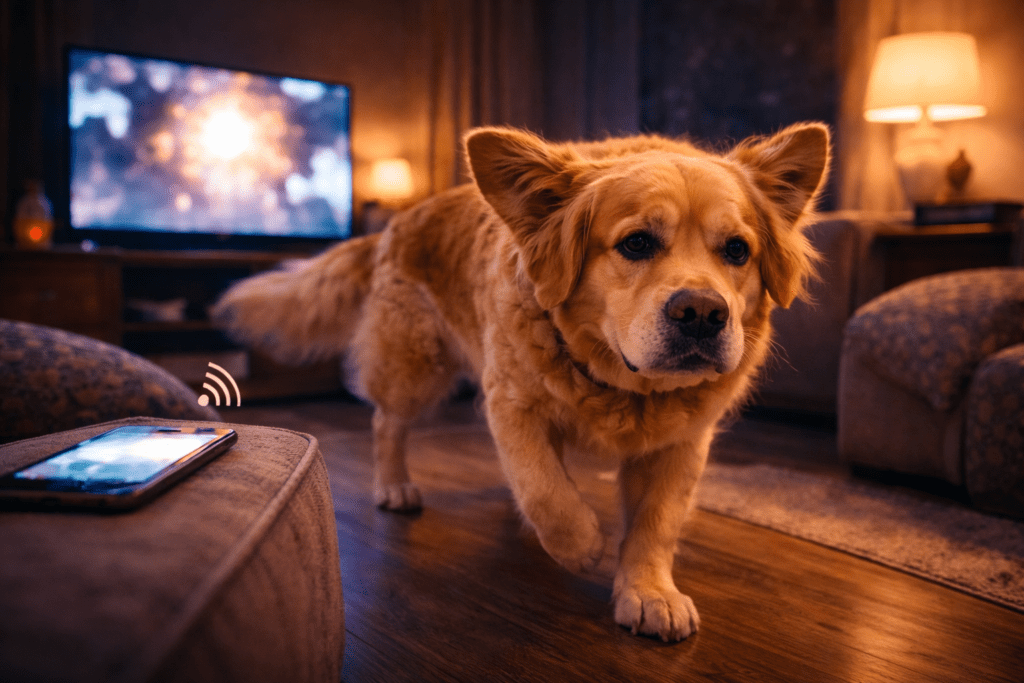
Late-night:
• TV noise
• Phone sounds
• Bright lights
• Late playtime
Instead of calming down,
my dog stayed alert.
His body was tired,
but his mind stayed switched on.
3. Searching behavior (looking for safety)
Pacing wasn’t random.
Sometimes my dog:
• Walked to doors
• Checked corners
• Revisited the same spots
This wasn’t exercise.
This was searching for comfort or reassurance.
What helped reduce pacing
(Different from what I did for restlessness)
This needed a slightly different approach.
1. I reduced movement triggers before bedtime
Instead of focusing on sleep,
I focused on stillness.
I made sure:
• No loud conversations
• No sudden movements
• No exciting activity late at night
Calm isn’t created at bedtime.
It’s created before bedtime.
2. I added grounding activities, not tiring ones
This was a big difference.
Instead of tiring my dog out,
I grounded him.
What helped:
• Slow sniffing games
• Gentle massage
• Calm chewing activity
These activities told his nervous system:
“You’re safe. You can slow down.”
3. I kept lights dim but not dark
Complete darkness increased alertness.
Soft lighting helped.
It reduced:
• Shadow confusion
• Sudden visual alerts
• Startle reactions
Small change, big impact.
4. I ignored pacing – but supported calm moments
This was hard.
When pacing started,
I didn’t react.
But when he stopped,
even for a moment,
I stayed calm and present.
Over time,
those calm pauses became longer.
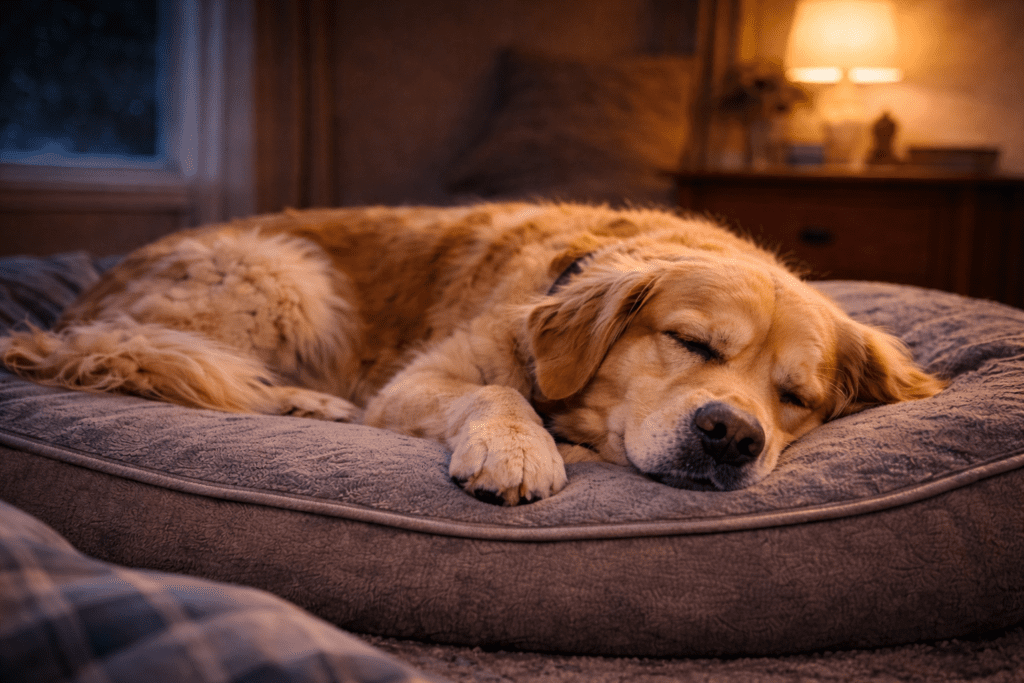
5. I made the sleep area more predictable
I didn’t change beds.
I didn’t move rooms.
I focused on consistency:
• Same spot
• Same bedding
• Same layout
Predictability reduced the need to check the environment.
How pacing slowly changed
It didn’t disappear overnight.
But I noticed:
• Shorter pacing cycles
• Longer calm periods
• Faster settling
The movement wasn’t gone,
but it lost intensity.
That’s progress.
When night pacing needs extra attention
If pacing:
• Lasts for hours
• Gets worse daily
• Comes with distress
• Happens even during the day
Then anxiety may be deeper.
Professional guidance helps in these cases.
Reader Questions
Why does my dog only pace at night and not during the day?
Nighttime is usually quieter, which makes small sounds, discomfort or leftover stress from the day feel much more noticeable. Many dogs also become more alert when the house routine changes at bedtime.
Is pacing at night always a sign of anxiety?
Not always. Sometimes it can be caused by nervous energy, changes in routine, discomfort, age-related confusion or even sounds outside that humans barely notice.
How can I help my dog settle faster at bedtime?
A calm evening routine usually helps the most. A short walk, quiet time, dim lights and a familiar sleeping spot can make it easier for your dog to relax.
Should I be worried if my dog paces every night?
If it happens often and your dog seems distressed, it’s worth paying closer attention. Repeated pacing can be a sign that something in the environment or routine is making your dog feel unsettled.
Can loud noises make dogs pace at night?
Yes, absolutely. Sounds like traffic, thunderstorms, fireworks, or even indoor appliances can keep some dogs in a state of alertness long after the noise itself stops.
What This Journey Taught Me
Pacing isn’t misbehavior.
It’s communication.
My dog wasn’t trying to stay awake.
He was trying to feel safe enough to stop moving.
Once I understood that,
my response changed.
And slowly,
so did his nights.
This continues to shape my journey with Pet Calm Care.
