

 By
By For a long time, I thought every anxious behavior needed training.
If my dog was restless, I thought he needed a command.
If he was pacing, I thought he needed correction.
If he looked nervous, I thought I had to work on it.
So I kept trying.
Sit.
Stay.
Place.
Look at me.
More repetition.
More structure.
More pressure.
And honestly?
It was making things worse.
He wasn’t relaxing.
He was just becoming more mentally tired.
That’s when I realized something I wish I had understood sooner:
Not every anxious dog needs more training.
Sometimes they just need help feeling safe enough to relax.
This was one of the biggest lessons in my journey with Pet Calm Care.
The Difference Between Calm and Obedient
This changed everything for me.
A dog can follow commands and still be anxious.
They may sit when asked.
Stay in one place.
Look well behaved.
But inside, they may still be stressed.
Fast breathing.
Tight body.
Ears alert.
Eyes scanning.
That’s not calm.
That’s controlled anxiety.
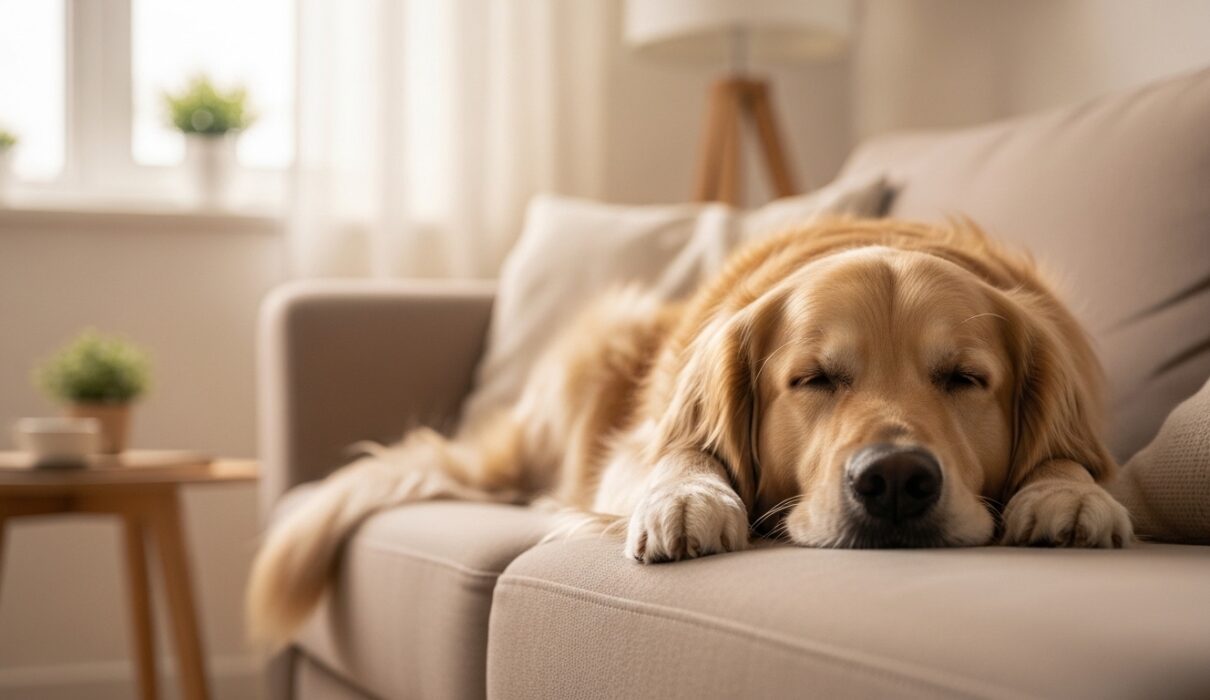
Real relaxation looks different.
It’s when the body softens.
The breathing slows.
The dog stops scanning the environment.
They feel safe enough to rest.
That became my new goal.
Not obedience.
Relaxation.
The Mistake I Was Making
I was trying to train away an emotion.
That rarely works.
Because anxiety is not a behavior problem first.
It’s an emotional state.
And emotions need regulation before they need instruction.
Once I understood this, I stopped asking:
“How do I make him listen?”
And started asking:
“What is making it hard for him to feel safe?”
That one question changed the way I helped him.
What Actually Helped My Dog Relax
These are the things that truly worked for us.
Not quick fixes.
But deep, real support.
1. I Reduced Pressure First
This was the biggest turning point.
I stopped constantly asking for commands.
No random sits.
No forcing place.
No repeating cues.
Instead, I let him just exist calmly near me.
This removed mental pressure.
And within a few days, I noticed something:
He started settling on his own.
Sometimes dogs need space from expectations.
2. I Created a Calm Environment
Dogs absorb energy from the space around them.
So I changed the environment before expecting behavioral change.
I reduced:
- loud TV sounds
- sudden movement
- high household noise
- unpredictable activity
I kept lighting softer in the evening.
Lower voices.
Less chaos.
The environment itself started telling him:
You are safe here.
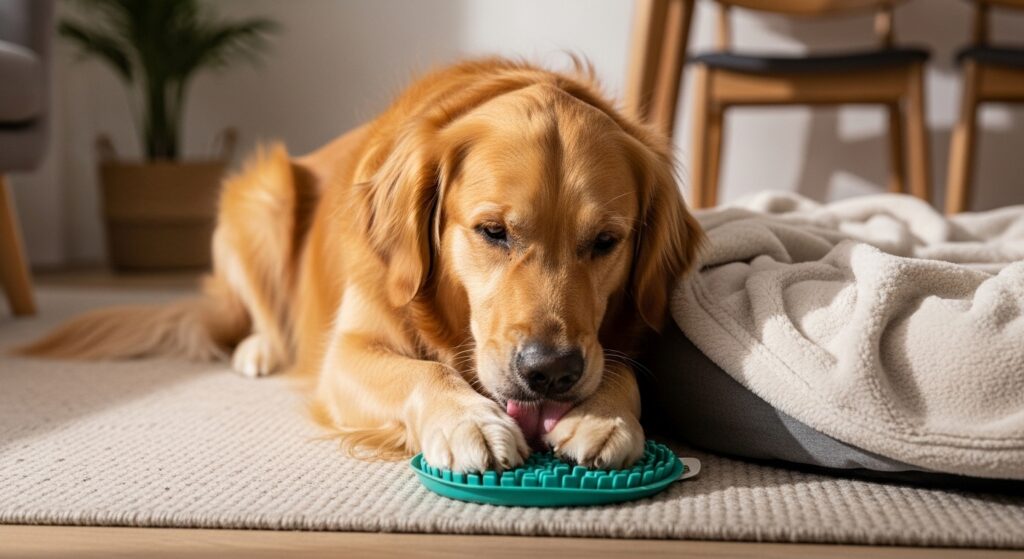
3. I Used Natural Calming Activities
This helped more than I expected.
Instead of commands, I focused on soothing behaviors.
Things like:
- lick mats
- snuffle games
- slow treat searches
- gentle chew time
These naturally activate calming instincts.
Especially sniffing and licking.
For my dog, sniff work was huge.
Even 10 minutes made a visible difference.
4. I Stopped Interrupting Rest
I didn’t realize I was doing this.
Every time he lay down, I would pet him, talk to him, or interact.
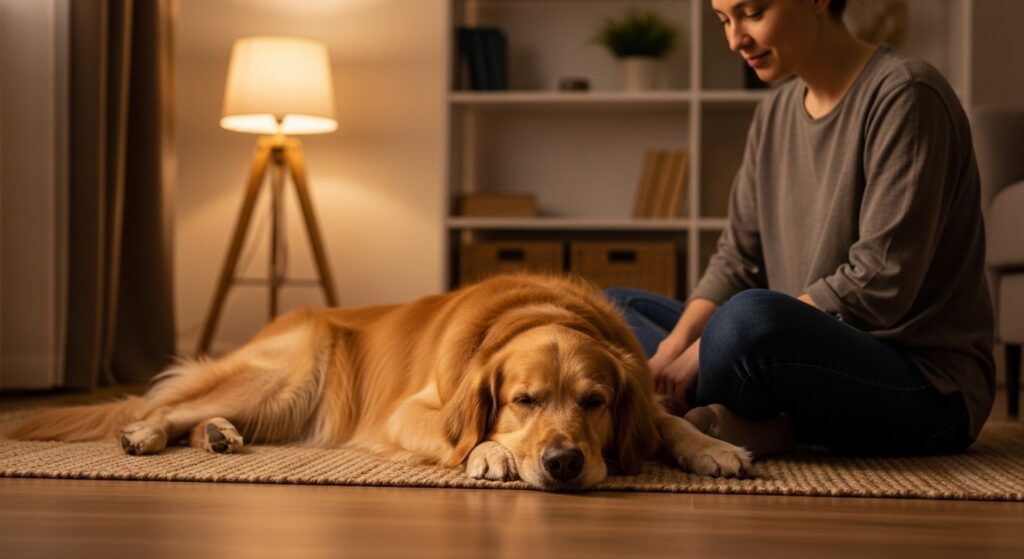
Sometimes dogs need uninterrupted decompression.
So I started allowing quiet rest without touching or speaking.
This helped him go deeper into relaxation.
5. I Focused on Co-Regulation
This part is powerful.
Dogs mirror our nervous system.
If I was stressed, rushed, distracted…
He felt it.
So I changed my own energy.
Slower movement.
Softer tone.
Calm breathing.
Less urgency.
And the difference was immediate.
Sometimes helping a dog relax starts with helping your own energy slow down.
6. I Stopped Forcing Social Situations
This was another big lesson.
I used to think meeting people or going outside more would help him get used to it.
But he wasn’t ready.
So I stopped forcing exposure.
Instead, I gave distance.
Observation without pressure.
This helped him relax much faster.
7. I Built Safe Daily Rituals
Predictable routines help dogs relax.
For us, this became:
Morning:
- same wake-up flow
- same calm greeting
- same feeding rhythm
Evening:
- lower lights
- quiet space
- sniff game
- rest area
Dogs relax faster when life feels predictable.
Signs Your Dog Is Truly Relaxing
Look for these subtle signs:
- softer eyes
- loose jaw
- deeper breathing
- hips relaxed
- side sleeping
- less environmental scanning
These matter more than perfect obedience.
What Not to Do
These things slowed our progress before:
❌ too many commands
❌ forcing place training during anxiety
❌ over-correcting pacing
❌ pushing social exposure
❌ expecting fast results
Relaxation is built, not demanded.
Reader Questions
Can a dog relax without formal training?
Yes. Many anxious dogs need emotional safety before training helps.
Is pacing always a training issue?
Not always. Often it’s stress, overstimulation, or inability to settle.
What activities naturally calm dogs?
Sniffing, licking, chewing, and quiet decompression routines work extremely well.
Should I pet my dog when they are anxious?
Sometimes yes, but avoid overstimulating them. Calm presence is often more helpful than excessive touch.
What if my dog only relaxes near me?
That’s common in anxious dogs and often linked to confidence and security.
Final Thought
I used to think relaxation had to be taught.
Now I see it differently.
Sometimes dogs already know how to relax.
They just don’t feel safe enough to do it.
Once I stopped forcing training and started creating safety…
Everything changed.
He didn’t just behave better.
He actually felt better.
And honestly, that mattered more than anything.
