

 By
By (What I’ve noticed and why it happens)
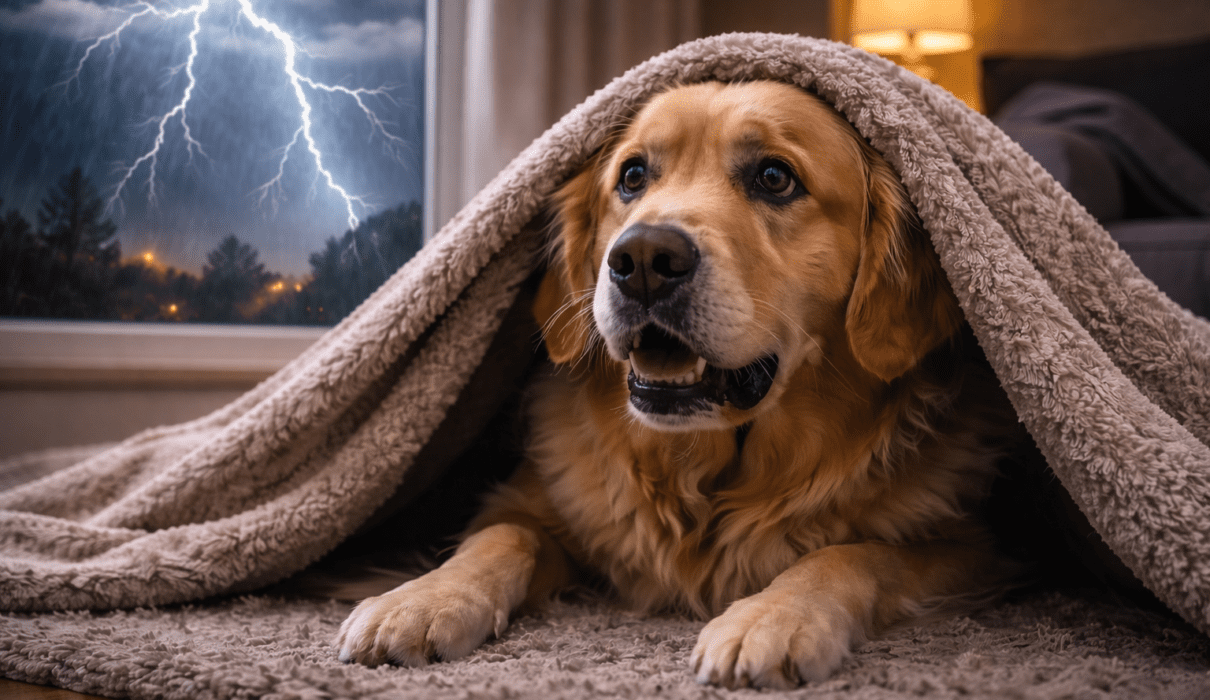
When the first thunderstorm of the season hit,
I noticed something immediately.
My dog wasn’t just scared.
He was shaking.
Not from cold.
Not from pain.
It was a deep, uncontrollable shaking that stopped only when the storm passed.
That moment made me pay attention.
It doesn’t happen during every storm
This is something many people miss.
The shaking didn’t happen during light rain.
It showed up when:
• Thunder was loud and sudden
• Wind picked up quickly
• The sky flashed with lightning
Once I noticed this pattern, it became clear.
This was thunderstorm-related anxiety.
Why thunderstorms feel overwhelming to dogs
Thunderstorms aren’t just noise.
For dogs, they are a full sensory overload.
Here’s what’s happening all at once:
• Loud thunder that comes without warning
• Pressure changes in the air
• Flashing light
• Wind and vibrations
Dogs can’t understand what’s causing it or when it will stop.
That lack of control creates fear.
What shaking during thunderstorms usually looks like
Not all dogs react the same way,
but common signs I’ve noticed include:
• Full-body trembling
• Trying to hide under furniture
• Panting even while resting
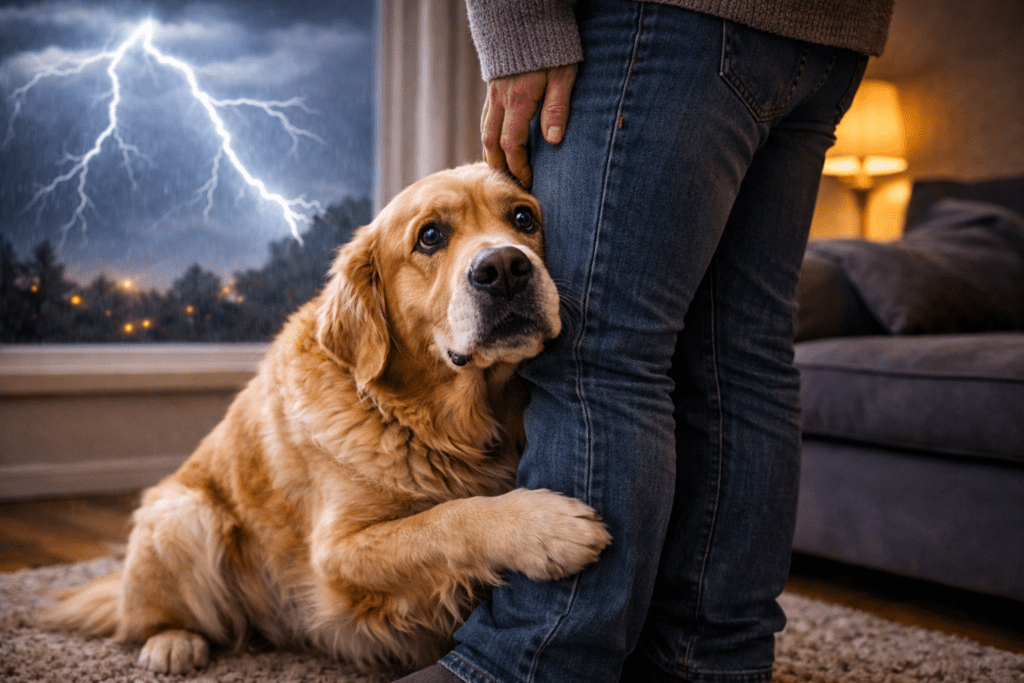
• Sticking very close to their owner
• Wide, alert eyes
Sometimes the shaking starts before the thunder hits.
That’s anticipation anxiety.
Why this fear can get stronger over time
Thunderstorm anxiety often builds slowly.
If it’s ignored, dogs may:
• React earlier during storms
• Become anxious at small sounds
• Shake even before thunder starts
• Struggle to calm down afterward
That’s why understanding it early matters.
What I do when thunderstorms start
The biggest thing I learned was that waiting until my dog was already
shaking badly made it much harder to help him calm down.
Now, the moment I hear thunder in the distance or see the weather changing,
I start our calming routine early.
1. I prepare his safe space first
The first thing I do is help him move toward the place where he naturally feels safest.
For us, this is a quiet corner in the bedroom with his bed, blanket and one of my old T-shirts.
Some dogs prefer:
- their crate
- under the bed
- a closet corner
- a bathroom away from windows
I never force him into the space.
I simply make it available and let him choose.
Dogs often feel safer in smaller den-like areas during storms.
2. I reduce the sound before it gets intense
As soon as the storm begins, I turn on gentle background noise.
This usually helps soften sudden thunder sounds.
What works best for us:
- white noise
- soft TV sound
- calming music
- a fan running nearby
Even reducing the sharpness of the thunder makes a noticeable difference.
3. I stay calm and keep my own energy steady
This made a bigger difference than I expected.
If I start acting worried, moving quickly or sounding tense, my dog notices immediately.
So now I make a conscious effort to stay calm.
I sit near him, speak softly and use slow gentle strokes if he wants comfort.
Some dogs want physical closeness.
Some prefer space.
I follow his lead.
Comforting a scared dog does not create fear – it often helps them feel safer.
4. I give him something soothing to focus on
Licking and chewing helped my dog settle faster.
So I usually offer:
- a lick mat
- frozen peanut butter on a mat
- a stuffed Kong
- a long-lasting chew
These self-soothing behaviors help redirect nervous energy.
5. I avoid forcing interaction
One mistake I made early on was trying to repeatedly call him out from his hiding spot.
Now I don’t do that.
If he wants to stay curled up in his safe space, I let him.
For many anxious dogs, choosing where to settle is part of how they cope.
6. I stay with him even after the storm passes
This part is often missed.
Even when the thunder stops, the body can stay in stress mode for a while.
I usually stay close for another 20–30 minutes until his breathing slows and his body softens.
Sometimes recovery takes longer than the storm itself.
What helped us most
The biggest change came when I stopped treating thunderstorms as an emergency and
started treating them as something we could prepare for.
A calm routine before the fear escalates made the biggest difference for us.
This experience continues to shape my journey with Pet Calm Care.
What I avoid doing during storms
These things made anxiety worse when I tried them:
• Yelling or correcting fear
• Dragging my dog out from hiding
• Forcing exposure to the storm
• Acting overly worried
Fear doesn’t disappear with pressure.
Can thunderstorm anxiety be prevented?
You can’t stop storms.
But you can reduce how intense the reaction becomes.
Consistency helps.
So does creating a calm environment before storms start.
Small changes over time make a big difference.
When thunderstorm anxiety needs extra help
If you notice:
• Panic that lasts long after the storm
• Destructive behavior
• Extreme shaking
• Fear spreading to other situations
That’s a sign to seek professional guidance.
Early help is always easier than waiting.
Reader Questions
Why does my dog react the same way to thunderstorms, fireworks and the vacuum cleaner?
Many sensitive dogs react to all three because sudden loud sounds trigger the same fear response. If this happens often, you may also want to read our guides on fireworks anxiety and vacuum cleaner sound anxiety for more specific calming support.
Is it normal for dogs to be terrified of thunderstorms?
Yes. Thunderstorm fear is extremely common. Many dogs are sensitive to sudden noise, pressure changes, flashing light and vibrations. For some, it’s mild. For others, it becomes full panic.
Why is my dog suddenly afraid of thunderstorms when he wasn’t before?
Fear can develop over time. Aging, a particularly loud storm, a stressful life event or health changes (like hearing issues) can increase sensitivity. Senior dogs often become more reactive to environmental changes.
Do thunder shirts or anxiety wraps actually work?
They help some dogs, especially when introduced before anxiety peaks. Compression can create a grounded feeling. They’re not magic, but for mild to moderate cases, they can reduce intensity.
Should I use medication for thunderstorm anxiety?
If panic is severe, destructive, or long-lasting, it’s worth speaking with a veterinarian. Some dogs benefit from short-term medication during predictable storms. Medication is not failure. It can reduce suffering and make training possible.
Are home remedies effective for thunderstorm anxiety?
Soft classical music, white noise, scent-based comfort (like a worn shirt), pheromone diffusers or creating a covered “safe cave” can help mild cases. Severe panic usually needs more structured support.
What I’ve learned through this
Thunderstorms are confusing and frightening for many dogs.
Shaking isn’t weakness.
It’s communication.
Once I understood that, my response changed.
And when my response changed, my dog’s reaction slowly improved.
Sometimes, feeling safe matters more than feeling brave.
“I’ve noticed that shaking during thunderstorms is part of a bigger noise
anxiety pattern, which I explain in detail in my main guide on loud noises.”
