

 By
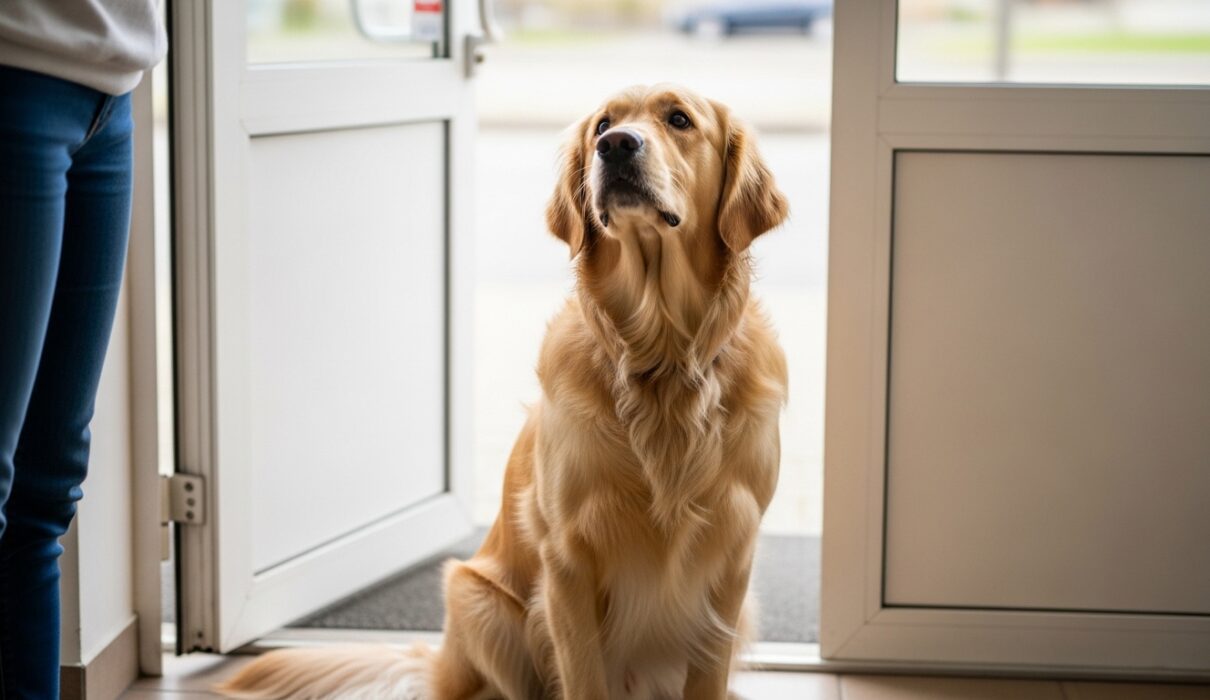
By The first time I took my dog to the vet, I knew he was nervous.
But I didn’t realize just how deeply stressful the whole experience felt for him until we got there.
The moment the car stopped, he froze.
By the time we reached the clinic door, he was trembling, pulling backward
and looking at me like he wanted to disappear.
I went home that day feeling awful.
I kept thinking I had somehow failed him.
What changed everything was realizing this wasn’t something to push through.
It was something we had to train gently and rebuild step by step.
This is exactly what finally worked for us.
Why Vet Visits Feel So Stressful for Dogs
For many dogs, the vet is a perfect storm of triggers.
It’s not just the exam.
It’s everything around it.
- unfamiliar smells
- strange animals
- slippery floors
- people reaching toward them
- restraint
- needles
- the memory of past discomfort
Dogs remember emotional experiences incredibly well.
If your dog has ever had a painful exam, vaccination, ear check or
uncomfortable restraint, the building itself can become a trigger.
Sometimes the anxiety starts before you even walk in.
The leash comes out.
The car ride starts.
Your dog already knows where they’re going.
That anticipation alone can create stress.
I learned this the hard way.
My dog wasn’t reacting to the vet room.
He was reacting to the entire chain of events leading up to it.
The Biggest Mistake I Made at First
At first, I tried to reassure him by talking constantly.
You’re okay.
It’s fine.
We’re almost done.
I also tried to gently pull him forward when he hesitated.
Looking back, that made things worse.
He wasn’t being stubborn.
He was scared.
The more I tried to move faster, the more pressure he felt.
That’s when I changed my approach.
Instead of trying to survive vet visits, I started training for
the entire experience outside the appointment itself.
That was the turning point.
Step 1: We Started With the Parking Lot
This was probably the most important thing we did.
For a week, I stopped taking him inside.
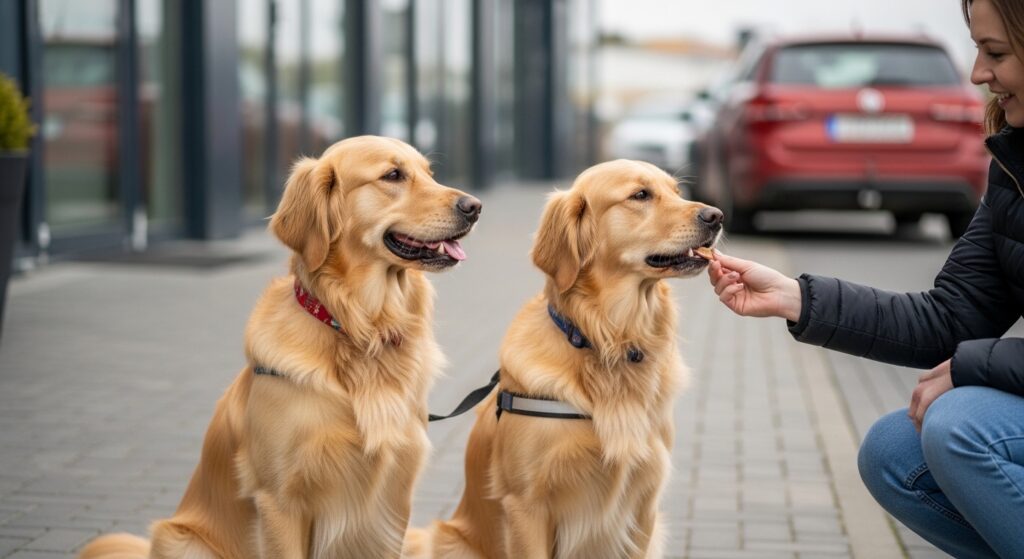
We only drove to the clinic parking lot.
That’s it.
We parked.
Sat quietly.
Had high-value treats.
Then went home.
No exam.
No stress.
No pressure.
I wanted the location itself to stop meaning something bad.
At first, he was still tense.
But after a few short visits, I noticed small changes.
His body softened.
The trembling reduced.
He started taking treats more easily.
This is where trust began.
Sometimes the biggest progress happens before you ever walk through the door.
Step 2: Happy Walks to the Door
Once the parking lot felt easier, we moved one step forward.
We walked near the entrance.
Not inside.
Just near it.
A few treats.
A little praise.
Then we left.
Some days we only got halfway there.
And that was okay.
I stopped measuring success by distance.
Instead, I measured it by body language.
I looked for:
- relaxed ears
- softer eyes
- less panting
- willingness to sniff
- taking treats
That matters far more than getting inside.
Step 3: Practicing Touch at Home Changed Everything
One thing I didn’t realize at first:
many dogs aren’t just scared of the location.
They’re scared of being handled.
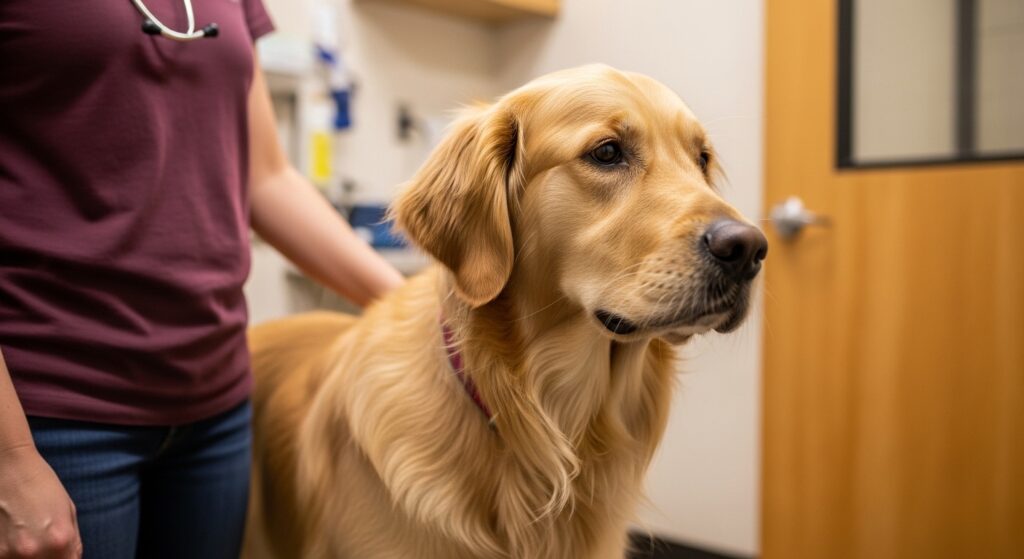
So I started practicing mini mock vet exams at home.
Very gently.
I touched:
- paws
- ears
- belly
- tail
- neck
- mouth area
Then immediately rewarded.
Treat.
Praise.
Pause.
Repeat.
Very short sessions.
This helped my dog learn that being touched didn’t automatically lead to something scary.
Over time, this made actual exams dramatically easier.
Step 4: I Trained a Calm Position
This was a game changer.
I taught my dog to settle in one calm position during stressful moments.
For us, it was a simple sit with eye contact.
Some dogs do better with:
- chin rest on your hand
- sit and focus
- down stay
- standing still
The goal isn’t perfect obedience.
The goal is giving your dog something familiar to do when anxiety rises.
Familiar behaviors create emotional safety.
Step 5: High-Value Rewards Only
I made one huge upgrade.
Vet training treats became special.
He only got them for this work.
I used things he absolutely loved.
- chicken
- cheese
- turkey pieces
- soft training treats
This made the entire experience feel different.
Something good happened every time we practiced.
That emotional shift matters.
Step 6: I Stopped Waiting for Appointments to Practice
This was the biggest lesson.
Don’t only work on vet stress during actual vet visits.
That’s too much pressure.
The real progress happens between appointments.
A few times, I even called ahead and asked if we could do a quick happy visit.
Some clinics allow short walk-ins where staff simply greet the dog and offer treats.
These visits helped enormously.
The clinic stopped being a place that only meant discomfort.
What Finally Changed
The first truly calm visit didn’t happen overnight.
It took time.
But one day I noticed something different.
We parked.
He looked at me.
Then calmly took a treat.
No shaking.
No freezing.
No pulling backward.
That moment honestly meant more to me than I can explain.
It wasn’t perfect.
But he finally felt safer.
And that was everything.
Reader Questions
Why is my dog scared before we even get to the vet?
Dogs often associate the car ride, leash routine or clinic smell with previous stressful experiences. Anxiety can begin before the building is even visible.
How long does vet anxiety training take?
For some dogs, you may see improvement in a few weeks. For deeply anxious dogs, it can take a few months of calm repetition.
Should I force my dog inside if they refuse?
No. Forcing often increases fear. Start with smaller exposure steps like parking lot visits and gradual approach work.
Can I practice vet handling at home?
Yes – and it helps a lot. Gentle ear checks, paw touches and short body handling sessions with treats can make future exams easier.
What if my dog got worse after a bad vet visit?
This is very common. In that case, go back to rebuilding positive associations slowly, starting outside the clinic.
A Gentle Closing Thought
What helped my dog most was not more force.
It was more safety.
Once I stopped trying to get through the visit and started teaching
him that he was safe every step of the way, everything changed.
Sometimes anxious dogs don’t need pressure.
They need a reason to trust the process.
And once that trust begins, progress feels possible again.
This experience is part of my journey with Pet Calm Care.
If your dog still seems restless, clingy or unusually anxious after
coming back home, you may also want to read our guide on
Why Dogs Feel Anxious After a Vet Visit
