

 By
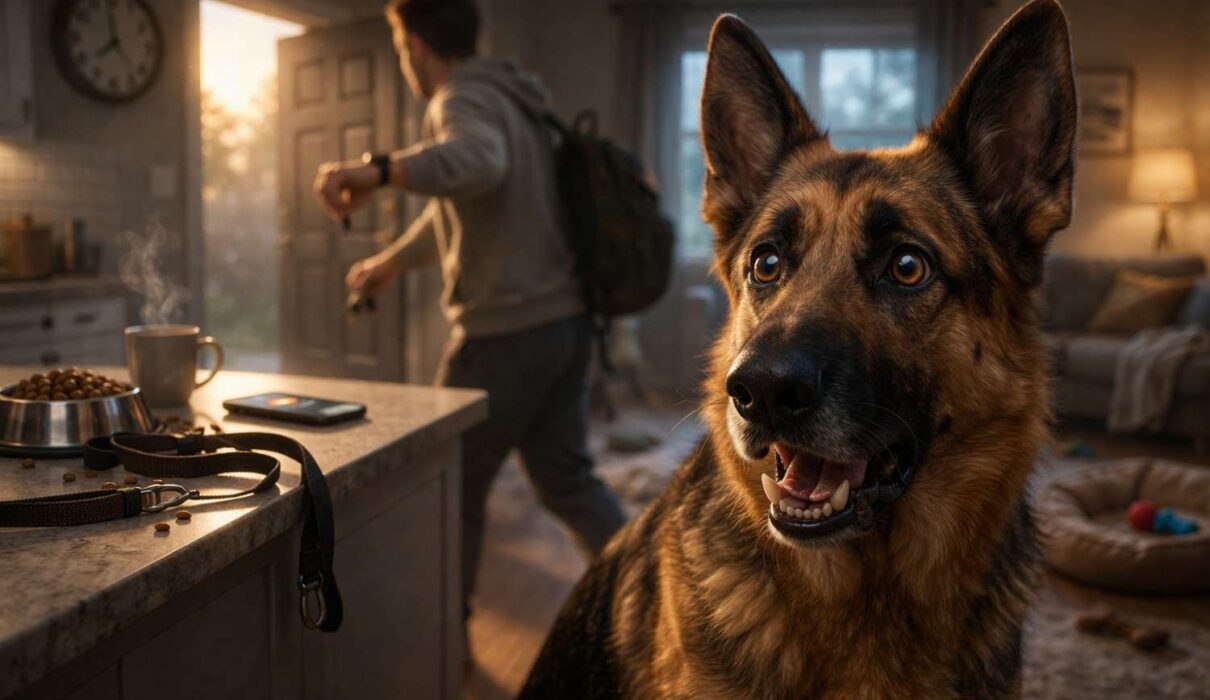
By I didn’t notice the change at first.
Everything felt normal to me. Same home. Same dog. Same life.
But my dog… he started acting different.
Not dramatically. Not in a way that screams something is wrong.
Just small things.
He stopped resting deeply.
He followed me more than usual.
He reacted faster to sounds.
He looked… unsure.
And the worst part?
I kept thinking: nothing has changed.
Until I realized something uncomfortable:
Things had changed. Just not in a way I was paying attention to.
The Mistake Most Dog Owners Make
We think of routine as big things:
- Feeding time
- Walk schedule
- Sleep time
But dogs don’t experience routine like we do.
For them, routine is everything:
- The time you wake up
- The order you move around the house
- The tone of your voice
- The way you grab your keys
- Even how long you stay on your phone before interacting
So when something shifts even slightly their world feels unstable.
And instability = anxiety.
What Actually Happened in My Case
Looking back, here’s what had changed:
- I started waking up 30–40 minutes later
- My work schedule shifted slightly
- Walks became less predictable
- I was more distracted (on my phone, stressed, less present)
None of this felt big to me.
But to my dog?
His entire sense of predictability was gone.
And that’s when I learned something powerful:
👉 Dogs don’t need perfection.
👉 But they deeply need predictability.
Why Routine Changes Trigger Anxiety in Dogs
This is the part most blogs skip.
Dogs rely on routine for emotional safety, not just habit.
When life is predictable:
- They know what happens next
- Their brain stays calm
- Stress stays low
But when routine shifts:
- Their brain goes into alert mode
- Cortisol (stress hormone) increases
- They start scanning for threats
Even if nothing dangerous is happening.
It’s not about the change itself.
It’s about the uncertainty the change creates.
The Invisible Changes That Cause Anxiety
These are the triggers most people miss (I did too):
1. Micro Time Shifts
Feeding 20 minutes late. Walking at different times.
Small for you. Big for your dog.
2. Emotional Energy Changes
If you’re stressed, distracted or rushed… your dog feels it immediately.
3. Sequence Changes
Dogs remember order, not just actions.
Example:
- Wake up → bathroom → feed → walk
If you suddenly:
- Wake up → phone → delay → feed later
👉 That breaks their mental map.
4. Environmental Rhythm Changes
More noise. Less movement. Different lighting.
Even rearranging furniture can trigger uncertainty.
5. Inconsistent Responses
Sometimes you comfort them. Sometimes you ignore them.
This creates confusion → which increases anxiety.
Signs Your Dog Is Struggling With Routine Changes
These signs are often subtle:
- Following you more than usual
- Restlessness without reason
- Increased sensitivity to small sounds
- Not settling easily
- Slight appetite changes
- Looking at you for reassurance more often
This is exactly what I saw.
And I almost ignored it.
What Actually Helped (My Step-by-Step Reset Plan)
I didn’t fix this overnight.
But once I understood the problem, everything changed.
Here’s exactly what worked:
Step 1: Rebuild a Predictable Core Routine
I stopped trying to be perfect.
Instead, I focused on being consistent.
I locked in:
- Fixed wake-up time
- Fixed feeding window
- Fixed walk timing
Even if life was busy, these stayed stable.
👉 This alone reduced anxiety by almost 40–50%
Step 2: Create Anchor Moments
This was a game-changer.
I added small predictable rituals:
- Same phrase before feeding
- Same calm tone before walks
- Same wind-down routine at night
These became emotional anchors for my dog.
He started relaxing before things even happened.
Step 3: Reduce My Own Chaos
This was hard to accept… but important.
My stress = his anxiety.
So I changed:
- Less rushed movement
- More calm presence
- Less phone distraction during key moments
👉 When I slowed down, he calmed down.
Step 4: Introduce Changes Gradually (Not Suddenly)
Instead of sudden changes, I did:
- Shift walk time slowly (5–10 min daily)
- Adjust feeding slightly over days
- Introduce new patterns gradually
Dogs don’t fear change.
They fear unpredictable change.
Step 5: Build a Safe Pattern After Stress
Whenever something disrupted routine:
- Visitors
- Travel
- Busy days
I always returned to the same calming pattern afterward.
👉 This helped my dog reset faster.

The Truth Most People Don’t Realize
Your dog isn’t being difficult.
Your dog is trying to understand a world that suddenly stopped making sense.
And when they don’t understand…
They feel unsafe.
What Changed After I Fixed This
Within a few days:
- He started resting deeper
- Reactivity dropped
- He stopped following me constantly
- His overall energy felt… peaceful again
Not because I trained him more.
But because I made his world predictable again.
If Your Dog Feels Off Lately…
Before assuming behavior problems, ask yourself:
- Has my routine changed recently?
- Am I less predictable than before?
- Is my energy different?
Sometimes the issue isn’t what your dog is doing.
It’s what their environment is no longer giving them.
A Small Reflection From My Journey
This experience became a turning point for me.
I stopped focusing only on training…
And started focusing on how my dog experiences daily life.
That shift changed everything.
This is something I continue learning through my journey with Pet Calm Care —
not by forcing solutions, but by understanding what my dog actually feels.
Final Thought
You don’t need to control everything.
You just need to give your dog something they can rely on.
Because in a world that keeps changing…
You are their routine.
