

 By
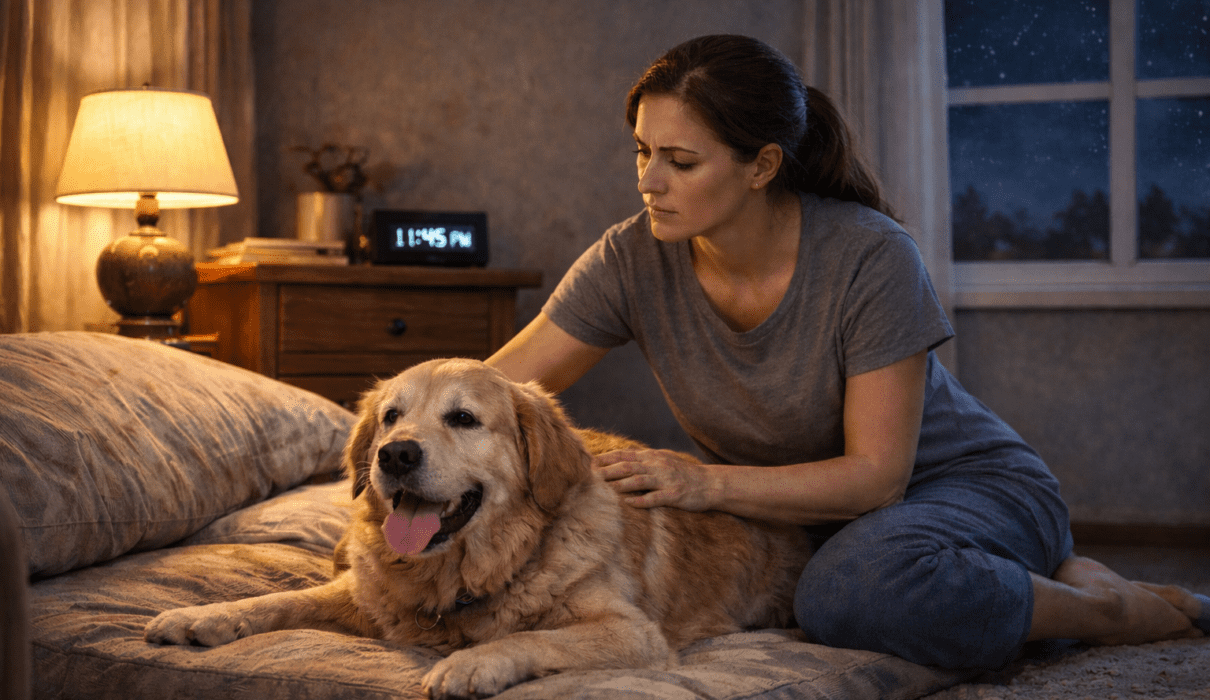
By The first time it happened, I froze.
It was past midnight.
The room wasn’t warm.
The fan was on.
But my dog was panting.
Not playful panting.
Not tired-from-a-walk panting.
It was slow. Heavy. Constant.
And my first thought was:
Is something wrong?
When a dog pants at night and it’s not hot, your brain immediately jumps to worst-case scenarios. Mine did too.
But over time, I realized something important.
Night panting isn’t always about temperature.
Sometimes it’s the body talking.
First: What Normal Panting Looks Like
Dogs pant to cool down.
They pant after exercise.
They pant when excited.
That kind of panting:
- Happens after activity
- Slows down quickly
- Looks relaxed
- Doesn’t come with tension
Night panting is different.
It often comes with:
- Restlessness
- Pacing
- Shifting positions
- Wide or alert eyes
- Getting up and lying down repeatedly
That’s when I knew this wasn’t about heat.
The Night Factor Most People Miss
Night changes everything.
During the day, there’s movement, sound, distraction.
At night, the world gets quiet.
And when the world gets quiet, anxiety gets louder.
I started noticing a pattern:
My dog’s panting didn’t start randomly.
It started:
- After stressful days
- During seasonal changes
- On nights after loud noises
- When routine shifted slightly
The body was releasing what the day had stored.
Panting was the pressure valve.
Anxiety Panting Feels Different
When panting is anxiety-based, it usually comes with tension.
The body looks tight.
The breathing is fast but not playful.
Sometimes the dog won’t fully settle.
You might notice:
- Ears slightly back
- Body stiff
- Small sounds outside triggering alertness
- Clinginess or sudden distancing
It’s not overheating.
It’s the nervous system staying on.
Why It Happens More at Night
Here’s what I learned the hard way.
During the day, stress gets masked.
At night:
- There are fewer distractions
- Sounds feel sharper
- Shadows move differently
- The house settles and creaks
- External noises stand out
For a sensitive dog, night can feel unpredictable.
And unpredictability fuels anxiety.
Even subtle separation stress can show up at night.
If your dog feels unsure about security, that uncertainty often surfaces when the lights go off.
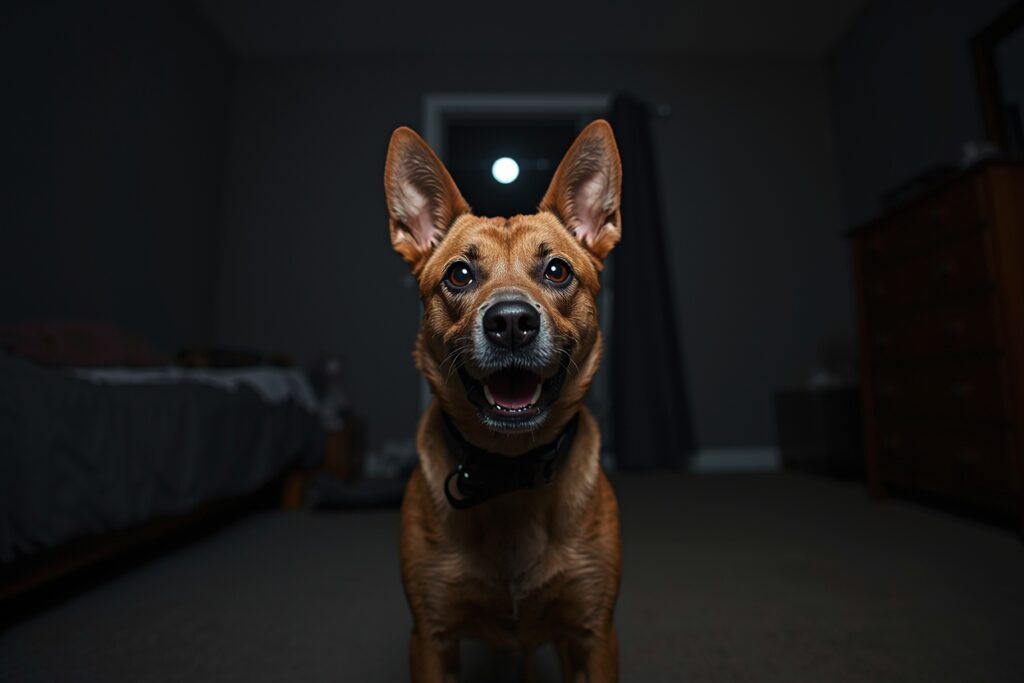
But Here’s the Important Part: It’s Not Always Anxiety
This is where many people panic and sometimes for good reason.
Panting at night can also signal:
- Pain or discomfort
- Digestive upset
- Arthritis in senior dogs
- Heart or respiratory issues
- Cognitive changes in older dogs
So context matters.
Ask yourself:
- Is the panting new and sudden?
- Is it intense and nonstop?
- Is your dog avoiding lying down?
- Is there whining, trembling or signs of pain?
- Is this happening every single night?
If something feels physically off, trust that instinct and consult a vet.
Peace of mind is worth it.
The Pattern That Helped Me Understand My Dog
I stopped reacting immediately.
Instead, I started observing.
I tracked:
- What happened earlier that day
- Whether there were loud noises
- Changes in schedule
- Visitors
- Longer absences
- Weather shifts
Patterns emerged.
On calm days, nights were calm.
On overstimulating days, nights were restless.
Panting was rarely random.
It was delayed stress.
What Actually Helped Reduce Night Panting
This wasn’t solved overnight.
But small changes made a noticeable difference.
1. A Predictable Evening Wind-Down
Instead of going from full activity to sudden silence, I created a transition.
Lights dimmed gradually.
Voices softened.
Movement slowed.
A calm dog doesn’t come from exhaustion.
It comes from decompression.
2. A Stable Sleep Environment
I removed small triggers:
- Closed windows to reduce outside noise
- Used steady background sound (fan or low TV)
- Kept lighting consistent
- Avoided sudden midnight movements
Consistency lowered alertness.
3. I Stopped Overreacting
The first few nights, I panicked internally.
Dogs feel that.
When I shifted to neutral calm – not ignoring, not dramatizing – panting shortened.
Sometimes the biggest change is our energy.
4. Letting My Dog Choose
Some nights he wanted space.
Other nights he came closer.
I stopped deciding for him.
Choice reduces anxiety.
Control brings safety.
Senior Dogs and Night Panting
If your dog is older, night panting deserves extra attention.
Senior dogs can develope:
- Joint pain that worsens at night
- Canine cognitive dysfunction
- Increased sensitivity to sound
- Disrupted sleep cycles
If panting is paired with confusion, pacing or staring into space, get medical guidance.
Age changes the equation.
When Night Panting Is an Emergency
Seek help immediately if panting is accompanied by:
- Pale gums
- Collapse
- Severe lethargy
- Persistent vomiting
- Signs of severe pain
- Blue or gray tongue
Those are not anxiety signs.
Those are urgent.
What I Learned About Night Anxiety
The biggest realization?
Panting isn’t misbehavior.
It’s communication.
It’s the body saying:
“I’m not fully settled.”
Once I stopped trying to silence the symptom
and started building safety before bedtime,
nights became easier.
Not perfect.
But easier.
Reader Questions
1. Why is my dog panting at night but not during the day?
When a dog pants only at night, the cause is often linked to what changes after dark. The house becomes quiet. Small sounds feel louder. Shadows shift. Routine slows down.
Some dogs release stored stress once stimulation drops. Others become more alert in silence.
If your dog is calm and normal all day but restless at night, mild anxiety or discomfort is usually involved. However, if the pattern is sudden or getting worse, medical causes should be ruled out.
2. How can I tell if panting is from pain or anxiety?
Pain-related panting often includes physical signs:
- Difficulty lying down
- Trembling
- Refusing food
- Guarding a body part
- Unusual posture
Anxiety panting usually comes with behavioral tension:
- Pacing
- Hyper-alertness
- Clinginess
- Reacting to small noises
- Settling briefly, then getting up again
If the body looks physically uncomfortable, think pain first. If the body looks tense but functional, anxiety is more likely. When unsure, a vet visit provides clarity.
3. Is senior dog panting at night normal?
Older dogs commonly experience increased night restlessness. Causes may include:
- Arthritis discomfort
- Cognitive changes (canine dementia)
- Hormonal conditions
- Increased sensitivity to sound
Occasional mild panting can happen with age.
But new, persistent or intense night panting in senior dogs always deserves a checkup. Age changes the equation.
4. When is night panting an emergency?
Seek immediate care if panting is paired with:
- Pale, blue or gray gums
- Collapse or extreme weakness
- Repeated vomiting
- Swollen abdomen
- Refusal to eat combined with pacing
- Signs of severe pain
Those signs are not typical anxiety. They require urgent evaluation.
5. How can I calm night anxiety panting?
Start with environment control:
- Create a predictable wind-down routine
- Reduce sudden noise
- Use steady background sound
- Keep lighting soft and consistent
- Stay emotionally neutral and steady
Let your dog choose closeness or space.
If calming adjustments don’t reduce the pattern over time, deeper anxiety or medical factors may be involved.
Final Thoughts
If your dog is panting at night but not hot, don’t jump to fear but don’t ignore it either.
Look at the whole picture.
Observe patterns.
Rule out physical causes when needed.
Most of all, remember this:
Dogs don’t randomly panic.
There’s usually a reason.
And when you find the reason,
the panting starts to fade.
Slowly. Quietly. Naturally.
