

 By
By My dog was scared of baths and at times it felt like full-blown panic the moment water was involved.
He would resist, try to escape and stay tense the entire time, which made me realize this wasn’t just dislike it was real bath anxiety in dogs.
Over time, I understood that when a dog panics during bath time, it’s often because the experience feels overwhelming, unfamiliar and out of their control.
Why Bath Time Triggers Anxiety in Dogs
At first, I thought it was just dislike.
But it turned out to be much deeper than that.
1. Slippery Surfaces Feel Unsafe
One of the biggest triggers was something I completely overlooked.
The tub or bathroom floor felt unstable to him.
That lack of grip made him feel like he couldn’t balance properly,
which instantly raised his stress.
2. Water Feels Unpredictable
Water coming from above, splashing or changing temperature
can feel overwhelming.
Dogs don’t always understand what’s happening, especially
when water hits sensitive areas like the face or ears.
3. Lack of Control
Bath time often means being held in one place.
For a dog, that loss of control can create anxiety before the bath even starts.
4. Negative Associations Build Quickly
Even a few stressful bath experiences can create a pattern.
After that, the anxiety starts before you even turn on the water.
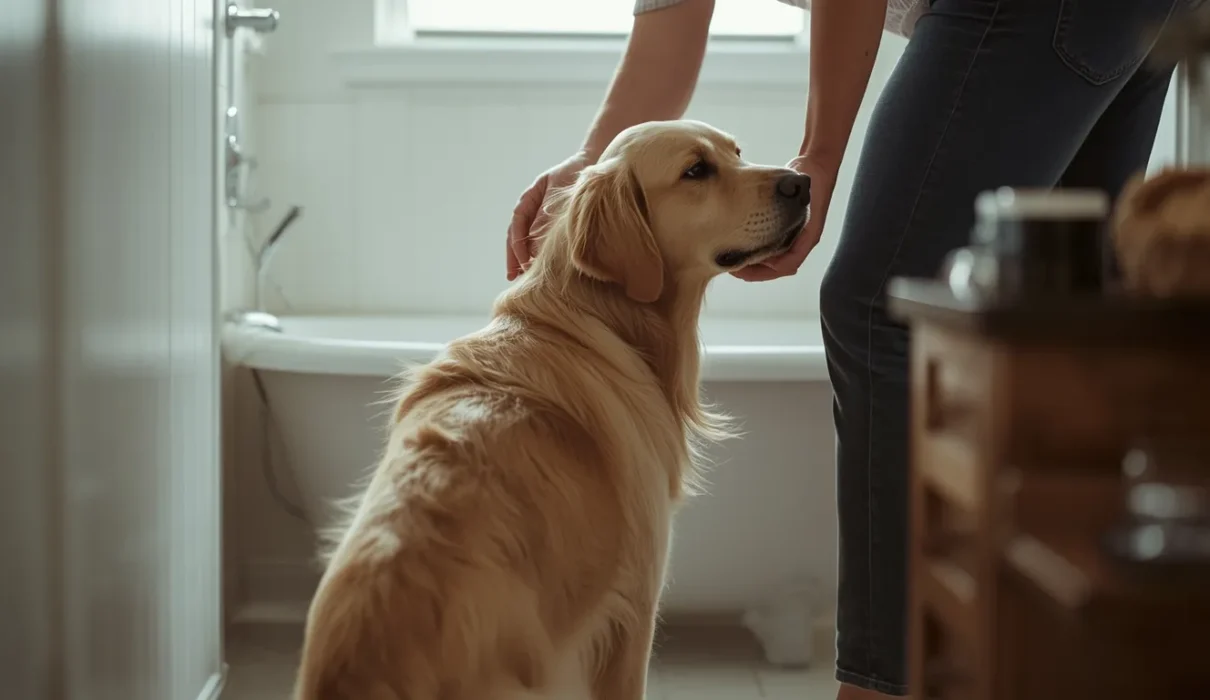
I noticed this when my dog reacted the moment we walked toward the bathroom.
What I Stopped Doing First
Before things improved, I had to change my own approach.
I stopped:
- rushing through the bath
- turning water on suddenly
- holding him too tightly
- trying to get it done quickly
Every time I rushed, his anxiety got worse.
What Finally Helped My Dog Stay Calm During Bath Time
This is where everything started to shift.
Instead of focusing on cleaning, I focused on how he experienced the moment.
1. I changed how I approached the bathroom itself
I noticed his anxiety started before the bath even began.
So instead of taking him straight inside, I made the bathroom a neutral space first.
- short visits without bathing
- calm presence without pressure
This reduced the trigger location effect.
2. I fixed the surface first
This made an immediate difference.
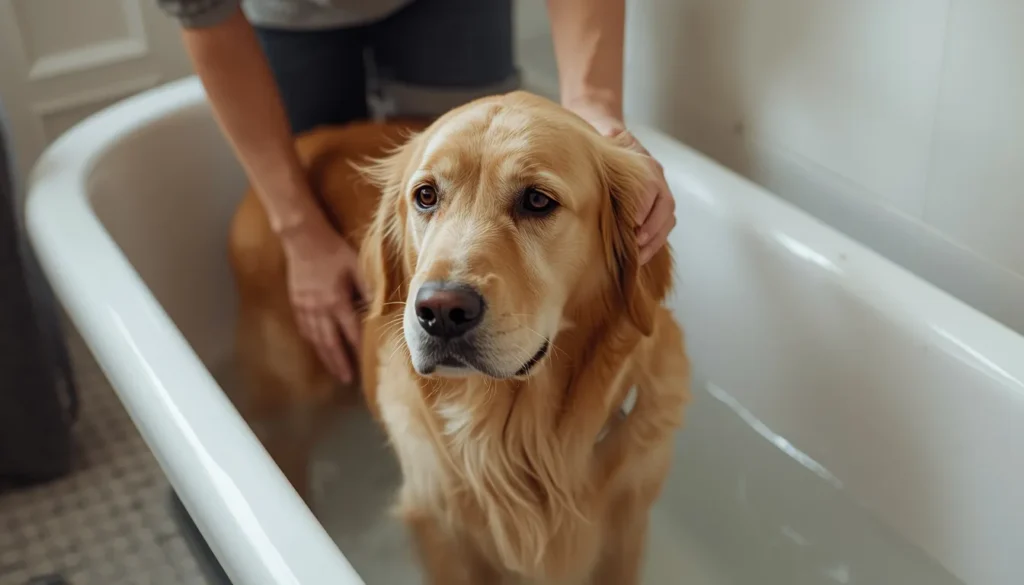
I added a non-slip surface so he could stand comfortably.
Once he felt stable, his body tension reduced noticeably.
3. I introduced water slowly
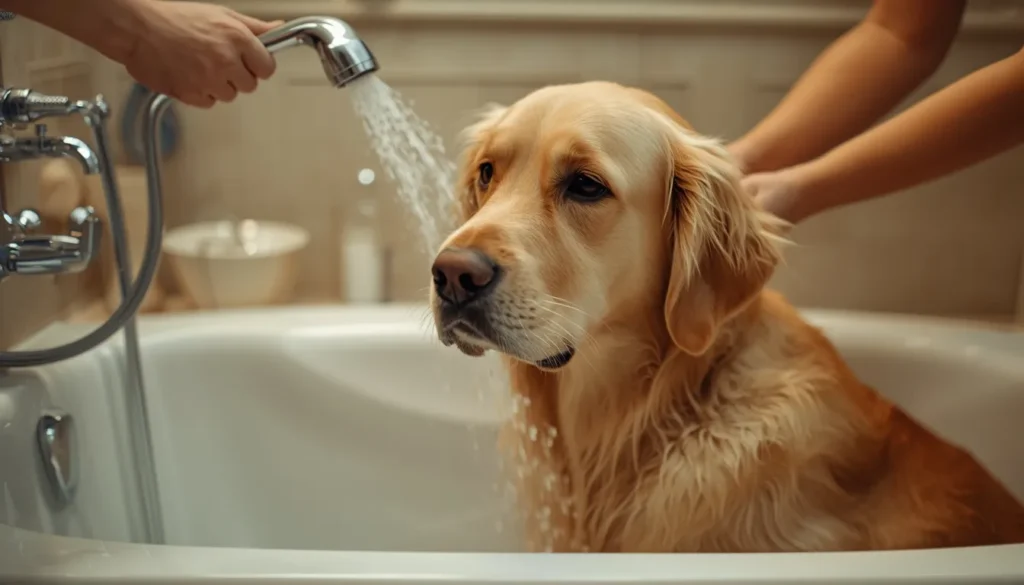
Instead of turning on the water suddenly, I eased into it.
- started with low pressure
- avoided the face early on
- let him feel small amounts first
This reduced the shock factor.
4. I changed the order of the bath
I used to go straight into full washing.
Instead, I slowed everything down:
- gentle contact first
- short pauses
- gradual progression
This helped him stay regulated.
5. I paid attention to water temperature
Even slightly uncomfortable temperature made him tense.
I made sure it was:
- consistently lukewarm
- not changing mid-bath
That consistency mattered more than I expected.
6. I kept my movements predictable
Sudden movements made him more alert.
So I stayed:
- slow
- steady
- intentional
He began to anticipate instead of react.
7. I avoided eye contact during stressful moments
This sounds small, but it made a difference.
Direct eye contact can increase pressure for some dogs during stressful situations.
So I stayed more neutral:
- softer focus
- less direct staring
It helped him feel less overwhelmed.
8. I adjusted my position instead of hovering over him
Standing over him made him more tense.
So I changed my body position:
- stayed lower
- worked from the side
This felt less threatening to him.
9. I didn’t try to correct or train during the bath
Earlier, I would try to teach calm behavior during bath time.
That didn’t work.
Bath time is not the moment for training – it’s the moment for support.
Once I removed that pressure, things improved.
10. I reduced sensory overload
Bath time can be a lot at once.
So I simplified the environment:
- no loud sounds
- no distractions
- minimal splashing
This helped him stay calmer.
11. I allowed small breaks
Instead of forcing him to stay still the entire time, I allowed brief pauses.
That small sense of control reduced resistance.
I used to try finishing everything in one go.
Now I focused on:
- shorter sessions
- stopping before stress builds
This helped him trust the process more.
12. I focused on ending the experience calmly
The end matters more than most people think.
I avoided rushing the finish.
- gentle drying
- calm tone
- no sudden release
This helped improve how he felt about the next bath.
What Made the Biggest Difference
The biggest change came when I stopped treating bath time as a task.
It became a controlled, predictable experience.
Once my dog understood that nothing sudden or uncomfortable would happen, his reaction slowly changed.
Not overnight.
But consistently.
Reader Questions
Why does my dog start acting anxious before bath time even begins?
Some dogs associate the bathroom, running water or even certain words with past stress, which can trigger anxiety before the bath actually starts.
Can using treats during bath time make my dog dependent on rewards?
Using high-value treats can help build positive associations, but over time, the goal is to reduce reliance as your dog becomes more comfortable.
Is it better to use a bathtub, shower or outdoor space for a dog scared of baths?
Some dogs feel less stressed in open or familiar environments, so choosing the right location can significantly impact their comfort level.
Why does my dog shake or act weird after a bath is over?
Post-bath behavior like shaking or zooming can be a release of built-up stress or an attempt to return to their normal scent and state.
Can bath anxiety be connected to other fears like grooming or vet visits?
Yes, dogs that experience stress during baths may also show similar reactions in other handling situations like grooming or vet visits.
Should I talk to my dog during bath time or stay quiet?
Some dogs feel calmer with a soft, reassuring tone, while others relax more in a quiet, low-stimulation environment.
Does the frequency of baths affect my dog’s anxiety levels?
Bathing too often or too infrequently can both impact anxiety. Finding a balanced routine helps prevent buildup of negative anticipation.
What This Experience Taught Me
Bath anxiety wasn’t really about water.
It was about safety, predictability and control.
When I focused on those, everything became easier for both of us.
This has been a big part of my journey with PetCalmCare.
If your dog gets anxious during grooming routines like nail trimming, this step-by-step experience might help.
