

 By
By (What I misunderstood about relief and reunion)
When I first noticed it,
it confused me more than the anxiety itself.
I had come back home.
The door was open.
My dog could see me.
So why wasn’t he okay?
I expected relief
What I saw was tension
In my mind, it was simple.
I leave → my dog gets anxious
I return → anxiety should stop
That didn’t happen.
Instead, I noticed:
• Restlessness
• Pacing
• Difficulty settling
• Constant checking
• A body that stayed “on”
Even though I was right there.
He wasn’t happy I was back
He was unsure I would stay
This realization took time.
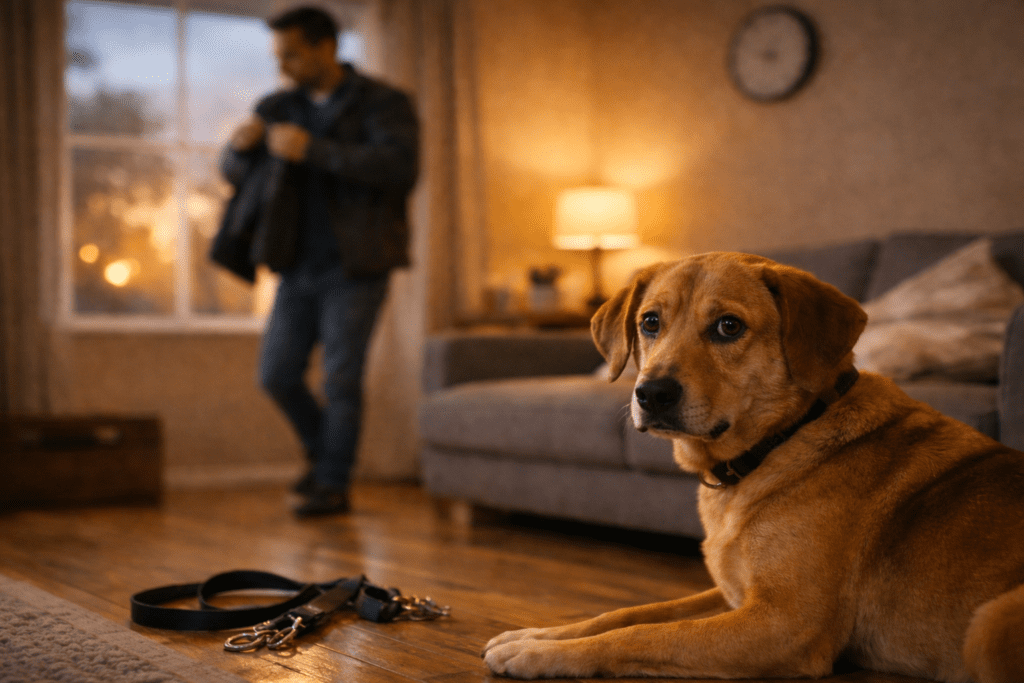
My dog didn’t greet me with relief.
He greeted me with alertness.
Watching.
Tracking my movement.
Staying close, but not resting.
It felt less like reunion
and more like monitoring.
I misunderstood what “coming back” meant to him
To me, my return meant safety.
To my dog, it meant uncertainty.
He had already experienced:
• Separation (“Crying During Departures”)
• Loss of control
• Emotional overload
So when I came back,
his nervous system didn’t reset.
It stayed guarded.
Anxiety doesn’t switch off instantly
This was one of the hardest lessons.
An anxious nervous system
doesn’t calm down just because the trigger disappears.
It needs time.
It needs consistency.
And most importantly,
it needs proof that the danger is actually over.
I noticed the longer I was away, the harder this became
Another pattern became clear.
Short absences → faster recovery
Longer absences → slower settling
Sometimes:
• He couldn’t lie down
• He followed me constantly
• He stayed tense for hours
My return didn’t erase the stress.
It only stopped it from increasing.
I accidentally made reunions more intense
I didn’t realize this at first.
When I came home, I:
• Spoke excitedly
• Touched him immediately
• Checked on him repeatedly
I thought I was comforting him.
What I was actually doing
was adding stimulation to an already overloaded system.
Relief feels different from reassurance
This was an important distinction.
Relief is emotional release.
Reassurance is emotional safety.
My dog didn’t need excitement.
He needed calm proof.
Proof that:
• I wasn’t leaving again immediately
• The environment was stable
• Nothing else was about to change
The body calms before the mind
Another thing I misunderstood.
I expected emotional calm first.
What actually happened was:
• Breathing slowed first
• Muscles relaxed later
• Mind settled last
If I rushed this process,
everything stayed stuck.
This is why anxiety spills into the evening and night
Once I understood this,
a lot made sense.
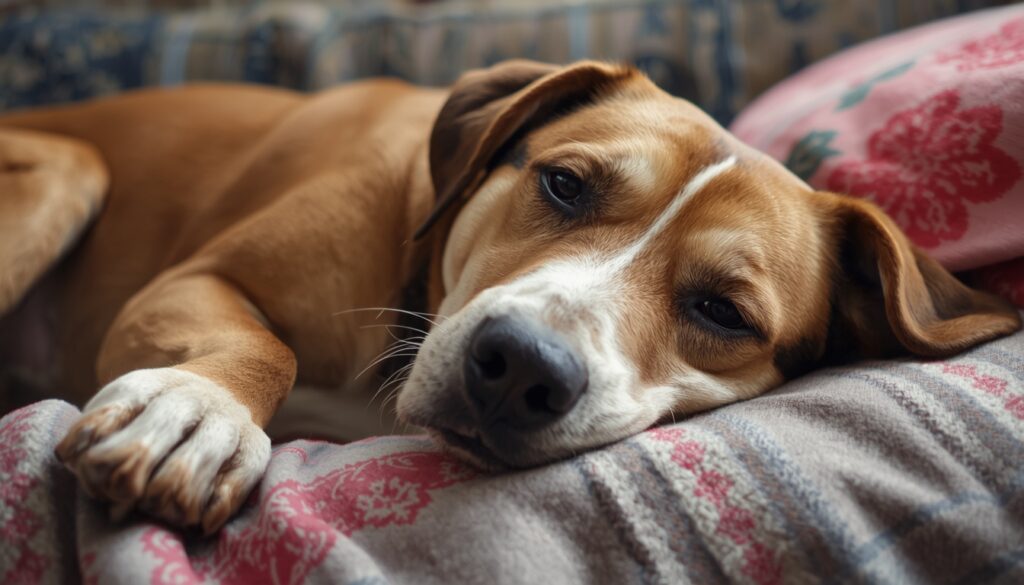
Dogs who can’t relax after reunion
often struggle later with:
• Evening restlessness
• Night pacing
• Difficulty sleeping
Because the nervous system
never fully powered down.
Day stress carried into night.
I stopped trying to “fix” reunions
This was a turning point.
I stopped:
• Over-greeting
• Over-checking
• Over-managing
Instead, I focused on:
• Calm presence
• Predictable behavior
• Normal pacing
No drama.
No urgency.
Just steadiness.
What improvement actually looked like
Not instantly.
But slowly, I noticed:
• Shorter recovery time
• Less shadowing
• More natural settling
• A softer body posture
The change wasn’t loud.
It was quiet.
And that made it easy to miss
if I wasn’t paying attention.
When this phase is often misunderstood
Many people think:
“If my dog is still anxious after I return,
something else must be wrong.”
Sometimes, yes.
But often,
it’s simply that the nervous system
hasn’t learned how to come down yet.
That doesn’t mean failure.
It means the process isn’t complete.
Looking back
My return didn’t end the anxiety.
It revealed it.
Because separation anxiety
isn’t just about being alone.
It’s about what happens
before, during and after separation.
And once I understood that,
I stopped rushing relief
and started allowing recovery.
That changed everything.
Not overnight.
Not perfectly.
But enough to matter.
