

 By
By (Why it didn’t feel serious at first)
When I look back now,
the hardest part wasn’t dealing with separation anxiety.
The hardest part was realizing
that it had been building for a long time
without me noticing.
Nothing happened suddenly.
There was no single bad day.
No clear starting point.
Just small changes
that felt easy to ignore.
It didn’t start with panic
This is where most people get it wrong.
I thought separation anxiety would begin
with something obvious.
Crying.
Destruction.
Full panic.
But that’s not how it started for my dog.
It started quietly. (“Subtle Signals I Missed”)
At first, it looked like closeness
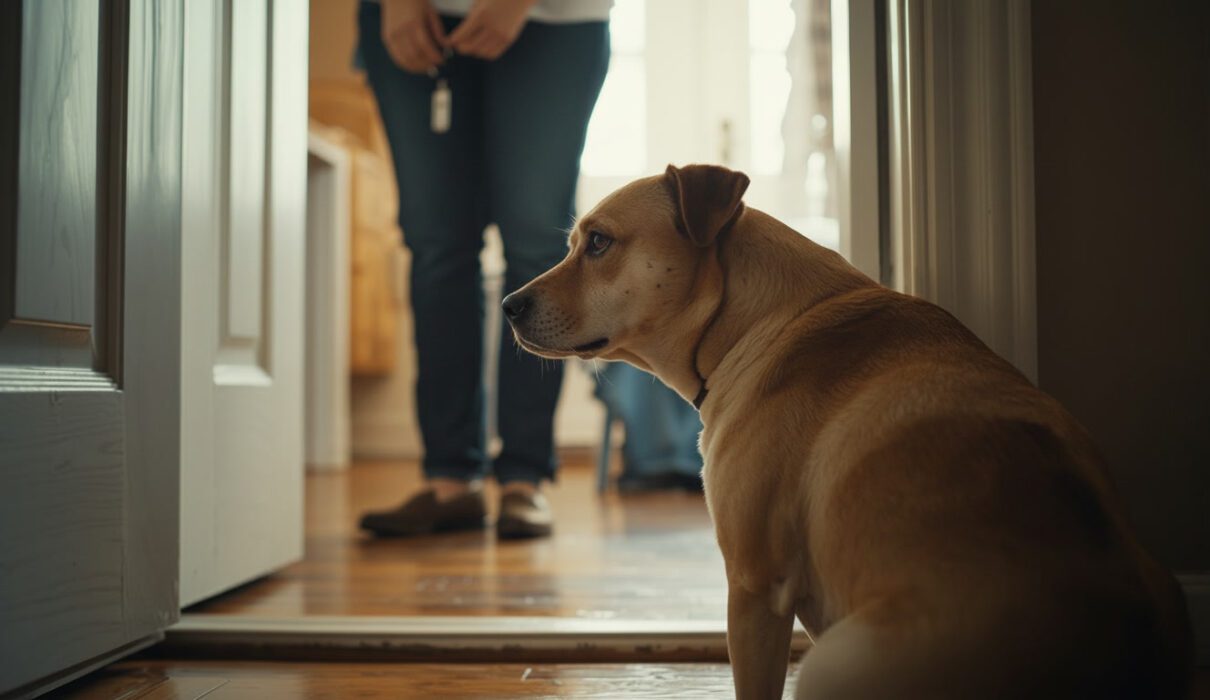
My dog wanted to be near me more often.
He followed me from room to room.
He waited outside doors.
He watched me closely.
At the time,
it felt like bonding.
I told myself:
“He’s just attached.” (“Confusing Attachment With Anxiety”)
Nothing about it felt urgent.
Then the closeness changed its tone
This is the part I missed.
The closeness stopped feeling relaxed.
He wasn’t resting near me.
He was monitoring me.
If I stood up, he stood up.
If I moved, he moved.
Even when he was tired,
his body stayed alert.
That wasn’t affection.
That was tension.
Anxiety grows through repetition, not events
There was no big trigger.
What changed things was repetition.
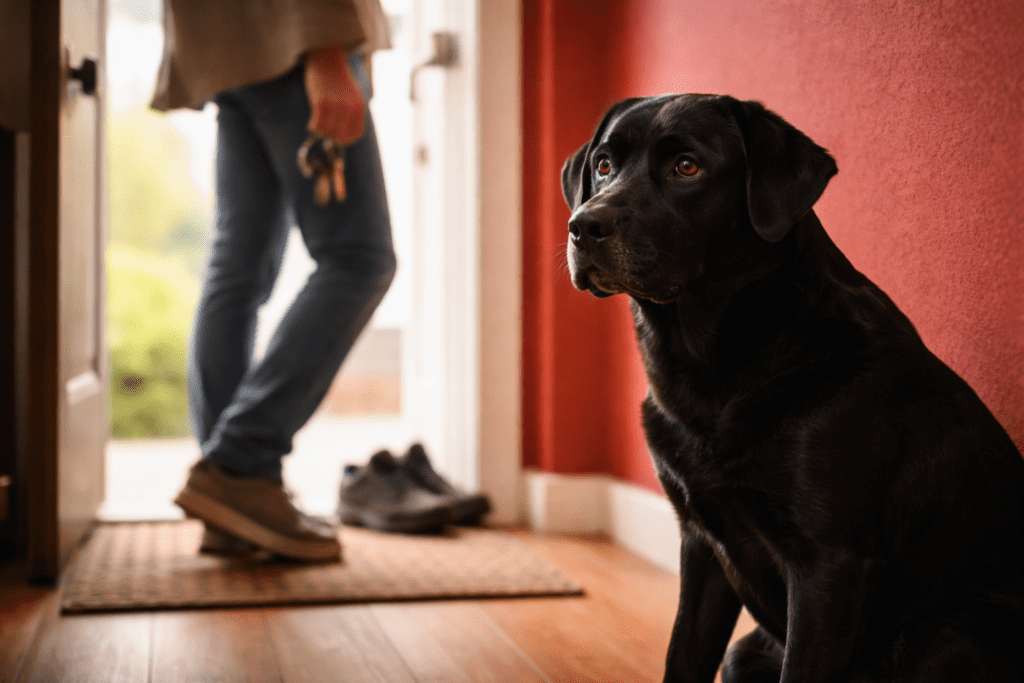
Leaving the room.
Picking up keys.
Putting on shoes.
Each time,
his nervous system practiced reacting.
And the body remembers what it practices.
The reactions started earlier each time
At first, anxiety showed up
after I left.
Later, it showed up
before I left.
Eventually,
it showed up the moment routines shifted.
He wasn’t reacting to separation anymore.
He was reacting to the possibility of separation.
I didn’t realize anxiety could live in anticipation
This changed how I understood everything.
My dog wasn’t panicking because I was gone.
He was panicking because
something familiar was about to disappear
and he couldn’t stop it.
That waiting period
was where anxiety grew strongest.
Small stress that isn’t released doesn’t disappear
Another thing I misunderstood:
Daytime stress doesn’t reset automatically.
If my dog had:
• A noisy day
• Visitors
• Routine changes
• Too much stimulation
That stress carried forward.
By evening,
his system was already overloaded.
Night just revealed it. (“Nighttime Restlessness”)

This is how anxiety layers itself
Looking back, the pattern was clear:
• First: following everywhere
• Then: stress when I left the room
• Then: tension before departures
• Then: crying when I left home
• Later: trouble settling at night
Each stage built on the one before it.
Nothing was random.
Why it didn’t feel serious at first
Because my dog still functioned.
He ate.
He slept.
He played.
There was no chaos.
Just a constant low-level unease.
And low-level anxiety is easy to normalize.
Separation anxiety isn’t a switch
This is the most important thing I learned.
It’s not:
calm → anxious
It’s:
secure → uncertain → tense → overwhelmed
And each step can look “manageable”
until you see them together.
I didn’t miss the signs because I didn’t care
I missed them because
I didn’t know what progression looked like.
I kept waiting for a problem big enough
to justify concern.
By the time it felt “big,”
it had already been rehearsed many times.
The earlier you notice the build, the more options you have
This matters.
At early stages:
• Dogs are still flexible
• Responses are still soft
• Patterns can still shift
Later, anxiety becomes more rigid.
Not because the dog is stubborn,
but because the nervous system has learned
to stay on guard.
Looking back
Separation anxiety didn’t arrive one day.
It grew quietly,
through moments that felt small
and explanations that felt reasonable.
If I could go back,
I wouldn’t wait for panic.
I’d listen to tension.
Because anxiety doesn’t start by screaming.
It starts by whispering
that something doesn’t feel safe anymore.
And those whispers matter.
