

 By
By (The early sign I ignored for too long)
At first, this didn’t feel like a problem at all.
I would stand up.
Walk to another room.
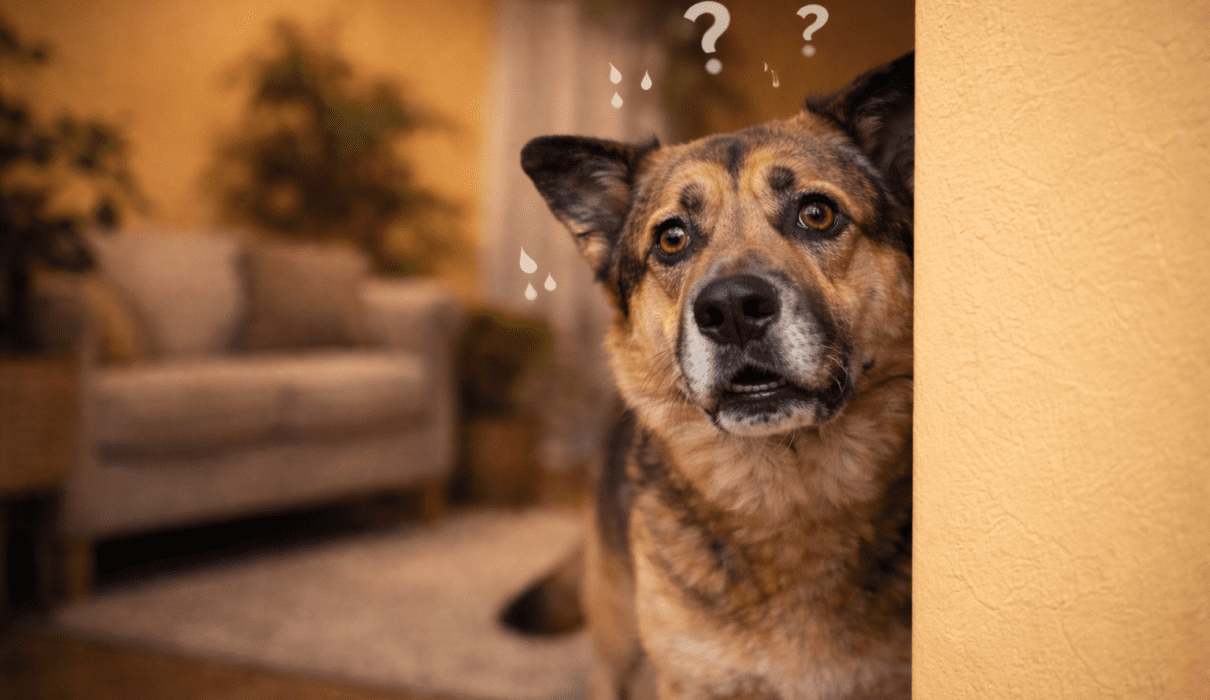
And my dog would follow.
If I closed the door,
he would sit right outside.
Quiet.
Alert.
Waiting.
I told myself,
“He just likes being around me.”
But over time, something felt off.
This wasn’t comfort.
This was unease.
This behavior starts very small
That’s why it’s easy to ignore.
It doesn’t look dramatic.
No crying.
No destruction.
No barking.
Just this:
• Getting up the moment I leave
• Standing near the door
• Watching instead of resting
• Waiting without relaxing
• Following me again when I return
At first glance,
it looks harmless.
But the body language tells a different story.
The moment I realized it wasn’t normal attachment
One day, I tested something.
I left the room
and stayed gone for just a minute.
When I came back,
my dog wasn’t relaxed.
He wasn’t stretching.
He wasn’t calm.
He looked relieved.
That’s when it clicked.
Relief means stress was there.
Why leaving the room feels hard for anxious dogs
For dogs with early separation anxiety,
distance feels unpredictable.
They don’t think:
“You’ll be back.”
They feel:
“Something changed.”
That uncertainty is enough to activate anxiety.
Even short separations matter.
How anxiety- driven following feels different
This helped me separate attachment from anxiety.
Healthy attachment:
• Dog may follow
• But can stop and rest
• Body stays loose
• Breath stays normal
Anxiety-driven behavior:
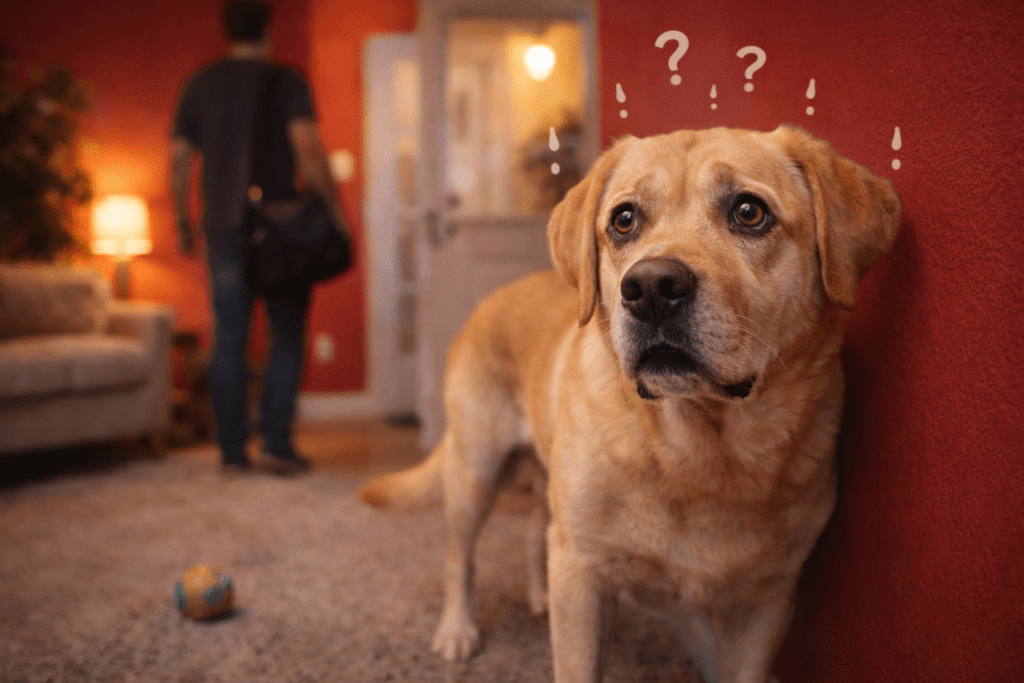
• Immediate reaction when you move
• Tension when you disappear
• Standing or pacing near the door
• Waiting instead of relaxing
• Alert posture even when still
The dog isn’t enjoying closeness.
He’s using proximity to regulate fear.
Why this is often the first separation anxiety sign
This behavior usually appears before:
• Crying
• Howling
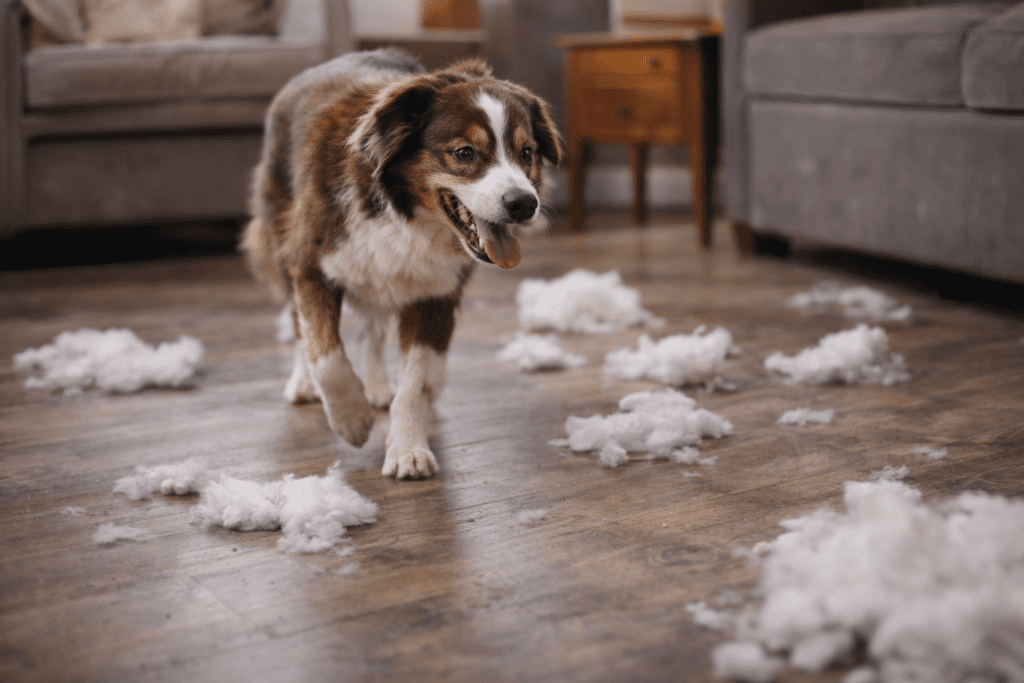
• Destruction
• Panic
It’s the earliest warning stage.
Most people miss it
because it looks “cute”.
I missed it too.
How this behavior slowly escalates
This doesn’t jump stages.
It grows quietly.
First:
• Following room to room
Then:
• Getting uneasy when doors close
Then:
• Stress when you prepare to leave
Then:
• Vocalization or panic
By the time dogs cry or destroy things,
this stage has already existed for months.
Why this also affects nights and routines
This surprised me.
Dogs who struggle when you leave the room often:
• Have trouble settling at night
• Become restless during transitions
• React strongly to routine changes
Because their nervous system never fully relaxes.
They are always monitoring.
What I did at this stage (without trying to “fix” anything)
This is important.
At this point, I didn’t try training.
I didn’t force independence.
I focused on reducing pressure.
Here’s what helped:
• I avoided sudden disappearances
• I kept movements predictable
• I stayed emotionally neutral
• I didn’t encourage constant following
• I didn’t punish it either
Support comes before solutions.
What NOT to do at this stage
These things made anxiety worse when I tried them:
• Scolding for following
• Locking the dog out suddenly
• Making exits dramatic
• Over-comforting
Anxious dogs don’t need lessons.
They need safety signals.
When this behavior deserves serious attention
If your dog:
• Cannot relax unless you’re visible
• Becomes tense when you leave the room
• Waits near doors without settling
• Gets worse over time
That’s not just attachment.
That’s an early anxiety signal.
And early signals are powerful –
because they’re still manageable.
Final thoughts
A dog getting anxious when you leave the room
is not being needy.
He’s communicating discomfort with distance.
I wish I had understood that sooner.
Not to panic.
Not to label.
But to respond with awareness.
Because separation anxiety doesn’t start
when you leave the house.
It starts
when your dog can’t relax
even when you’re just one room away.
CHECK HERE: Dog Anxiety During the Day
