

 By
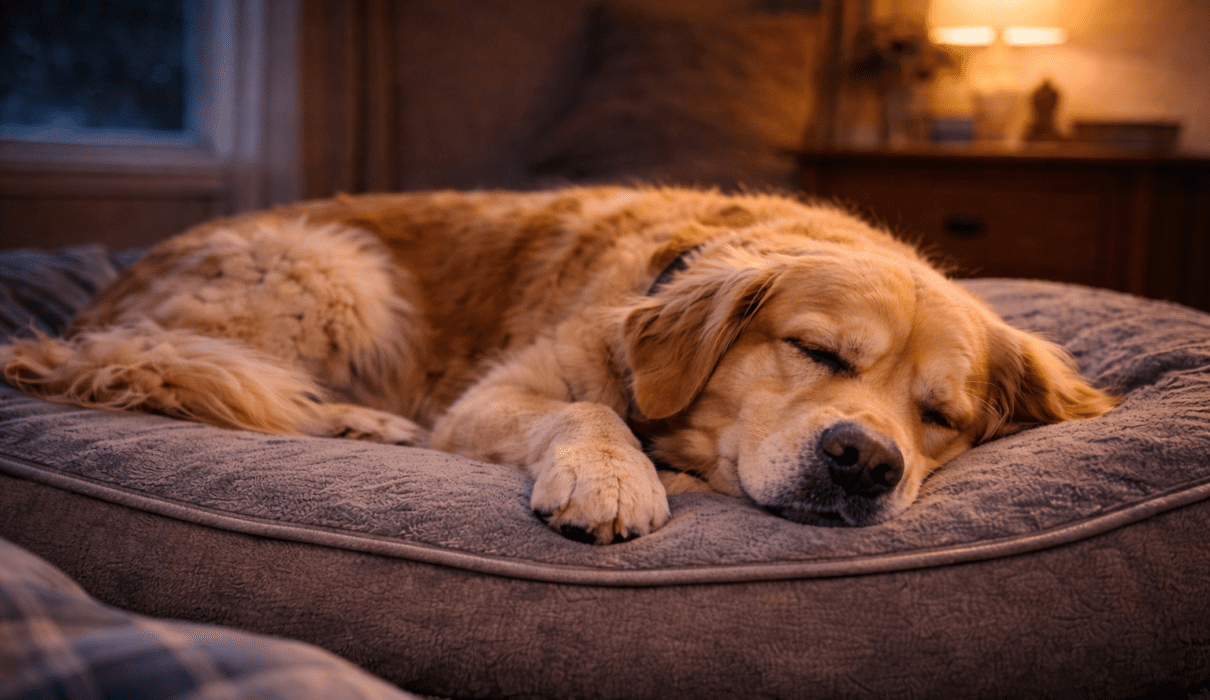
By (What finally helped my dog sleep peacefully)
For a long time, nights were the hardest part of the day for my dog.
The day would go fine.
Evenings felt okay.
But when it was time to sleep,
something changed.
Restlessness.
Pacing.
Sighing.
Getting up again and again.
That’s when I realized something important:
Sleep doesn’t fail at night.
It fails before night begins.
I stopped thinking bedtime and started thinking wind-down time
This one shift changed everything.
Earlier, my focus was:
“Why won’t my dog sleep?”
Now my focus became:
“How can I help my dog slow down before sleep?”
Dogs don’t switch off instantly.
They need help transitioning.
What a calm bedtime routine actually means
A bedtime routine is not one thing.
It’s a sequence of signals that tells your dog:
“Nothing more is expected from you today.
You’re safe. You can rest.”
And those signals need to be consistent.
The bedtime routine that worked for us
(Step-by-step, no rush)
This didn’t happen overnight.
I adjusted slowly.
Here’s the routine that finally worked.

1. I started calming the environment one hour before sleep
This was huge.
Instead of waiting until bedtime,
I made the whole house calmer.
What I changed:
• TV volume lower
• No loud conversations
• No sudden movements
• Lights slightly dimmed
This slow shift helped my dog’s nervous system relax.
2. I added a predictable last activity
Dogs love knowing what comes next.
So every night,
the last activity was the same.
Sometimes it was:
• A slow walk
• Gentle sniffing outside
• Calm chewing time
Nothing exciting.
Nothing energetic.
Just grounding.
3. I avoided play that spikes adrenaline
This was a mistake I made earlier.
Late-night play felt helpful,
but it actually backfired.
So I stopped:
• Rough play
• Fast games
• Anything that made my dog hyper
Tired body ≠ calm mind.
4. I created a sleep cue (this works quietly)
I didn’t use commands.
I used signals.
For example:
• Same light turned off
• Same calm tone
• Same location
Over time, my dog learned:
“These things mean it’s time to rest.”
No force needed.
Always remember: Routine Matters More Than Commands
5. I made the sleeping space feel emotionally safe
Not fancy.
Just familiar.
The sleeping area had:
• Same bedding every night
• Comfortable temperature (WINTER ANXIETY )
• No drafts
• Minimal foot traffic
I stopped changing sleep locations.
Consistency built comfort.
6. I stayed calm when my dog couldn’t settle
This was the hardest part.
Earlier, I reacted to every movement.
Now I did this instead:
• No frustration
• No repeated commands
• No constant checking
I stayed present, but neutral.
Dogs sense pressure instantly.
Calm presence helps more than words.
7. I handled leftover anxiety before sleep
If my dog had a stressful day:
• Loud noise
• Visitors
• Routine change
I didn’t ignore it.
I slowed the evening even more:
• Extra quiet time
• Background sound
• Gentle reassurance
Unreleased anxiety always shows up at night.
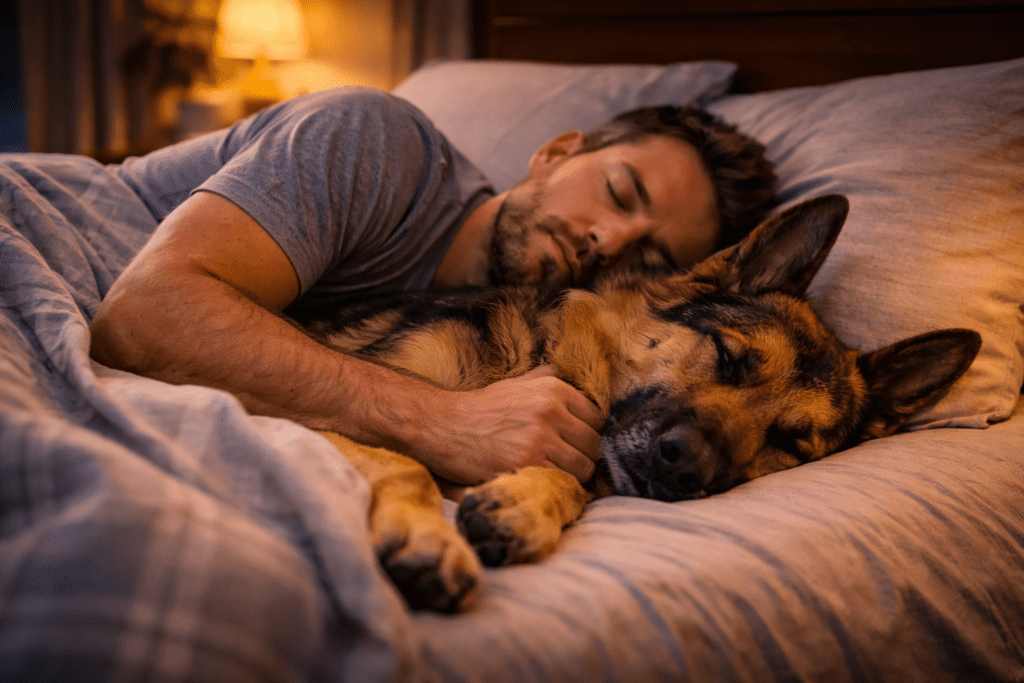
What changed once the routine settled in
Not immediately.
But gradually.
I noticed:
• Less pacing
• Faster settling
• Longer sleep stretches
• Fewer night wake-ups
Most importantly,
my dog stopped looking confused at night.
What this routine is not
Let me be clear.
This routine is not:
❌ A quick fix
❌ A strict schedule
❌ A command-based system
It’s a support system, not control.
When a bedtime routine isn’t enough
If your dog:
• Panics most nights
• Can’t relax at all
• Gets worse over time
That’s a sign anxiety may be deeper.
Professional support can really help here.
There’s no failure in asking for help.
Reader Questions
Why does my dog seem more anxious right before bedtime?
Evening time often brings a drop in activity, which can make leftover stress or sensitivity more noticeable for some dogs.
Can too much rest during the day affect my dog’s sleep at night?
Yes, dogs that don’t get enough mental or physical engagement during the day may struggle to fully settle at night.
Should my dog sleep in complete silence or with background noise?
Some dogs relax better with soft background sound, as it helps mask sudden noises that can trigger alertness.
Is it okay to stay near my dog until they fall asleep?
For some anxious dogs, your calm presence can help them settle, as long as it doesn’t turn into a dependency pattern over time.
How long does it take for a bedtime routine to start working?
Most dogs begin to respond within a few days of consistency, but deeper anxiety may take a few weeks of a steady routine.
What Changed Everything for My Dog
What I realized over time is that calming my dog at night wasn’t about one single trick.
It was about creating a feeling of safety that repeated every evening.
The same small steps.
The same quiet signals.
The same predictable rhythm.
Once my dog started recognizing that pattern, the restlessness slowly began to fade.
Not overnight.
But little by little, night started to feel less uncertain for him.
And that changed everything for both of us.
This continues to shape my journey with Pet Calm Care.
