

 By
By I didn’t understand it at first.
There was no thunder. No fireworks. No loud chaos.
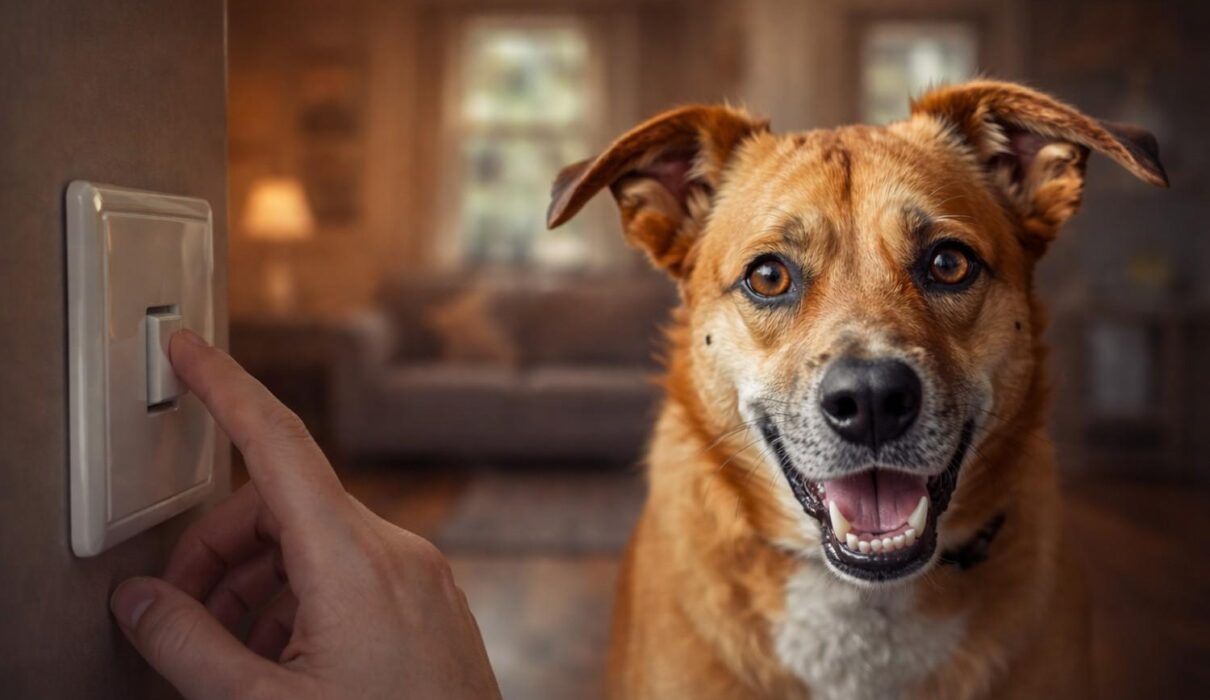
Just a soft click from the kitchen… and suddenly my dog froze.
Ears up. Body stiff. Eyes wide like something was seriously wrong.
At that moment, I remember thinking…
How can such a small sound trigger this much fear?
If you’ve seen something similar, you’re not imagining it.
And more importantly – your dog isn’t overreacting.
The Truth Most People Miss About Small Sounds
What feels small to us… is not small to a dog.
Dogs hear frequencies we can’t even detect.
They pick up vibrations through floors, walls, even air pressure changes.
So when you hear:
- a light switch click
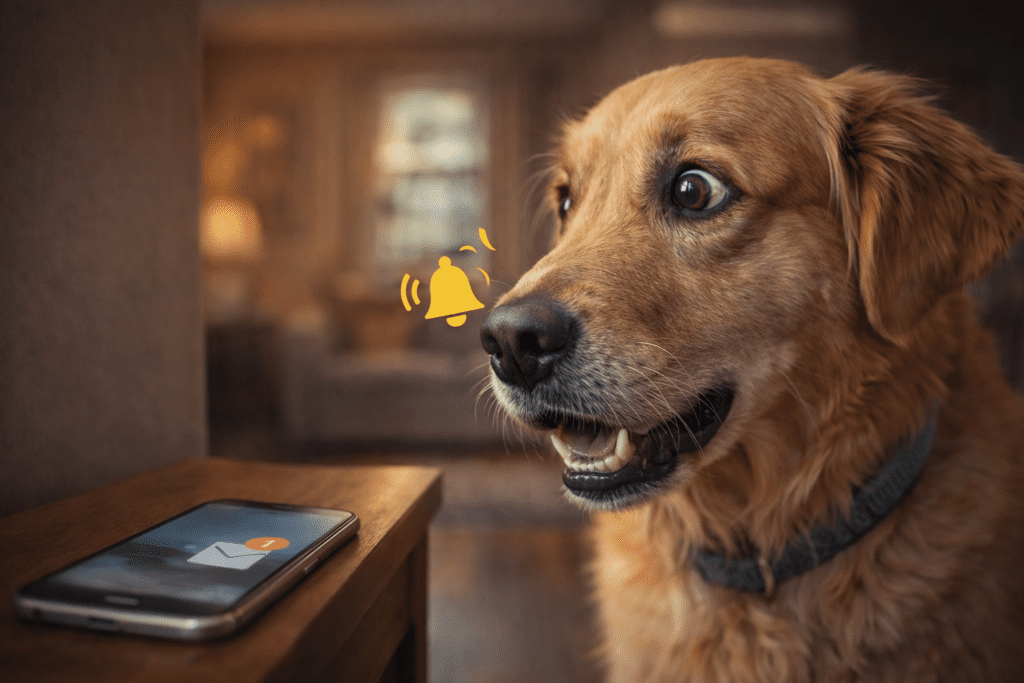
- a phone vibration
- a distant door closing
Your dog might be hearing:
- a sharp, high-frequency spike
- a sudden pressure shift
- or something completely unfamiliar
And unfamiliar = unsafe in a dog’s brain.
What I Realized the Hard Way
At one point, my dog started reacting to things I couldn’t even identify.
He would:
- suddenly leave the room
- refuse to settle
- stare toward random corners
It drove me crazy because I couldn’t find the trigger.
Until I slowed down and started observing instead of reacting.
That’s when I noticed patterns:
- It often happened at night
- It happened more in silence
- It followed tiny, almost invisible sounds
That changed everything.
Why Small Sounds Feel So Big to Your Dog
1. Lack of Context
We know what a fridge click means.
Dogs don’t.
To them, it’s just:
Something happened… I don’t know what… should I be worried?
2. No Visual Confirmation
If they hear something but can’t see the source, anxiety increases.
That uncertainty is what creates fear.
3. Past Associations
Sometimes one bad experience is enough.
A small sound that happened during:
- a stressful event
- a vet visit
- being left alone
…can become a long-term trigger.
4. Built-Up Sensitivity
This is the part most people ignore.
When a dog is already slightly anxious, their tolerance drops.
So even small sounds start feeling overwhelming.
Common Small Sounds That Trigger Anxiety
You might not notice these… but your dog does:
- Phone notifications or vibration
- Switches (lights, fans)
- Distant doors or cupboards
- Appliance clicks (AC, fridge, heater)
- Footsteps in another room
- Keys, metal sounds, subtle clinks
Individually, they’re nothing.
But to a sensitive dog, they add up.
The Mistake I Made (And Most People Do)
I tried to fix the reaction instantly.
Talking too much.
Petting too quickly.
Trying to distract.
It actually made things worse.
Because I was unknowingly confirming:
Yes, something is wrong.
What Actually Started Working
This is where things slowly changed.
Not overnight. But consistently.
Step 1: Lower Your Own Energy
Your dog reads you before anything else.
If you react, they react more.
Instead:
- move slower
- speak softer
- act normal
You become the signal that everything is safe.
Step 2: Don’t Force Comfort
This was hard to accept.
Sometimes your dog doesn’t want touch in that moment.
Give them space… but stay present.
That balance builds trust.
Step 3: Create a Safe Zone
Pick one place where your dog feels secure.
For me, it was:
- a specific bed
- same corner
- low noise area
Then:
- no pressure there
- no sudden interaction
- just calm presence
Over time, that place becomes their reset button.
Step 4: Controlled Exposure (Very Important)
Not flooding. Not avoidance.
Just controlled, gentle exposure.
Example:
- Let them hear small sounds at a distance
- Pair it with calm moments (not excitement)
- Gradually reduce sensitivity
This is slow work. But it works.
Step 5: Reduce Background Stress
Sometimes the sound isn’t the real problem.
It’s the overall stress level.
Ask yourself:
- Is my dog getting enough mental stimulation?
- Is their routine predictable?
- Are they already overwhelmed?
Lower the baseline… and reactions reduce naturally.
Something That Changed My Perspective
I stopped asking:
Why is my dog scared of this?
And started asking:
What is my dog trying to tell me?
That shift changed everything.
Because anxiety is not random.
It’s communication.
When Small Sound Anxiety Gets Worse
If you notice:
- reactions increasing over time
- fear spreading to new situations
- difficulty relaxing even in safe spaces
Then it’s not just about sound anymore.
It’s part of a bigger anxiety pattern.
In that case, it helps to understand the root more deeply, like I shared here:
👉 Why Is My Dog Suddenly Anxious for No Clear Reason?
If This Feels Familiar…
You’re not doing anything wrong.
And your dog isn’t too sensitive.
They’re just trying to make sense of a world that feels unpredictable to them.
And once you understand that…
Everything starts getting easier.
This is something I’ve been learning step by step through my own journey with Pet Calm Care —
and honestly, the biggest lesson has been this:
You don’t need to remove every trigger.
You just need to help your dog feel safe despite them.
