

 By
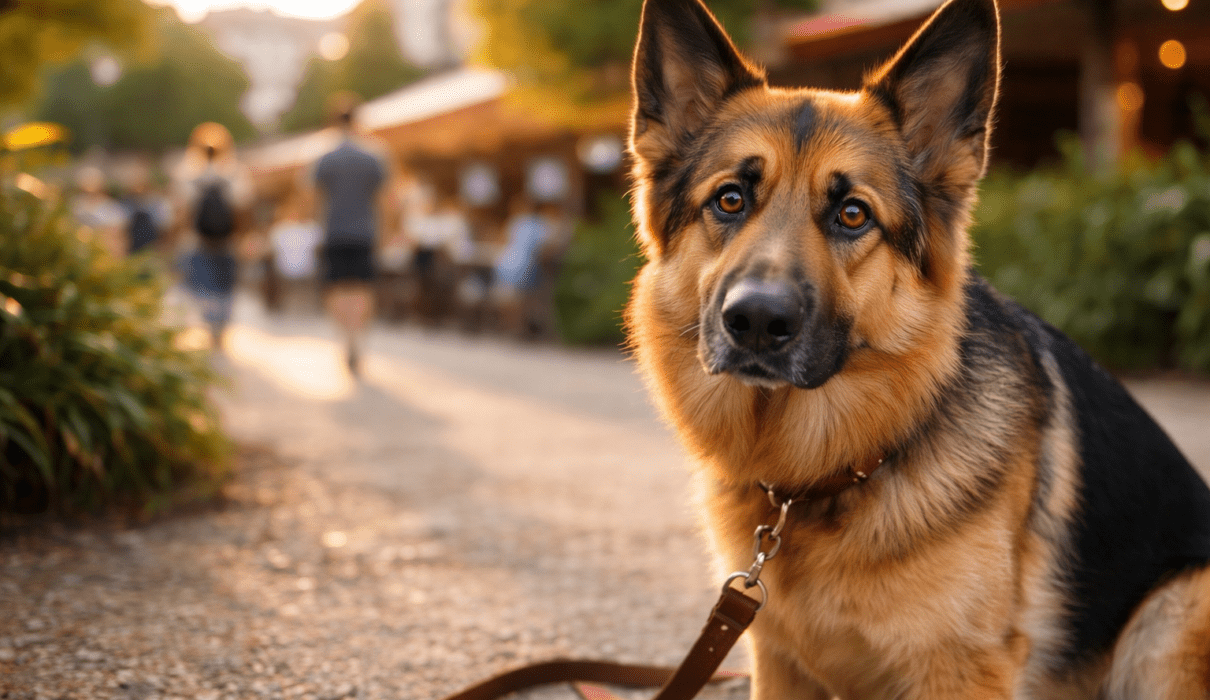
By The first time I noticed this, I didn’t think much of it.
We had just gone somewhere new – not loud, not chaotic, just… different.
And suddenly, my dog wasn’t himself.
He stayed close.
He kept scanning the environment.
Even when nothing was happening… he couldn’t relax.
At first, I thought maybe he just needed time.
But then I started noticing a pattern.
It wasn’t just that place.
Every new place triggered the same response.
That’s when I understood something important:
For us, it’s just a new location.
For dogs, it’s an entirely unfamiliar world.
This realization became a big part of my journey with Pet Calm Care —
understanding that anxiety isn’t always about fear… sometimes it’s
about uncertainty.
Why Dogs Get Anxious in New Places
Most people assume dogs should be excited in new places.
But for many dogs, the opposite happens.
Here’s what’s actually going on beneath the surface.
1. Everything Feels Unpredictable
At home, your dog knows:
- where sounds come from
- what smells belong there
- what happens next
In a new place?
None of that exists.
Even small things become unknown:
- a door closing
- footsteps
- distant noises
Your dog isn’t just reacting.
They’re trying to understand an environment that doesn’t make sense yet.
2. Their Sense of Control Drops
Dogs feel safe when they can predict outcomes.
In new places:
- they don’t know escape routes
- they don’t know safe zones
- they don’t know what’s normal
So their brain shifts into:
stay alert → stay ready → don’t relax
That’s why you’ll see:
- pacing
- constant scanning
- inability to settle
3. Smell Overload (This Is Huge)
We see new places.
Dogs smell them.
And a new place is like:
- hundreds of unknown scent layers
- other animals
- people
- past events
It’s not just new – it’s overwhelmingly complex.
I’ve seen this personally.
My dog would enter a new place and just… freeze
for a moment, processing everything through smell.
4. Past Experiences Get Triggered
If your dog has ever felt:
- scared
- uncomfortable
- overwhelmed
in a similar environment…
A new place can trigger that memory.
Even if nothing bad is happening right now.
This is why some dogs seem randomly anxious in certain places.
It’s not random.
It’s memory + association.
Signs Your Dog Is Anxious in a New Place
Some signs are obvious. Some are very easy to miss.
Look for:
- staying unusually close to you
- not exploring freely
- sudden quietness
- excessive sniffing without settling
- pacing or circling
- ignoring treats (big sign)
- reacting to small sounds
One thing I learned:
A quiet dog isn’t always a calm dog.
What Actually Helped My Dog (Step-by-Step)
This is where most advice online feels generic.
So I’ll share what actually made a difference.
Step 1: I Stopped Forcing Exploration
At first, I used to encourage:
“Go explore!”
“Come on, it’s okay!”
But that was pressure.
Instead, I did this:
- I stood still
- I let him observe
- I let him choose when to move
And slowly… he started relaxing.
Step 2: I Became the Safe Anchor
In a new place, your dog looks to you for signals.
If you’re:
- rushed
- distracted
- slightly tense
They feel it instantly.
So I made one change:
I stayed calm… intentionally.
No rush. No pulling. No forcing.
Just presence.
And that alone changed how he responded.
Step 3: I Reduced the Duration
This was a game changer.
Instead of long exposure, I did:
- short visits
- low-pressure exits
We’d leave before stress built up.
This helped him associate:
new place = manageable experience
Step 4: I Created a Micro Safe Zone
Even in new places, you can create familiarity.
I started bringing:
- his mat
- his blanket
- familiar scent items
Suddenly, he had something that felt like home.
And you could literally see his body relax around it.
Step 5: I Stopped Expecting Immediate Comfort
This is important.
Most people expect:
Dog should adjust quickly
But the truth is:
Adjustment is gradual, not instant.
Once I accepted that, everything became easier – for both of us.
Mistakes That Make Anxiety Worse
These are easy to do without realizing.
❌ Forcing social interaction
Letting strangers approach too quickly increases pressure.
❌ Overexposure
Staying too long overwhelms your dog.
❌ Ignoring subtle stress signals
By the time anxiety is obvious… it’s already high.
❌ Using treats at the wrong time
If your dog is too stressed, they won’t take food – and forcing it doesn’t help.
How Long Does It Take for Dogs to Adjust?
It depends on the dog.
Some adjust in:
- minutes
Others take:
- multiple visits
And some need:
- consistent gradual exposure
What matters most is not speed.
It’s how safe your dog feels during the process.
🐾 Reader Questions (Real Concerns Dog Owners Have)
1. Why does my dog get anxious in every new place?
Answer:
Most of the time, it comes down to one simple thing – your dog doesn’t feel safe yet.
Dogs rely heavily on familiarity. When everything around them changes, their brain switches into alert mode.
They’re not being difficult – they’re trying to figure out if they’re safe.
Some dogs are also naturally more sensitive, especially rescue dogs or those with past stress.
This is more about emotional security than behavior.
2. Should I take my anxious dog to new places or avoid them?
Answer:
The goal isn’t to avoid new places – but also not to force them.
The best approach is slow, controlled exposure.
Start small. Quiet places. Short visits. Let your dog observe without pressure.
If your dog is overwhelmed, they’re not learning – they’re just trying to cope.
So the balance is simple: introduce new experiences, but at your dog’s pace.
3. Why is my dog calm at home but anxious outside?
Answer:
At home, everything is predictable. Your dog knows what to expect.
Outside, it’s a completely different world – new sounds, unfamiliar people, unexpected movement.
That unpredictability is what creates anxiety.
Your dog isn’t different outside – they’re just unsure.
The goal is to slowly help them feel that same sense of safety beyond your home.
4. Can familiar items help my dog feel better in new places?
Answer:
Yes — and this is one of the simplest things that actually works.
Bringing familiar items like your dog’s bed, blanket or even a favorite toy can make a big difference.
I’ve personally seen how something as simple as a mat can become a safe spot for a dog, even in a completely new place.
It gives them something they recognize and that alone can lower anxiety.
6. Why does my dog seem to get worse instead of better?
Answer:
This usually happens when a dog is pushed too fast or exposed to situations they’re not ready for.
If your dog repeatedly feels overwhelmed, those experiences build up instead of improving confidence.
I’ve made this mistake before thinking more exposure would fix it quickly. It didn’t.
Progress with anxiety is slow. And sometimes it looks like setbacks before it gets better.
7. How can I help my dog feel more confident in new environments?
Answer:
Confidence doesn’t come from forcing your dog into situations. It builds gradually.
What worked for me was focusing on small wins:
- Keeping a predictable routine
- Letting my dog explore at their own pace
- Rewarding calm behavior
- Staying calm myself
Dogs read our energy more than we realize.
When you stay steady, your dog starts to believe things are okay too.
What Changed Everything for Me
I stopped trying to fix the behavior.
And started focusing on:
making my dog feel safe in unfamiliar situations.
That shift changed everything.
Because anxiety isn’t disobedience.
It’s uncertainty.
If your dog struggles in new places, you’re not doing anything wrong.
And your dog isn’t difficult.
They’re just trying to understand a world that suddenly feels unpredictable.
That’s something I’ve come to understand deeply through my journey with Pet Calm Care.
And once you start seeing it this way…
you stop rushing the process –
and start helping your dog truly feel safe.
If your dog shows anxiety not only in new environments but also after stressful
situations like vet visits, this guide will help you understand it better:
👉 Dog Anxiety After a Vet Visit: Why It Happens and How to Help
It explains why dogs feel unsettled after vet visits and what you can do to calm them effectively.
