


 By
By (What I noticed, why it happens, and what actually helped)
For a long time, I thought my dog was just having a bad night.
He wasn’t crying.
He wasn’t barking.
But he couldn’t settle.
He would get up.
Walk around.
Lie down again.
Then repeat the same thing.
Night after night.
That’s when I realized this wasn’t random behavior.
Something was bothering him at night.
What “restless at night” really looks like
This isn’t always dramatic.
In my case, it looked like:
• Constant pacing
• Changing sleeping spots again and again
• Heavy sighing
• Getting up for no clear reason
• Looking tired but unable to sleep
During the day, he was mostly fine.
The problem showed up only at night.
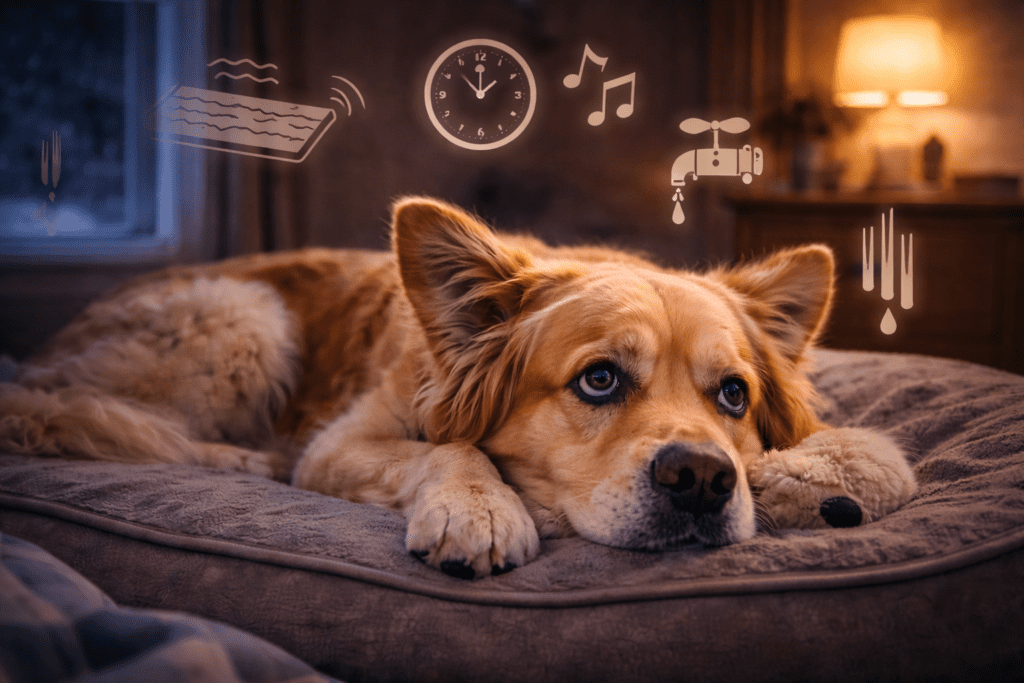
Why night makes anxiety feel worse for dogs
Night changes everything for dogs.
Here’s what I learned.
At night:
• The house gets quieter
• Lights go off
• Activity stops
• Small sounds feel louder
Dogs are naturally alert animals.
When stimulation drops,
their mind starts focusing on every little sound or feeling.
That’s why anxiety often shows up at night.
Common reasons I found behind night restlessness
It wasn’t just one thing.
Usually, it’s a combination.
1. Leftover energy from the day
This was a big one.
If my dog didn’t get enough:
• Physical activity
• Mental stimulation
his body was tired,
but his mind wasn’t.
That imbalance shows up at night.
2. Noise anxiety that doesn’t stop after sounds end
This surprised me.
Even when loud noises stopped,
the anxiety stayed.
Things like:
• Thunder earlier in the evening
• Fireworks in the distance
• Loud neighborhood sounds
The fear didn’t disappear immediately.
It carried into the night.
3. Routine changes
Dogs love routine.
Small changes matter more than we think:
• Different walk timing
• Late dinner
• Guests in the house
• Seasonal changes
When routine feels unstable,
night restlessness increases.
4. Overstimulation before bedtime
Too much excitement late at night can backfire.
I noticed this when:
• Playtime was too rough
• TV volume stayed high
• Lights stayed bright
Instead of relaxing,
my dog stayed alert.
What I did that actually helped
(This part made the real difference)
I didn’t fix this in one night.
But step by step,
things improved.
Here’s what worked.

1. I focused on calm evenings, not just calm nights
This was a big mindset shift.
I stopped trying to “fix” sleep at bedtime.
Instead, I looked at the entire evening.
I made sure:
• Evening activities were calmer
• No sudden excitement late at night
• Noise reduced gradually
Calm nights start with calm evenings.
2. I added mental stimulation earlier in the day
Physical exercise is important.
But mental work mattered more.
I started adding:
• Puzzle toys
• Short training sessions
• Sniffing games
This helped tire the mind,
not just the body.
3. I created a predictable bedtime routine
Dogs feel safe in predictability.
Every night looked similar:
• Lights dimmed at the same time
• Same sleeping area
• Same calm tone
• Same order of events
Over time, my dog started recognizing:
“It’s time to relax now.”
4. I managed leftover noise anxiety
If there were loud noises earlier,
I didn’t ignore the effect.
I used:
• Background sound
• Calm presence
• Quiet space
Even after noise stopped,
I helped my dog fully settle.
5. I made the sleeping space truly comfortable
Small things mattered a lot:
• Familiar bedding
• Comfortable temperature
• No drafts
• Minimal movement around
Once the space felt safe,
restlessness reduced.
6. I stopped reacting to every movement
This was hard.
Earlier, whenever my dog moved,
I reacted.
That actually reinforced restlessness.
So I stayed calm.
No sudden attention.
No frustration.
Just steady presence.
How long did it take to see improvement?
Not immediately.
But slowly, I noticed:
• Less pacing
• Longer sleep stretches
• Easier settling after waking
Progress wasn’t perfect,
but it was consistent.
And consistency mattered more than speed.
When night restlessness needs more attention
If your dog:
• Can’t settle most nights
• Seems distressed
• Paces for hours
• Gets worse over time
That’s a sign anxiety may be deeper.
Professional guidance can really help in these cases.
Final thoughts
Night restlessness isn’t “bad behavior.”
It’s communication.
Once I stopped asking:
“Why won’t you sleep?”
and started asking:
“What’s keeping you from feeling safe?”
everything changed.
Calm nights come from understanding,
not forcing sleep.