

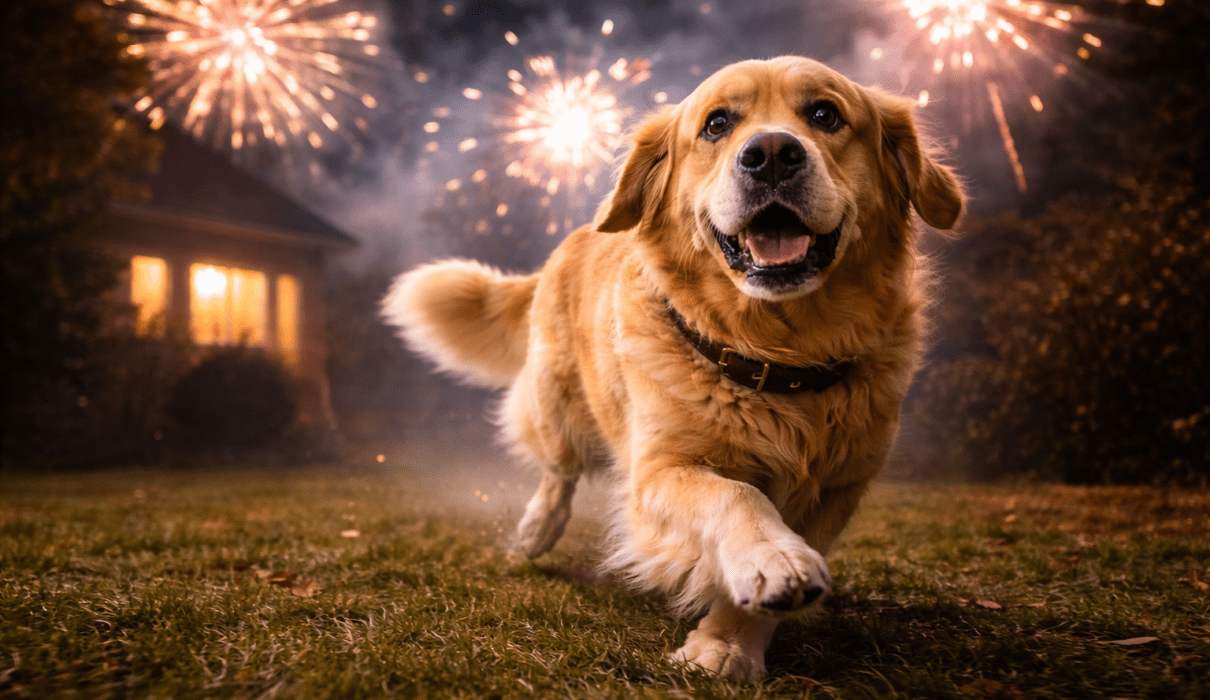
 By
By (What I’ve noticed and what actually helped)
The first time fireworks went off near my home,
I wasn’t prepared.
My dog was calm one moment.
And the next moment, he was shaking uncontrollably.
Not barking.
Not running around.
Just standing there, trembling.
That’s when I understood something important.
Fireworks don’t scare dogs slowly. They hit all at once.
Fireworks feel very different to dogs
Fireworks aren’t just loud.
They are:
• Sudden
• Unpredictable
• Explosive
• Repeated
Dogs don’t get any warning.
They don’t know when the next bang will come.
And they don’t know when it will stop.
That uncertainty is what creates panic.
When I started seeing a clear pattern
The shaking didn’t happen with every noise.
It mostly happened during:
• Fireworks at night
• Celebrations nearby
• Holidays like July 4th or New Year’s
• Random neighborhood fireworks
What stood out was this:
the fear was strongest when fireworks started suddenly and kept repeating.
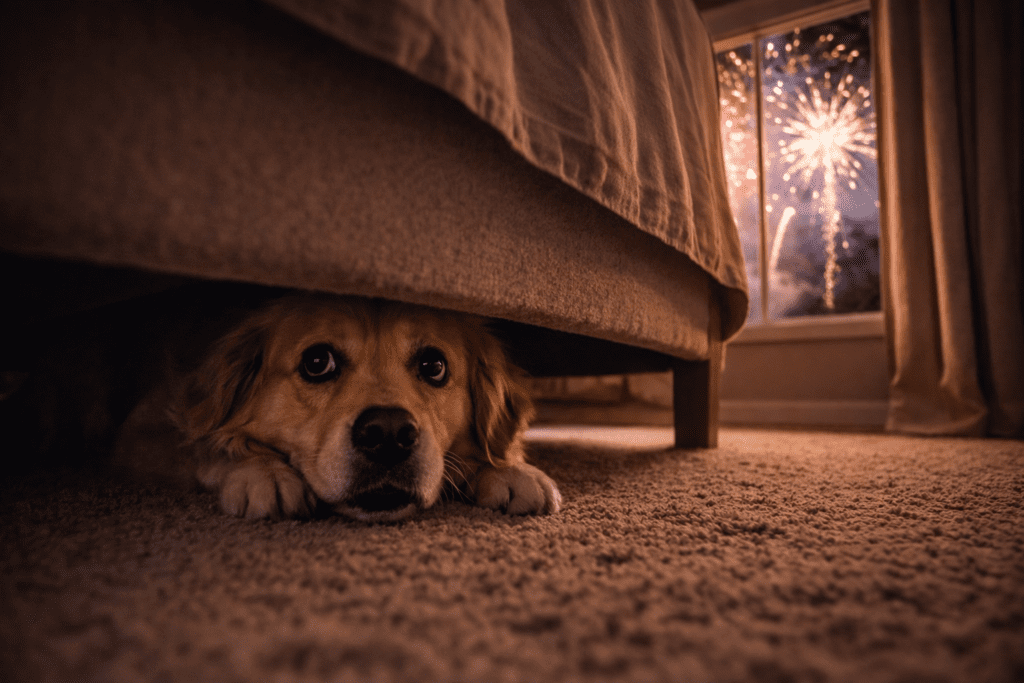
Common signs of firework anxiety I’ve seen
Different dogs react differently,
but these signs kept showing up again and again:
• Full-body shaking
• Heavy panting
• Trying to hide
• Clinging tightly to the owner
• Refusing to eat or move
• Wide, fearful eyes
Sometimes the shaking started before the loudest sounds.
That’s anticipation anxiety.
“This kind of anxiety feels even stronger during colder
months when dogs spend more time indoors, something
I’ve talked about in my Winter Months Guide.”
Why firework anxiety often gets worse every year
This part is important.
Firework anxiety doesn’t usually stay the same.
If nothing is done, dogs may:
• React earlier each time
• Shake more intensely
• Fear smaller sounds
• Stay anxious long after fireworks stop
The memory builds.
The fear deepens.
That’s why early support matters.
“I’ve seen very similar Shaking And Fear During Thunderstorms
as well, which I’ve explained in detail here.”
What I did wrong at first (and learned from it)
I’ll be honest.
I made mistakes.
These things didn’t help:
• Saying “it’s okay” repeatedly in panic
• Forcing my dog to stay near the noise
• Acting nervous myself
• Ignoring the fear and hoping it would pass
Fear doesn’t fade when it’s dismissed.
What actually helped my dog during fireworks
(This is the part that made the real difference)
This wasn’t a one-night fix.
It took planning and consistency.
Here’s what truly helped.
1. I prepared before fireworks started
This changed everything.
Before fireworks:
• I closed windows and curtains
• I turned on background sound (TV or fan)
• I created a calm indoor environment
Reducing sudden sound spikes lowered anxiety.
2. I created a safe, familiar space
My dog needed a place where he felt protected.
So I made sure he had:
• A quiet room
• Familiar bedding
• Low light
• No fireworks visibility
This became his comfort zone.
Knowing there’s a safe place reduces panic.
3. I stopped forcing bravery
This was hard to accept.
I did not:
• Drag him out
• Force exposure
• Push him to face it
Fear doesn’t disappear through pressure.
It disappears through safety.
4. I stayed emotionally steady
Dogs read us constantly.
So I focused on:
• Calm body language
• Normal tone of voice
• No sudden reactions
I didn’t over-comfort,
and I didn’t ignore him either.
Neutral calm worked best.
5. I let my dog choose closeness
Sometimes my dog wanted to be alone.
Sometimes he wanted to stay close.
I let him decide.
That choice gave him control,
and control reduced anxiety.
6. I avoided sudden movements during fireworks
Even small things mattered.
I avoided:
• Loud conversations
• Sudden walking around
• Turning lights on and off
The calmer the environment,
the easier it was for my dog to cope.
If you want to see the exact calming routine I personally follow step by step,
I’ve shared it in detail in my guide on How I Calm My Dog During Loud Noises.
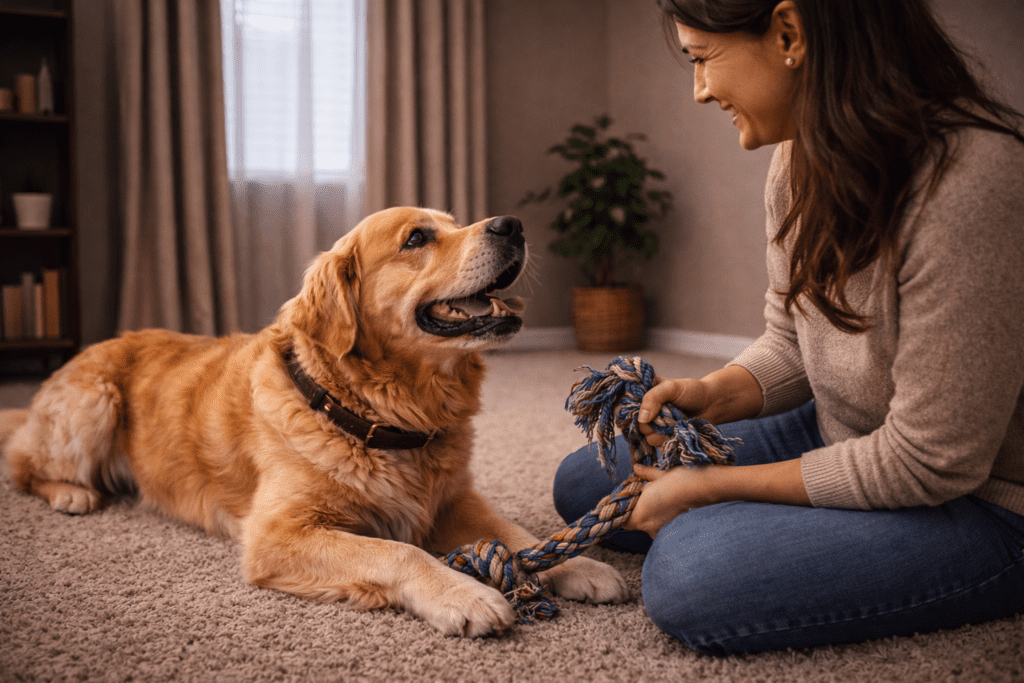
How long did it take to see improvement?
Not instantly.
But over time, I noticed:
• Less intense shaking
• Faster recovery
• More confidence indoors
Progress was slow,
but very real.
When firework anxiety needs extra help
If your dog:
• Panics hours before fireworks
• Becomes destructive
• Refuses food for long periods
• Stays fearful days after
That’s a sign anxiety is severe.
Professional help can make a big difference.
Reader Questions
My dog is shaking and panting even though the fireworks stopped. Why?
Fireworks don’t just scare dogs in the moment. The body can stay in alert mode for hours. Sometimes dogs also hear distant fireworks we don’t notice. If symptoms last into the next day, it may be lingering stress.
Can fireworks cause vomiting or diarrhea in dogs?
Yes. Severe stress can upset the digestive system. Lip licking, pacing, shaking and vomiting during fireworks can all be linked to anxiety. If vomiting continues, consult a vet.
Should I ignore my dog when they’re scared of fireworks?
Ignoring intense fear can make a dog feel alone. Instead of ignoring, stay steady and allow them to choose closeness or space.
Do anxiety wraps or compression shirts help?
Some dogs respond well to gentle pressure. It can create a grounding effect. It doesn’t work for every dog, but when introduced calmly, it can reduce shaking in certain cases.
Can I give my dog Benadryl for fireworks anxiety?
Benadryl is an antihistamine, not a true anti-anxiety medication. It may make some dogs sleepy but does not treat panic. Always consult your vet before giving any medication.
Can fireworks cause long-term trauma in dogs?
In sensitive dogs, yes. Repeated unpredictable exposure can build stronger fear responses each year. That’s why proactive support matters.
Why do some dogs not care about fireworks at all?
Temperament, early exposure, genetics and past experiences all play a role. Just because one dog is calm doesn’t mean another is overreacting.
What This Journey Taught Me
Fireworks are confusing and overwhelming for dogs.
Shaking isn’t weakness.
It’s communication.
Once I stopped trying to fix fear
and started creating safety,
things slowly changed.
Calm doesn’t come from noise disappearing.
It comes from trust.
This became an important part of my journey with Pet Calm Care.
