

 By
By When I first brought my anxious dog home, I thought he would settle in a few days.
Instead, he stayed quiet, alert and unsure of everything around him.
A few weeks later, the pacing and clinginess began.
That’s when I realized something important:
Dogs don’t settle all at once. They settle in stages.
The 3-3-3 rule for anxious dogs helped me understand what to expect in the
first 3 days, 3 weeks and 3 months, and it changed the way I supported him.
What Is the 3-3-3 Rule for Dogs?
The 3-3-3 rule is a simple adjustment timeline that helps explain
how dogs often settle into a new environment.
It usually refers to:
- 3 days
- 3 weeks
- 3 months
This timeline is especially helpful for:
- rescue dogs
- dogs in a new home
- dogs after a move
- newly adopted dogs
- anxious dogs after major life changes
Now, this is not a strict rule.
Some dogs need more time.
Some settle faster.
But emotionally, it gives a realistic framework.
The First 3 Days: Survival Mode
This stage is often misunderstood.
Many dogs appear calm during the first few days.
But what you may be seeing is not true comfort.
It’s emotional shutdown.
They are trying to understand:
- Where am I?
- Who are these people?
- Is this safe?
- What happens next?
For anxious dogs, the nervous system is often in survival mode.
You may notice:
- hiding
- little appetite
- excessive sleep
- refusal to explore
- freezing behavior
- silent observation
Some dogs become unusually quiet.
Others become clingy immediately.
Both are common.
What Helped Me During This Stage
I stopped trying to bond fast.
This is where many people accidentally add pressure.
No forced affection.
No introducing visitors.
No overwhelming excitement.
No pressure to perform.
Instead, I focused on safety and predictability.
Same feeding time.
Same walk route.
Same sleeping area.
Same tone of voice.
At this stage, consistency matters more than training.
The First 3 Weeks: The Real Personality Starts to Show
This stage surprised me the most.
By now, many dogs begin to realize:
This might actually be home.
And that’s when anxiety sometimes becomes more visible.
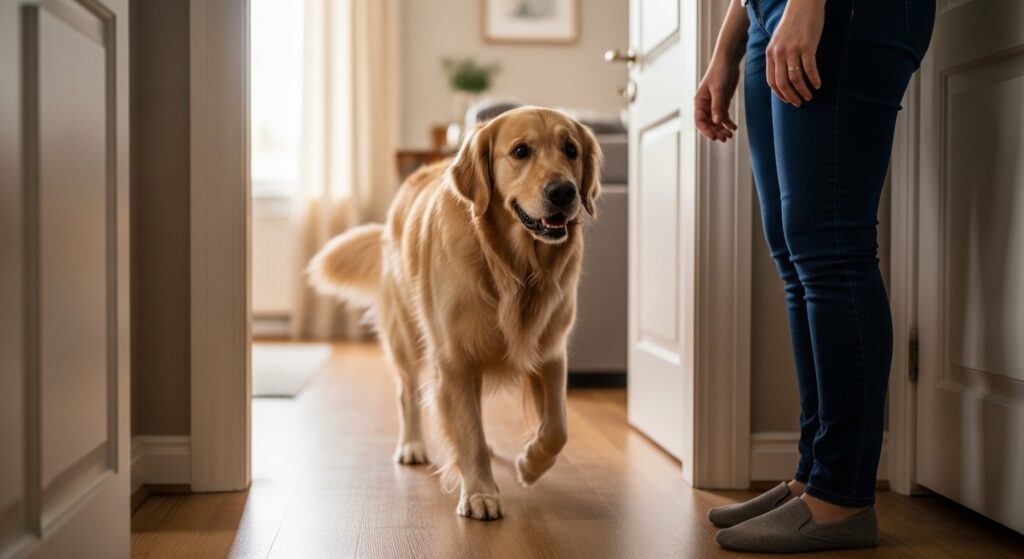
This is when I noticed my dog becoming more expressive.
He started:
- pacing
- reacting to sounds
- whining more
- following me room to room
- barking at unfamiliar noises
At first, I worried things were getting worse.
But actually, this was progress.
He felt safe enough to express what he was feeling.
This stage often reveals:
- separation anxiety signs
- sound sensitivity
- fear around strangers
- routine dependence
- confidence issues
This is usually when the dog’s true emotional needs become clearer.
Why This Stage Feels Hard for Owners
Because expectations are usually wrong.
People think:
“It’s been 2 weeks. Why is my dog still anxious?”
But healing isn’t linear.
Sometimes dogs seem worse before they seem better.
That doesn’t mean failure.
It often means they are finally emotionally present.
What Helped During This Phase
This is where I focused on emotional regulation.
Instead of forcing confidence, I built safety.
Things that worked:
- sniff walks
- calm decompression time
- no crowded spaces
- no forced socialization
- structured routine
This is also where our confidence-building work started making a difference.
Very small wins.
Small exposure.
Safe distance.
No pressure.
The First 3 Months: Trust Begins to Build
This stage is where real emotional settling often begins.
By now, many dogs start understanding:
- your schedule
- your energy
- the household sounds
- when food comes
- when you leave
- when you return
The environment stops feeling unpredictable.
That predictability lowers anxiety.
This is where I saw the biggest changes.
My dog started:
- sleeping more deeply
- resting farther from me
- reacting less to sounds
- recovering faster after stress
- exploring more confidently
This stage is less about obedience and more about emotional trust.
That trust is what changes everything.
Important: Some Dogs Need Longer Than 3 Months
This part is so important.
For sensitive dogs, trauma dogs, rescue dogs or dogs with previous fear experiences…
Three months may not be enough.
And that is completely okay.
Some dogs need:
- 6 months
- 9 months
- even longer
There is no failure in slow healing.
The goal is not speed.
The goal is safety and sustainable progress.
Signs Your Dog Is Settling
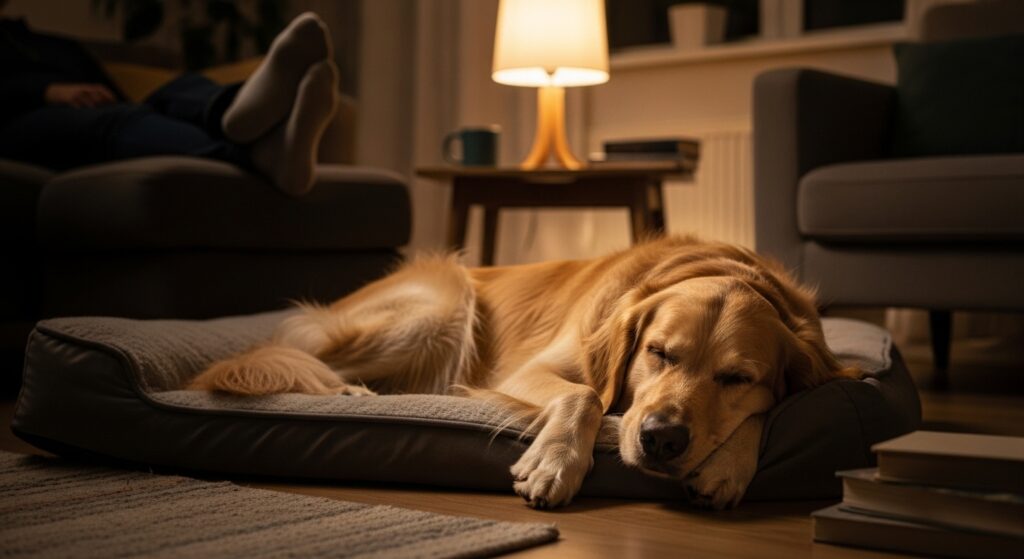
Look for these emotional signs:
- deeper sleep
- softer body posture
- less startle response
- less scanning
- more independent resting
- improved appetite
- calmer greetings
These matter more than perfect behavior.
Common Mistakes During the 3-3-3 Timeline
These slowed our progress early on:
❌ too much exposure
❌ inviting many guests too soon
❌ changing routine often
❌ expecting fast confidence
❌ forcing affection
The nervous system needs time.
Reader Questions
Is the 3-3-3 rule real for anxious dogs?
Yes, it’s a helpful adjustment framework, but every dog heals at their own pace.
Why did my dog seem calm at first and anxious later?
This is extremely common. Many dogs are in survival mode initially and show true anxiety later.
Can anxious dogs take more than 3 months to settle?
Absolutely. Sensitive dogs often need much longer.
Should I start training immediately?
Light structure is okay, but emotional safety and routine should come first.
Does this apply after moving homes?
Yes, very strongly. This also fits dogs adjusting to a new home or apartment.
What I Learned Through This Journey
The biggest lesson this rule taught me was patience.
My dog was never being difficult.
He was adjusting in layers.
Fear first.
Then expression.
Then trust.
And once I stopped rushing the process…
he started healing.
Sometimes the most loving thing we can give an anxious dog is not more training.
It’s time.
