

 By
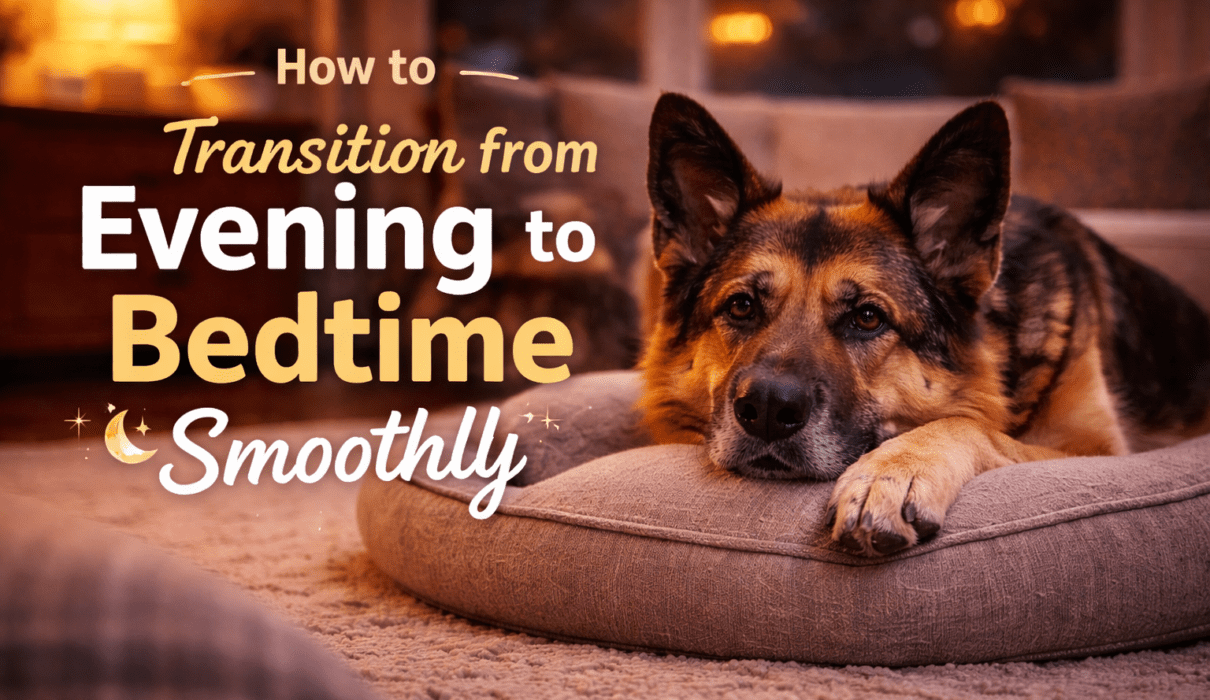
By (The missing link that finally made nights easier for my dog)
For a long time, I thought I was doing everything right.
I had an evening routine.
I had a bedtime routine.
But something still felt off.
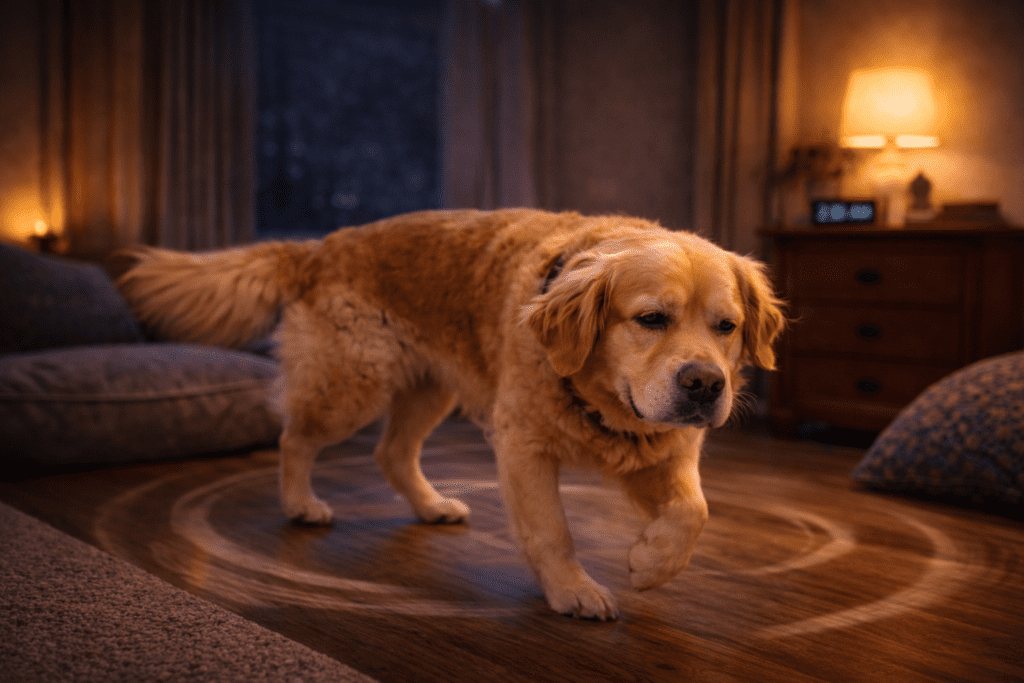
My dog would seem calm in the evening,
and bedtime would eventually come…
but the transition between the two was messy.
That’s when I realized:
Evening and bedtime are not the same phase.
The space between them matters the most.
Why most dogs struggle in this transition window
This transition period is usually short.
But it’s emotionally heavy.
What happens during this time:
• Activity stops suddenly
• Humans shift attention to themselves
• Lights change
• The house energy shifts
For anxious dogs, this feels like being dropped into uncertainty.
Not night yet.
Not evening anymore.
That’s where anxiety sneaks in.
Indoor Evening Routine for Anxious Dogs
The mistake I was making without realizing it
I was doing this:
Evening → straight to bed.
No buffer.
No emotional landing.
That gap was making my dog restless, even though everything else was “correct”.
Once I fixed the transition,
everything else started working better.
What a smooth transition actually means
A smooth transition is not an activity.
It’s a decompression phase.
Think of it like this:
Evening routine slows the body.
Transition routine slows the mind.
Bedtime routine invites rest.
If the mind doesn’t slow down,
sleep won’t come easily.
The transition routine that finally worked
(Step-by-step, very intentional)
This is the part most blogs skip.
So I’ll go slow here.
1. I created a clear “last alert moment”
This was powerful.
I chose one moment in the evening
where I mentally told myself:
“After this, nothing exciting happens.”
That moment could be:
• Final TV episode
• Final walk
• Final interaction
After that, the energy never went up again.
Dogs read this shift instantly.
2. I reduced stimulation in layers, not all at once
Earlier, I switched everything off quickly.
That backfired.
Now I do it in layers:
• First: movement slows
• Then: sound lowers
• Then: lights soften
Layered calming feels safe.
Sudden calm feels suspicious to anxious dogs.
3. I stopped multitasking during transition time
This was uncomfortable for me at first.
But important.
During this transition window:
• I stopped phone scrolling
• I stopped rushing
• I stayed physically present
Dogs feel ignored energy more than noise.
Presence calms faster than routines.
4. I used one grounding activity — only one
This is important.
Not many tools.
Not variety.
Just one predictable grounding activity.
Examples:
• Calm chewing
• Gentle stroking
• Lying quietly together
This activity became a signal:
“We’re moving toward rest now.”
5. I kept the environment boring on purpose
This sounds strange, but it worked.
During transition time:
• No new toys
• No training
• No problem-solving games
Anxious dogs don’t need stimulation here.
They need nothing to react to.
6. I allowed stillness without expecting sleep
This was a mindset shift.
I stopped thinking:
“You should sleep now.”
Instead, I thought:
“You can just be still.”
Stillness came first.
Sleep followed naturally.
7. I kept this transition time the same every day
Not strict by the clock.
But strict by sequence.
Even if timing shifted:
• The order stayed the same
• The energy stayed the same
Dogs trust sequence more than time.
What changed once this transition became smooth
Not magically.
But noticeably.
I saw:
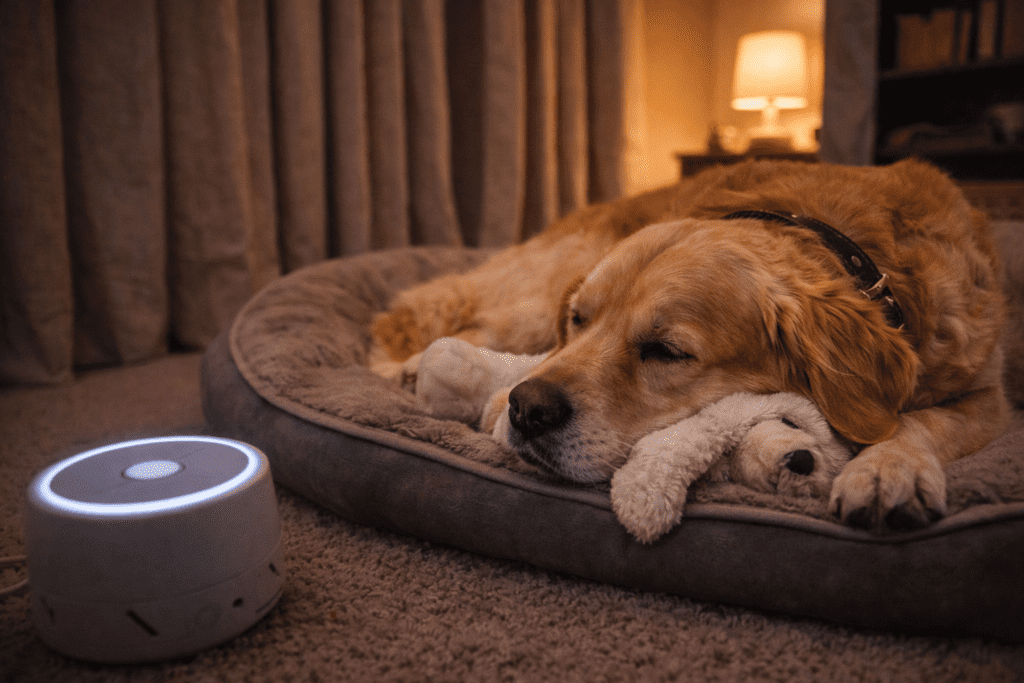
• Less pacing before bed
• Less confusion
• Faster settling
• Calmer body language
Most importantly,
my dog stopped looking unsure about what was coming next.
Why this works especially well for anxious dogs
Anxiety feeds on uncertainty.
This transition routine removes uncertainty by answering one question:
“What’s happening next?”
Once a dog knows the answer,
the nervous system relaxes.
When transition routines still don’t work
If your dog:
• Remains highly alert
• Shows distress despite calm transitions
• Escalates over time
Anxiety may be deeper.
That’s when professional support can help.
Final thoughts
Most people try to fix sleep.
But sleep is not the problem.
The gap before sleep is.
Once I respected that gap,
nights became easier.
Not perfect.
But predictable.
And for anxious dogs,
predictability is peace.
Calm Bedtime Routine for Anxious Dogs