


 By
By Dogs experience safety through familiar environments.
Their comfort comes from things we rarely notice:
• familiar smells
• predictable sounds
• known walking routes
• the layout of the home
• established routines
When you move, almost all of that disappears at once.
Suddenly your dog is living in a place where:
• nothing smells familiar
• every sound feels new
• the outside environment is different
• daily patterns feel uncertain
From a dog’s perspective, the brain interprets this as:
Something important has changed. Stay alert.
That alertness is what often shows up as anxiety.
The Subtle Signs I Noticed After the Move
Some dogs show obvious fear.
Others show quiet behavioral shifts.
In my case, the signs were subtle at first.
Things like:
• following me from room to room
• hesitating before lying down
• reacting to small noises outside
• waking up more during the night
• pacing briefly before settling
Nothing looked extreme.
But the calm confidence my dog usually had was missing.
He wasn’t misbehaving.
He was trying to understand a world that suddenly made less sense.
Why Night Anxiety Often Appears After a Move
Nighttime is when many dogs struggle the most after moving.
During the day, activity keeps the mind busy.
At night, everything slows down.
That’s when the brain starts scanning the environment.
In a new home, nighttime sounds feel unfamiliar:
• new neighborhood noises
• heating or cooling systems
• distant traffic
• different echoes inside the house
Even small sounds can trigger alertness.
Many owners think their dog suddenly developed nighttime anxiety.
Often, it’s simply the dog adjusting to an unfamiliar environment.
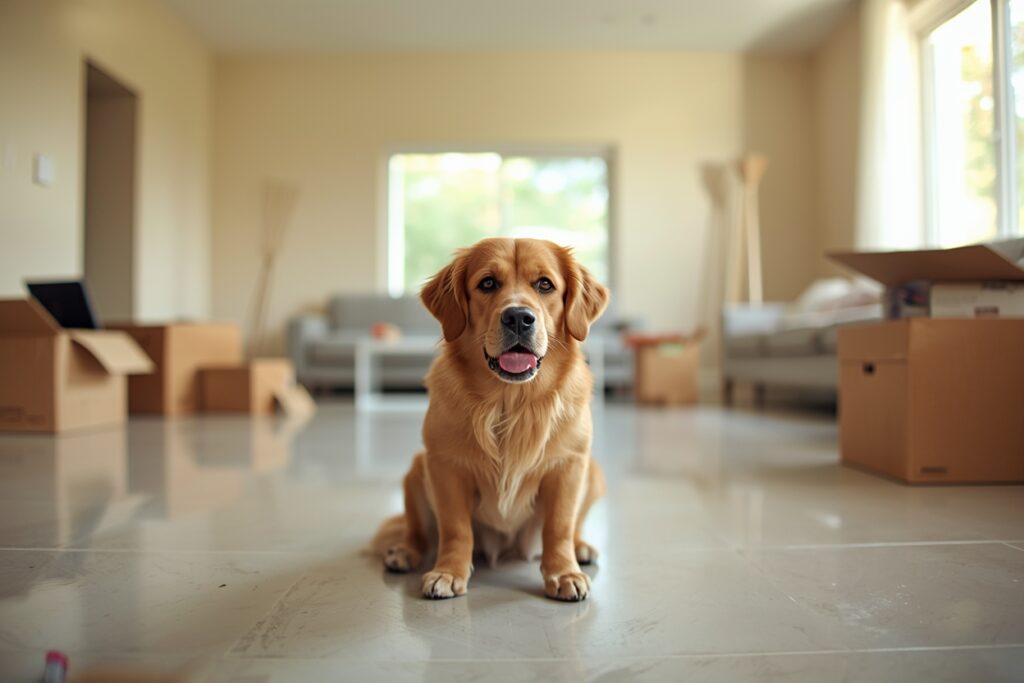
The Mistake Many Owners Make After Moving
This is something I nearly did myself.
When a dog looks anxious, the natural reaction is to increase stimulation.
More walks.
More play.
More training.
But after a move, the nervous system is already overloaded.
Too much stimulation can actually make settling harder.
What the dog really needs first is predictability.
Not excitement.
The One Thing That Helped My Dog Settle Faster
The biggest improvement came from something simple.
Routine.
Not a strict schedule.
Just consistent patterns.
For example:
Morning wake-up → short walk → breakfast → quiet rest
Evening walk → calm indoor time → lights dim → sleep
Dogs don’t read clocks.
They read sequences.
When the sequence becomes familiar, the environment starts feeling safer.
Rebuilding a Sense of Safety in a New Home
Over the first few weeks, I focused on helping my dog rebuild a sense of familiarity.
These small changes made a noticeable difference.
Keep the same sleeping space
If your dog had a bed or crate in the old home, keep using it.
Familiar objects carry familiar scents.
That scent alone can help reduce stress.
Keep walks predictable
After a move, the outside world is completely new.
Instead of exploring everything immediately, I kept walks short
and repeated the same routes for a while.
Familiar paths slowly build confidence.
Avoid overwhelming the dog with visitors
When people visit a new home, it can feel exciting for us.
For a dog still adjusting, it can feel overwhelming.
For the first weeks, keeping the environment calm helps the nervous system settle.
Create calm evenings
Evenings are when anxiety often shows up.
A quiet wind-down routine helps signal that the day is ending.
Simple habits helped:
• dim lights
• quiet activities
• predictable bedtime
Over time, evenings became calmer again.
How Long Adjustment Usually Takes
This part requires patience.
Some dogs relax within a few days.
Others take weeks.
Rescue dogs or sensitive dogs sometimes need even longer.
What matters most is not forcing the adjustment.
Confidence grows gradually as the dog realizes:
Nothing bad is happening here.
This is home.
Signs Your Dog Is Starting to Adjust
As the weeks passed, I noticed small improvements.
Not dramatic changes.
Just subtle shifts.
Things like:
• deeper sleep
• less scanning of rooms
• more relaxed body language
• curiosity instead of hesitation
• settling faster at night
These signs meant my dog was starting to trust the new environment.
Progress often looks quiet.
But it’s still progress.

When Moving Anxiety Should Be Taken Seriously
Most dogs adjust with time.
But some situations need extra support.
If you notice:
• panic behaviors
• destructive anxiety
• constant pacing
• refusal to eat
• severe fear reactions
It’s worth speaking with a veterinarian or behavior professional.
Early support can prevent anxiety from becoming long-term.
Reader Questions
1. How long does it take for a dog to adjust after moving to a new home?
Most dogs need a little time to feel safe in a new environment.
Some begin relaxing within a few days, while others may take a few weeks.
Everything smells different, sounds different and looks unfamiliar to them.
With patience, routine and reassurance, most dogs gradually learn that the new place is home.
2. Why did my dog suddenly develop anxiety after moving to a new house?
Dogs rely heavily on familiarity. When you move, they suddenly lose the
smells, sounds and routines that helped them feel secure.
Why Dogs Pace at Night and Can’t Settle Even confident dogs can feel unsure in a completely new environment.
This can show up as pacing, whining, clinginess, panting, barking or difficulty settling.
In most cases, it’s simply a temporary adjustment period.
3. Can moving to a new home trigger separation anxiety in dogs?
Yes, it sometimes can.
A dog that was comfortable being alone in the old house may suddenly feel insecure in a new place.
Because the environment is unfamiliar, being left alone there can feel frightening.
Once the dog begins to understand the new home is safe, this anxiety usually improves.
4. What are the signs that a dog is stressed or anxious after moving?
Common signs include:
- Restlessness or pacing
- Whining or barking more than usual
- Clingy behavior
- Loss of appetite
- Trouble sleeping or settling
Some dogs may also seem unusually alert, reacting to every small sound.
These reactions are very common after a move.
5. How can I help my dog feel safe and comfortable in a new home?
The best thing you can do is create familiarity.
Set up your dog’s bed, toys, and food area the same way they were before.
Keep daily routines predictable, including feeding times, walks and bedtime.
Dogs relax faster when life around them feels stable and predictable.
6. Should I change my dog’s routine after moving to a new house?
It’s usually better not to change it.
Dogs feel safer when their daily routine stays the same.
Try to keep feeding times, walks and bedtime as consistent as possible.
Familiar routines help dogs understand that even though the house changed, their life didn’t.
7. When should I worry if my dog is still anxious after moving?
Mild anxiety during the first few weeks is normal.
However, if the anxiety continues for many weeks or starts getting worse, it may help to look deeper.
Persistent signs like destructive behavior, extreme panic when left alone or constant distress may
need guidance from a trainer or veterinarian.
Most dogs adjust with time, patience and consistent routines.
What I Learned From This Experience
Moving homes taught me something important.
Dogs don’t struggle because they are stubborn.
They struggle because their world suddenly stops making sense.
Once I stopped expecting my dog to just adapt and focused
on rebuilding safety instead, things improved naturally.
Slowly, the new house stopped feeling strange.
And one evening, I noticed something small but meaningful.
My dog walked into the living room, circled his bed once and
fell asleep without hesitation.
No scanning.
No pacing.
Just rest.
That’s when I knew the house finally felt like home for him too.
