

 By
By (Why it happens and what actually helped in my home)
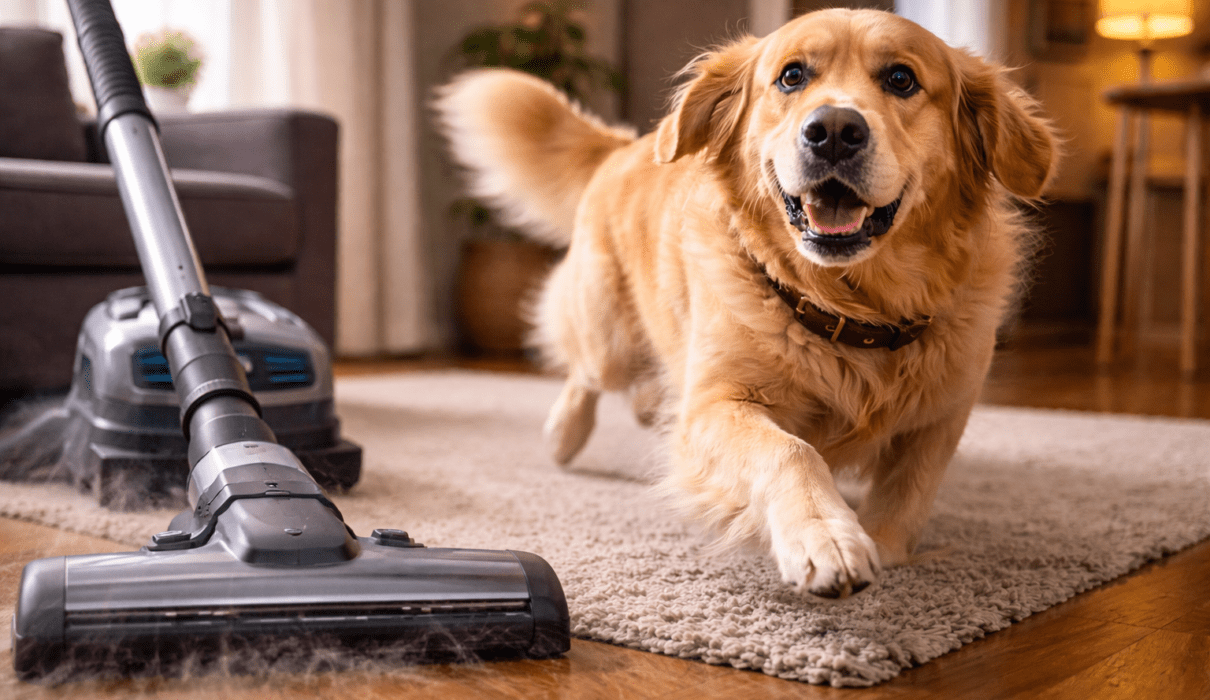
The first time I turned on the vacuum cleaner,
my dog ran.
Not slowly.
Not confused.
He panicked.
He hid behind the couch, started shaking and refused to come out until the vacuum was off.
At that moment, I realized something important.
This wasn’t disobedience.
This was fear.
“I later realized this fear wasn’t just about the vacuum, but part of a bigger
noise anxiety pattern that I explain in my main guide on Dogs Shaking During Loud Noises.”
I started noticing a clear pattern
It wasn’t random.
My dog reacted only when:
• The vacuum suddenly turned on
• The sound started without warning
• The machine moved toward him
If the vacuum was just sitting in the corner, he was fine.
The fear was tied to noise + movement together.
Why vacuum cleaners scare dogs so much
To us, a vacuum is annoying.
To dogs, it’s terrifying.
Here’s why:
• The noise is loud and unpredictable
• The machine moves on its own
• It smells strange
• It invades their space
From a dog’s perspective,
the vacuum looks and sounds like a threat.
And dogs don’t analyze threats.
They react.
“I’ve noticed similar SHAKING and FEAR during THUNDERSTORMS
as well, which I’ve explained separately here.”
Common signs of vacuum cleaner anxiety I’ve seen
Not every dog reacts the same way.
Some common behaviors include:
• Hiding under furniture
• Shaking or trembling
• Barking aggressively at the vacuum
• Trying to escape the room
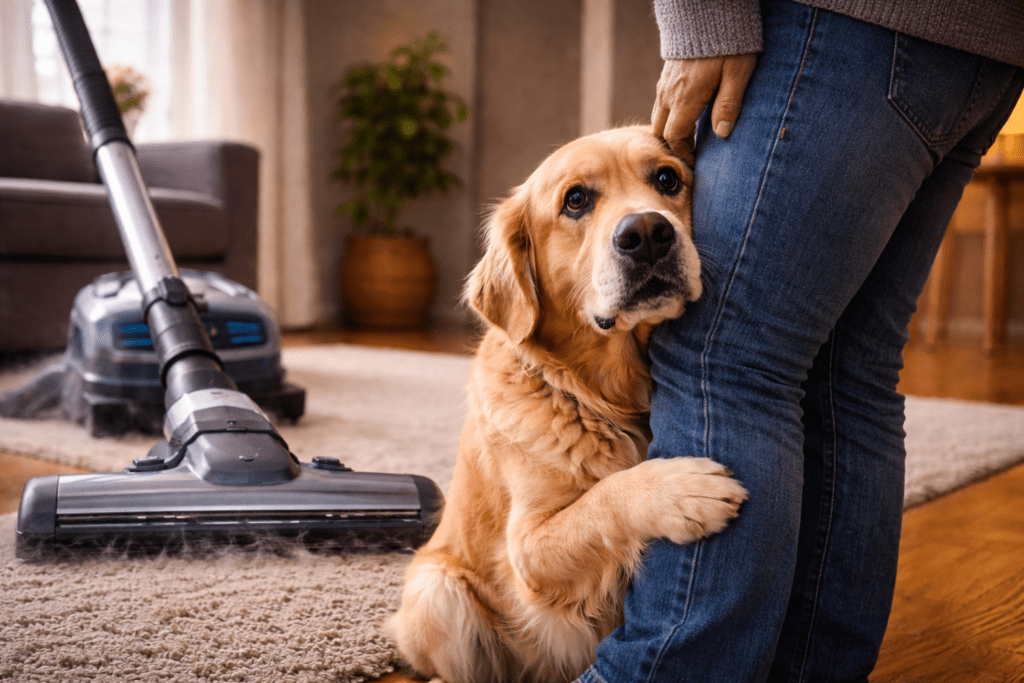
• Clinging to their owner
If these signs appear only during vacuum use,
anxiety is the main cause.
“This kind of ANXIETY FEELS EVEN MORE INTENSE DURING COLDER MONTHS
when dogs spend more time indoors, something I’ve talked about in my winter anxiety guide.”
What made the fear worse (mistakes I learned from)
I’ll be honest.
I made mistakes at first.
These things backfired:
• Dragging my dog into the room
• Forcing him to “get used to it”
• Yelling to stop barking
• Turning the vacuum on suddenly
Fear doesn’t disappear with force.
It gets stronger.
What actually helped my dog feel calmer
(This is where depth matters)
I didn’t fix this in one day.
It took patience and consistency.
Here’s what actually worked.
1. I stopped surprising my dog
This was the biggest change.
Before vacuuming, I now:
• Let my dog see the vacuum
• Speak calmly
• Turn it on from a distance
No sudden noise.
Predictability reduces fear.
2. I gave my dog control over distance
I never forced him to stay close.
Instead:
• I let him choose how far he wanted to be
• I allowed him to leave the room
• I kept doors open
Feeling trapped makes anxiety worse.
Feeling in control reduces it.
3. I separated sound from movement
This helped a lot.
I practiced in steps:
• First, turning the vacuum on without moving it
• Later, moving it slightly while it was off
• Slowly combining both
This helped my dog process the fear in smaller pieces.
4. I created a “safe zone”
Before vacuuming, I made sure my dog had:
• A quiet room
• Familiar bedding
• No vacuum noise nearby
This became his retreat space.
Knowing there’s a safe place changes everything.
5. I stayed emotionally neutral
This part is underrated.
I didn’t over-comfort.
I didn’t act worried.
I stayed calm and normal.
Dogs mirror our emotions.
If I panic, my dog panics more.
How long did improvement take?
Not overnight.
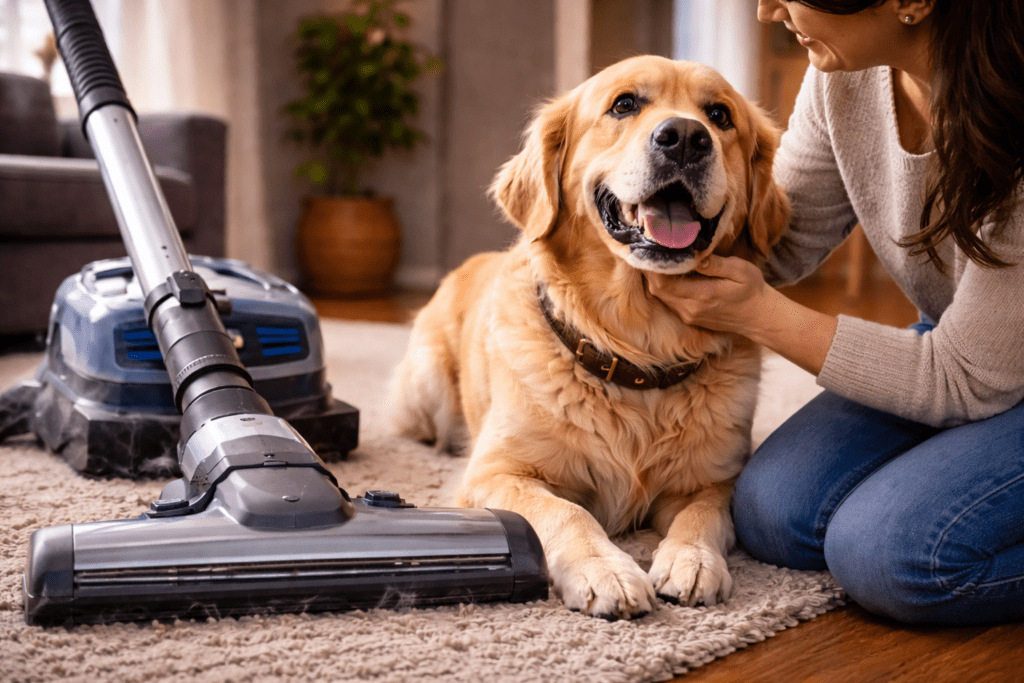
But slowly, I noticed changes:
• Less shaking
• Less hiding
• Faster recovery after vacuuming
Progress matters more than speed.
When vacuum anxiety becomes a bigger issue
If your dog:
• Panics even before the vacuum is on
• Becomes aggressive
• Refuses to enter rooms where vacuuming happened
• Starts fearing other household sounds
Then anxiety may be spreading.
That’s when professional guidance helps.
Final thoughts
Being afraid of a vacuum cleaner doesn’t mean your dog is “dramatic.”
It means your dog feels unsafe.
Once I stopped forcing confidence and started building trust,
things changed.
Not perfectly.
But steadily.
Sometimes, calm isn’t taught.
It’s allowed.