

 By
By (What anticipation anxiety really looks like)
For a long time,
I thought my dog reacted
after I left home.
I was wrong.
The panic didn’t start
when the door closed.
It started much earlier.
I noticed the anxiety before the goodbye
The first sign wasn’t crying.
It was tension.
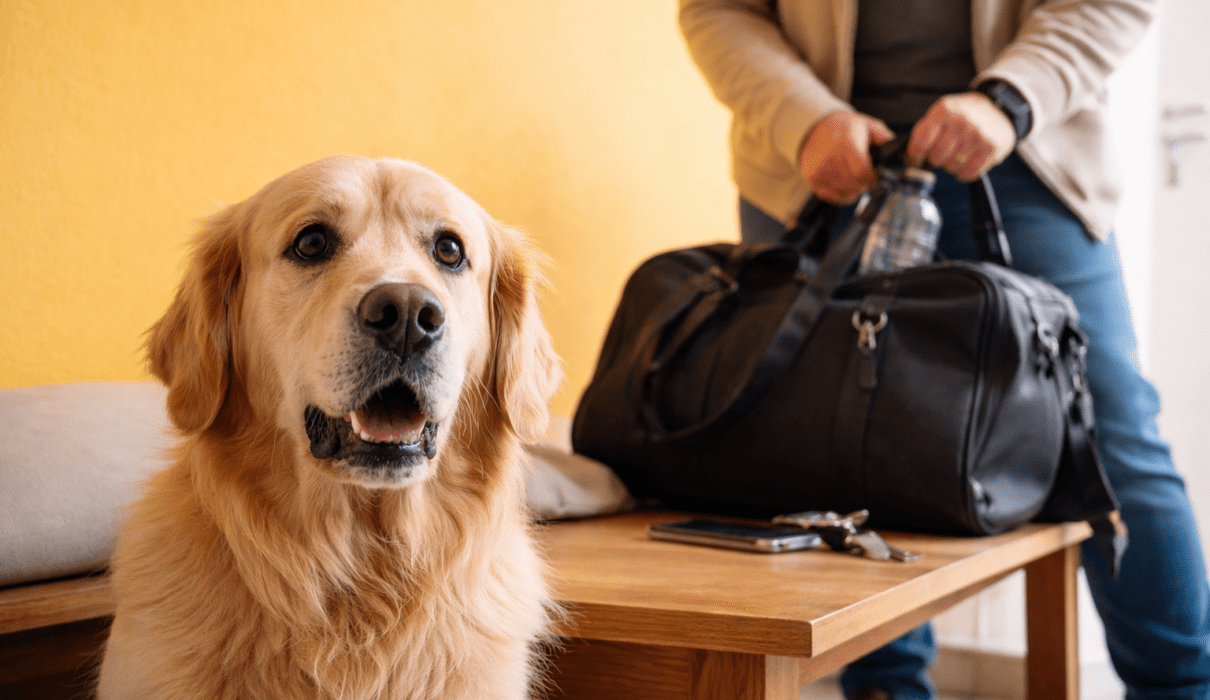
The moment I:
• Picked up my keys
• Put on my shoes
• Grabbed my bag
My dog changed.
He stopped relaxing.
He started watching. ( Tracking My Movement Constantly )
Nothing had happened yet
But his body already reacted.
That confused me at first.
I hadn’t left.
Nothing bad had occurred.
But his breathing changed.
His posture stiffened.
His eyes stayed locked on me.
The anxiety arrived
before separation. ( stress during short separations )
I realized he wasn’t reacting to absence
He was reacting to patterns.
Dogs don’t wait for things to happen.
They predict.
And my dog had learned
what my leaving looked like
long before it actually happened.
The cues were louder than the door
Looking back,
these were the real triggers:
• Keys
• Shoes
• Jacket
• Bag
• Certain movements toward the door
The door itself
was almost irrelevant.
The story had already started.
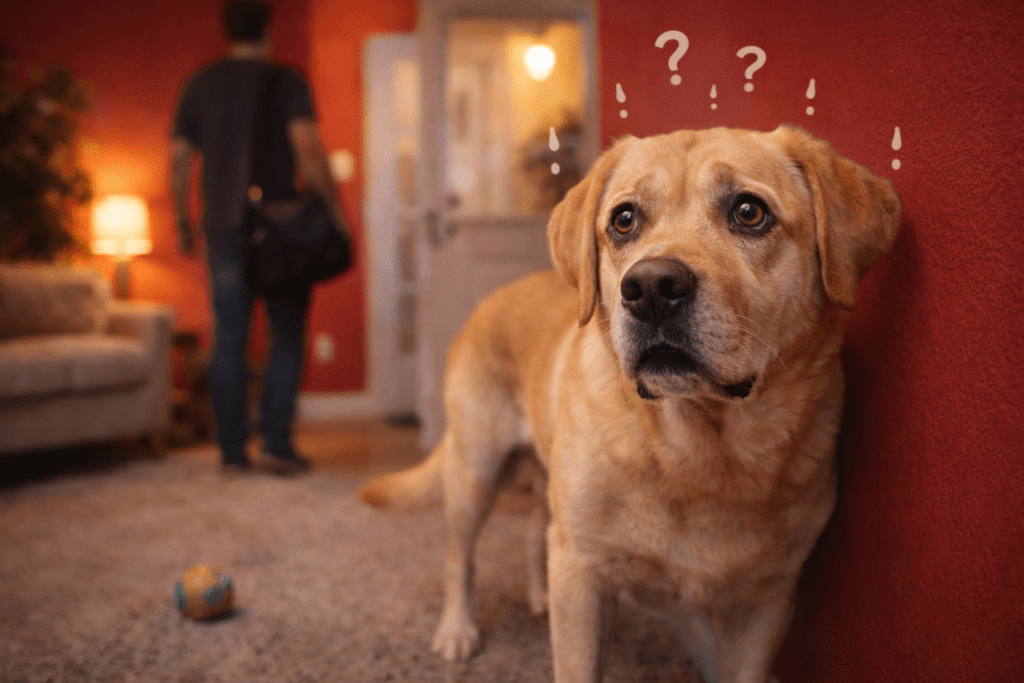
This is what anticipation anxiety looks like
It doesn’t always look dramatic.
Sometimes it looks like:
• Following silently
• Sitting upright instead of lying down
• Refusing to settle
• Watching every movement
• Waiting near the door
No noise.
No destruction.
Just tension.
I misunderstood this stage completely
I used to think:
“He knows I’m leaving, that’s all.”
But this wasn’t understanding.
This was loss of control.
Once the cues started,
his nervous system switched on.
And it didn’t know how to switch off.
Why anticipation feels worse than separation
This surprised me.
The waiting
was harder than the leaving.
Because waiting means:
• No clarity
• No timeline
• No control
The fear had room to grow.
By the time I actually left,
his body was already overwhelmed.
I accidentally made it worse without knowing
I rushed.
I grabbed things quickly.
I moved fast.
I tried to “get it over with.”
That urgency
fed the anxiety.
Not intentionally.
But consistently.
This stage connects everything
Once I saw it clearly,
everything else made sense.
• Following me everywhere
• Anxiety when I left the room
• Crying when I left home
• Difficulty settling at night
They weren’t separate issues.
They were one pattern.
Anticipation anxiety is an early warning
This part matters.
At this stage:
• Panic isn’t constant yet
• Destruction hasn’t started
• The dog is still reachable
This is the most workable window.
Ignoring it doesn’t make it go away.
It lets it grow.
“Subtle Separation Anxiety Signals”
What changed once I noticed it
I stopped focusing on the exit.
I started paying attention
to what happened before it.
That awareness alone
shifted how I responded.
And slowly,
how my dog responded too.
Looking back
The panic didn’t come from me leaving.
It came from my dog
feeling something important was slipping away
without warning.
Anticipation anxiety isn’t loud.
It’s tight.
It’s quiet.
It’s watchful.
And once you see it,
you can’t unsee it.