

 By
By (What I misunderstood about reunion anxiety at first)
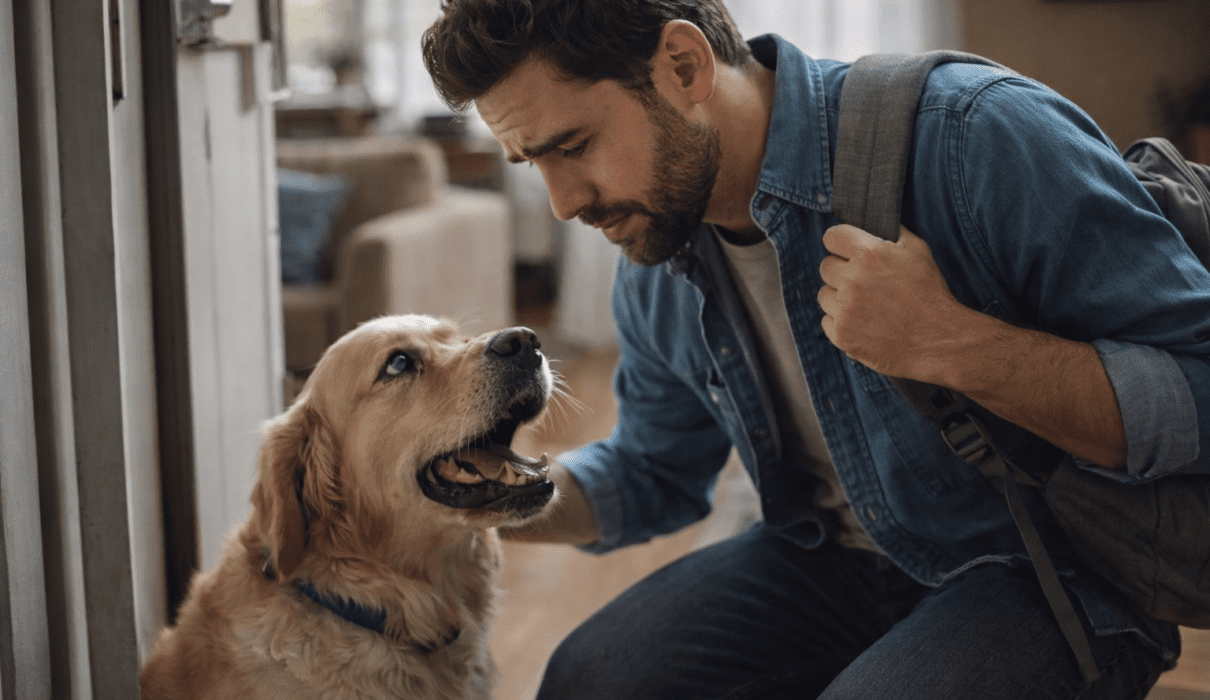
When I first noticed it,
I was confused.
I came back home.
The door opened.
I was finally there.
So why wasn’t my dog relieved?
Instead of calming down,
he was pacing.
Whining.
Clinging.
Unable to settle.
I remember thinking:
“I’m back… shouldn’t this anxiety be over now?”
That assumption was wrong.
And understanding why it was wrong changed everything for us.
I later realized this anxiety didn’t start when I came back –
it actually began much earlier.
I thought anxiety only existed when I was gone
Like most people,
I believed separation anxiety had a clear start and end.
• I leave → anxiety
• I return → relief
Simple.
But what I was seeing didn’t match that logic.
The anxiety didn’t disappear when I came back.
Sometimes, it actually intensified.
That’s when I realized something important:
Separation anxiety doesn’t end at reunion.
It transitions.
What reunion anxiety actually looks like
This anxiety doesn’t look dramatic.
No destruction.
No panic attacks.
It looks like:
• Over-excitement that won’t settle
• Following me nonstop after I return
• Whining or sighing
• Restlessness hours later
• Difficulty relaxing in the evening
At first, I called it happiness.
But happiness settles.
This didn’t.
Why coming back home can feel overwhelming to an anxious dog
This part took me time to understand.
For an anxious dog,
my return didn’t feel like resolution.
It felt like emotional overload.
Here’s why.
1. The nervous system doesn’t switch off instantly
When I was gone,
my dog’s body stayed alert.
Heart rate elevated.
Senses heightened.
Waiting mode active.
When I came back,
the body didn’t instantly relax.
Instead, it stayed activated –
now with excitement layered on top.
That’s not relief.
That’s overload.
2. Reunion breaks the “waiting pattern” suddenly
During separation,
an anxious dog often enters a frozen state:
Waiting.
Listening.
Monitoring.
When the door suddenly opens,
that state breaks abruptly.
The nervous system doesn’t glide down.
It crashes.
That crash shows up as:
• Hyper attachment
• Inability to calm
• Emotional clinginess
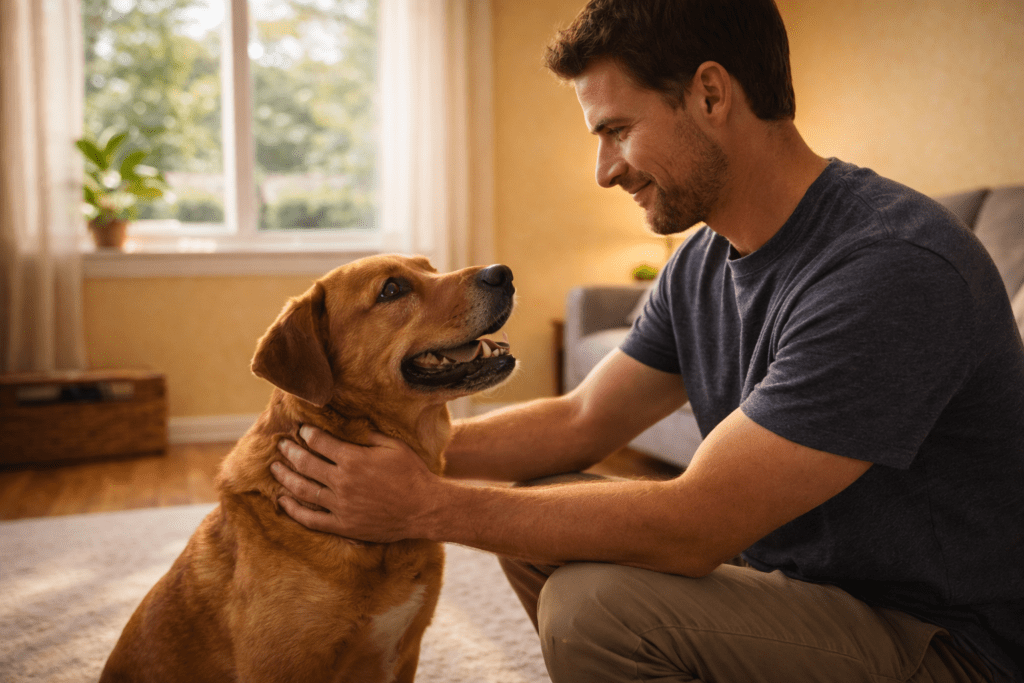
3. I unknowingly added pressure during reunions
This part was uncomfortable to admit.
When I returned, I used to:
• Talk excitedly
• Bend over immediately
• Ask questions
• React emotionally
I thought I was reassuring.
But emotionally charged reunions told my dog:
“This moment is BIG.
This moment matters intensely.”
For an anxious nervous system,
that intensity is too much.
How I knew this wasn’t “normal excitement”
Normal excitement fades.
This didn’t.
I noticed patterns:
• Anxiety lasted 30-60 minutes after return
• Evenings became restless
• Night pacing followed
• Sleep quality dropped
The stress wasn’t ending.
It was carrying forward.
That’s when I stopped calling it excitement
and started calling it what it was:
Unresolved separation anxiety.
What actually helped my dog after I came back home
Not tricks.
Not commands.
Small, intentional changes.
1. I stopped making reunions emotional events
This was the hardest shift.
When I came back, I:
• Entered calmly
• Avoided high-pitched voice
• Didn’t rush physical contact
• Moved normally
No ignoring.
No guilt.
Just neutral presence.
That neutrality created safety.
2. I allowed space before closeness
Earlier, I thought closeness helped.
But anxious dogs often need space first.
So I let my dog:
• Observe me
• Sniff
• Follow at his pace
Closeness happened naturally once the nervous system settled.
3. I created a predictable post-return routine
This changed everything.
After returning home,
the next 15-20 minutes always looked similar.
• Same movements
• Same room
• Same calm energy
Predictability told my dog:
“This moment is safe.
Nothing intense is coming.”
4. I stopped trying to “fix” the anxiety immediately
Earlier, I tried to calm him fast.
Now, I slowed everything down.
Anxiety doesn’t dissolve through control.
It dissolves through safety.
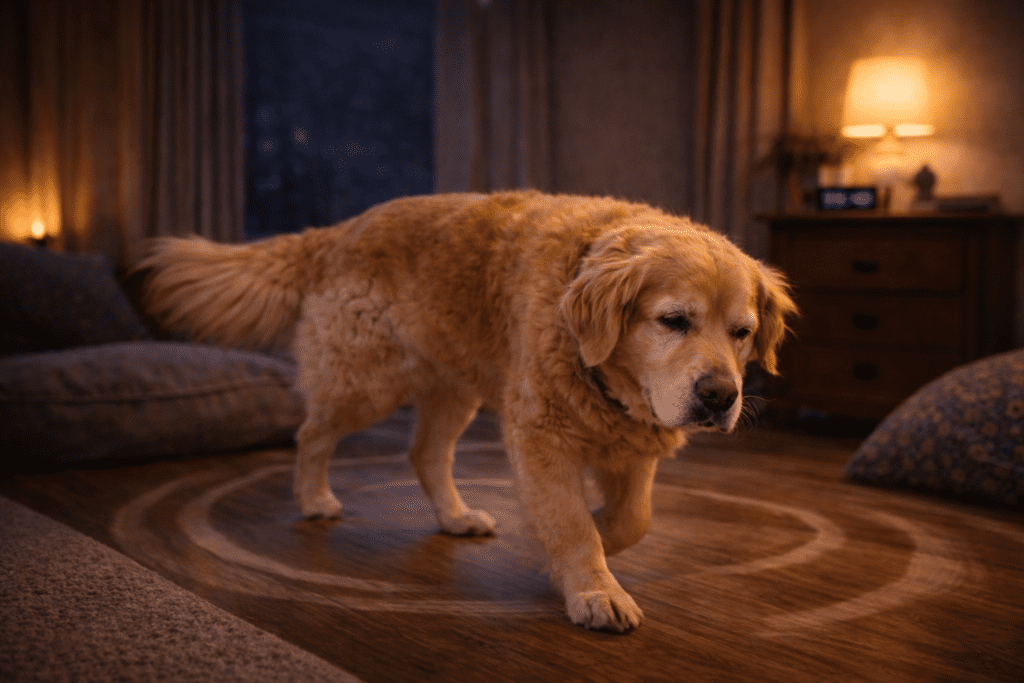
Why reunion anxiety often leads to night problems
This surprised me.
When post-return anxiety stayed unresolved,
it showed up later as:
• Evening restlessness
• Difficulty settling
• Night pacing
Stress delayed is still stress.
Calm returns created calm nights.
What this taught me about separation anxiety
Separation anxiety isn’t only about absence.
It’s about emotional regulation.
Leaving activates the nervous system.
Returning doesn’t automatically deactivate it.
That transition matters.
When reunion anxiety needs more attention
If your dog:
• Can’t calm down long after you return
• Becomes more anxious over time
• Shows night restlessness
• Becomes hyper-attached
That’s not something to ignore.
Early support prevents escalation.
A quiet realization I wish I’d had sooner
My dog wasn’t asking me to come back faster.
He was asking me to come back calmer.
Once I understood that,
everything softened.
Over time, I stopped focusing only on reunions and
worked on the bigger picture instead.
This experience is part of my journey with Pet Calm Care,
where I focus less on controlling behavior
and more on supporting emotional safety.