

 By
By For a long time, I thought I was doing everything right.
Every time my dog seemed anxious- pacing, whining, following me room to room – I’d grab the leash.
“Let’s go for a walk,” I’d tell myself.
Because that’s what everyone says, right?
A tired dog is a calm dog.
Except… mine wasn’t.
We’d come back from long walks.
Sometimes two. Sometimes three.
And yet, within minutes, the restlessness would creep back in.
That’s when it finally hit me:
My dog didn’t need more walks.
He needed something deeper.
The Mistake I Didn’t Realize I Was Making
Walks are physical relief.
Anxiety is emotional and neurological.
I was trying to fix an internal problem with an external solution.
Yes, walks burned energy.
But they did nothing to teach my dog how to feel safe.
In fact, on anxious days, walks often made things worse:
(LINK : Why tiring out an anxious dog often backfires)
- He became more alert, not calmer
- He scanned every sound, every movement
- He came home overstimulated, not settled
That’s when I understood something important:
An anxious dog doesn’t need exhaustion.
He needs regulation.
What Anxiety Actually Took Away From My Dog
When anxiety was high, my dog had lost three things:
- Predictability
- Emotional control
- Trust in downtime
Walks didn’t restore any of these.
So I stopped asking, “How do I tire him out?”
And started asking, “What helps his nervous system slow down?”
That question changed everything.
What Helped More Than Walks (The Real Shift)
1. Teaching Him How to Be Bored (Yes, Really)
This was the hardest one- for me.
I realized my dog didn’t know how to just exist without stimulation.
If nothing was happening, anxiety filled the gap.
So I stopped trying to entertain him constantly.
I created intentional quiet blocks in the day:
- No toys
- No commands
- No engagement
At first, he paced. Whined. Looked confused.
Then, slowly, something clicked.
He learned that:
Nothing happening does not mean something bad is coming.
That lesson was more powerful than any walk.
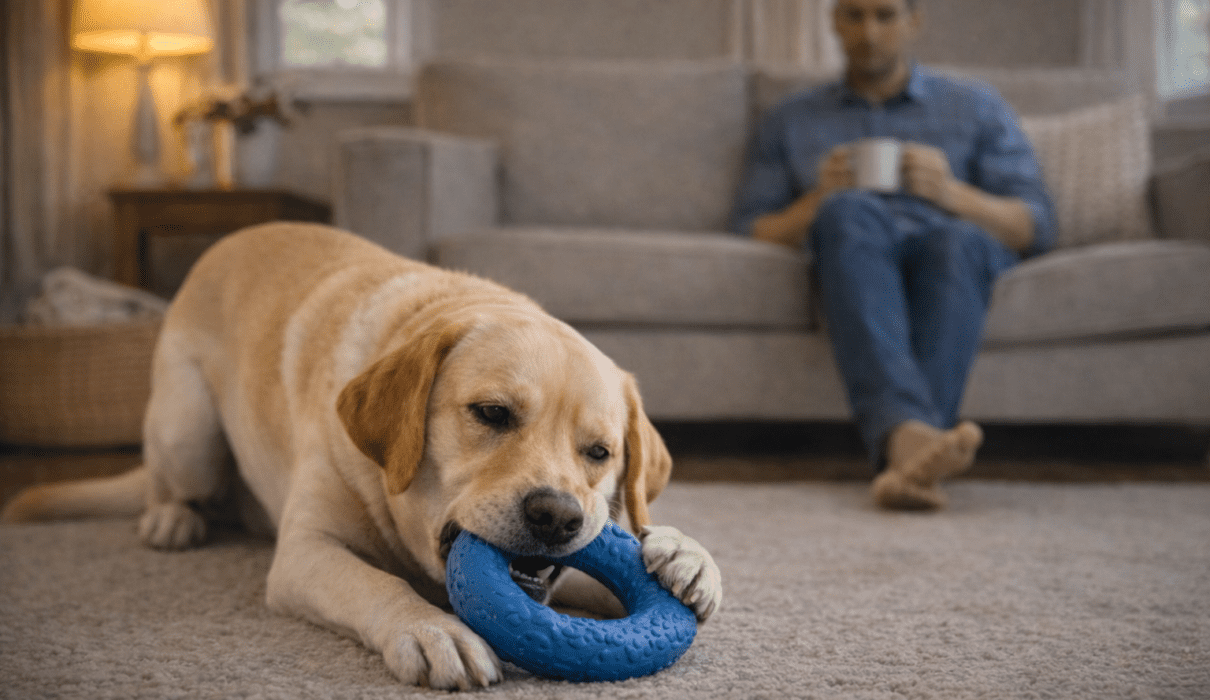
(What A Calm Day Actually Looks Like)
2. Predictable Anchors, Not More Activity
Instead of adding more movement, I added anchors:
- Same morning rhythm
- Same afternoon calm window
- Same evening wind-down cues
Not rigid schedules – emotional landmarks.
Anxious dogs don’t fear lack of exercise.
They fear uncertainty.
Once my dog knew what part of the day he was in, his body relaxed.
This is a core idea I refined deeply through my journey with Pet Calm Care –
calm doesn’t come from doing more, it comes from knowing what’s next.
3. Mental Stillness Over Physical Output
Here’s the part most people miss.
Walks stimulate:
- Sights
- Sounds
- Smells
- Decisions
An anxious brain doesn’t need more input.
It needs less noise.
So I replaced some walks with:
- Snuffle mats
- Lick mats
- Slow chewing activities
- Scatter feeding indoors
These did something walks never did:
They lowered his heart rate.
Ten minutes of slow licking helped more than a 45-minute walk.
4. Calm Presence, Not Constant Direction
When my dog was anxious, I used to guide him constantly:
“Sit.”
“Stay.”
“No.”
“Come here.”
I thought structure meant commands.
But commands kept his brain alert.
routine mattered more than commands.
What he needed was permission to relax.
So I changed my role:
- Fewer words
- Slower movements
- Neutral body language
I stopped managing him and started modeling calm.
And slowly, he followed.
5. Teaching Safety at Home First
This was the biggest realization:
If your dog can’t feel safe at home, walks won’t fix that.
Home became our training ground:
- Calm entry and exits
- No dramatic greetings
- No rushing to fix every emotion
Once he felt regulated indoors, walks naturally became calmer too.
Not the other way around.
When Walks Started Helping Again
Here’s the irony.
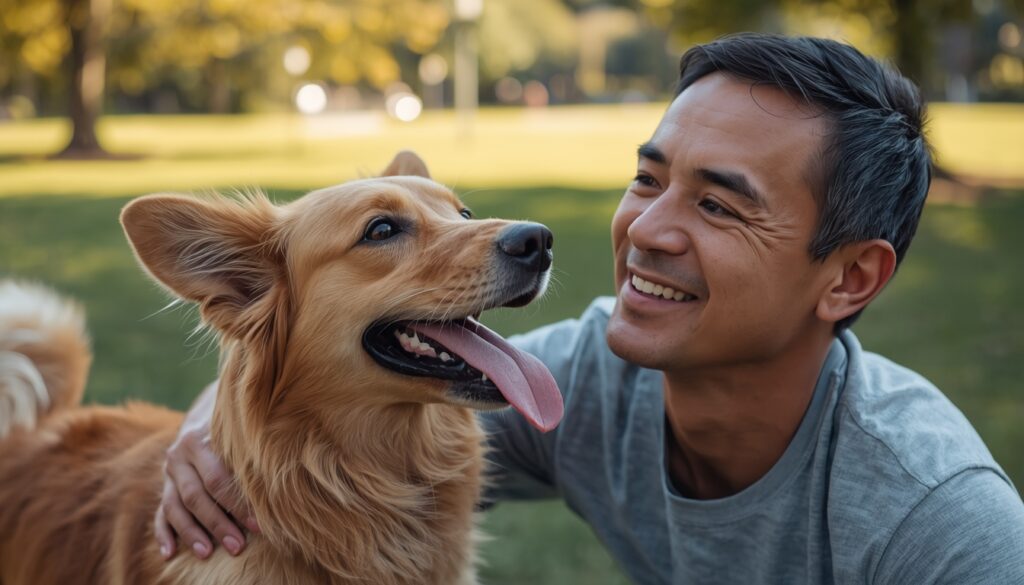
Once anxiety reduced, walks became enjoyable again.
- He sniffed instead of scanning
- He walked loose instead of pulling
- He settled faster afterward
Walks didn’t change him.
Regulation did.
If Your Dog Is Anxious, Ask This Instead
Not:
- Is he tired enough?
- Did I walk him long enough?
But:
- Does he know how to settle?
- Does he feel safe doing nothing?
- Does he trust calm moments?
Those answers matter more.
Reader Questions I Had During This Phase
If walks usually help dogs, why weren’t they calming my anxious dog?
Because walks release physical energy, not nervous system tension. When anxiety is high, stimulation can actually increase alertness instead of calming it.
Does this mean I should stop walking my anxious dog altogether?
No. Walks still matter. The shift is in how and when they’re used. Shorter, slower walks combined with regulation at home worked better than long, exhausting ones.
How can I tell if a walk is helping or overstimulating my dog?
Watch what happens after you get home. If your dog settles more easily, the walk helped. If restlessness increases, the nervous system may have taken on too much input.
What helped more than walks on highly anxious days?
Activities that slow the body down, like licking, chewing, sniffing indoors and simply having permission to be still. These lowered arousal in a way walks couldn’t.
Is it okay if my dog seems bored sometimes instead of constantly active?
Yes. Learning to tolerate boredom is a critical regulation skill. Calm doesn’t come from constant engagement; it comes from feeling safe during quiet moments.
Will walks start helping again once anxiety improves?
Often, yes. Once regulation improves, walks become enjoyable instead of overwhelming. Calm shows up inside the walk, not because of it.
Final Thought (The One I Wish I Knew Earlier)
Your dog doesn’t need you to run him into exhaustion.
He needs:
- Emotional safety
- Predictable calm
- Permission to slow down
Once I stopped chasing tiredness and started building calm capacity, everything changed.
This insight didn’t come from theory- it came from living it,
day after day, as part of my journey with Pet Calm Care.
And if your dog is anxious right now, let me tell you this:
You’re not failing.
You’re just learning what actually helps.
Take it slow.
Your dog is worth it.