


 By
By (The part I misunderstood – and what changed everything)
When I first heard the term separation anxiety,
I thought it meant something extreme.
Destruction.
Howling for hours.
Complete panic.
My dog didn’t do any of that.
So I told myself,
“This can’t be separation anxiety.”
I was wrong.
I thought anxiety looked louder than this
My dog still ate.
Still slept.
Still played.
So I assumed he was fine.
But what I didn’t understand back then was this:
Separation anxiety doesn’t start loudly.
It starts quietly.
The signs were there – just not dramatic
Looking back, I can see them clearly now.
Things I brushed off:
• Following me from room to room
• Getting restless when I grabbed my keys
• Watching the door instead of relaxing
• Settling only when I was nearby
• Feeling “off” in the evenings
None of it felt serious.
But it was consistent.
And consistency matters more than intensity.
I misunderstood what my dog was reacting to
I thought my dog reacted
after I left.
But that wasn’t true.
He reacted before I left.
Before the door opened.
Before I stepped outside.
The anxiety lived in the anticipation.
That was my first real clue.
Separation anxiety isn’t about distance
This took me the longest to understand.
It’s not about how far you go.
It’s about what your presence represents.
For my dog, I wasn’t just a person.
I was:
Safety
Predictability
Regulation
When those cues started disappearing,
his nervous system reacted.
Not logically.
Emotionally.
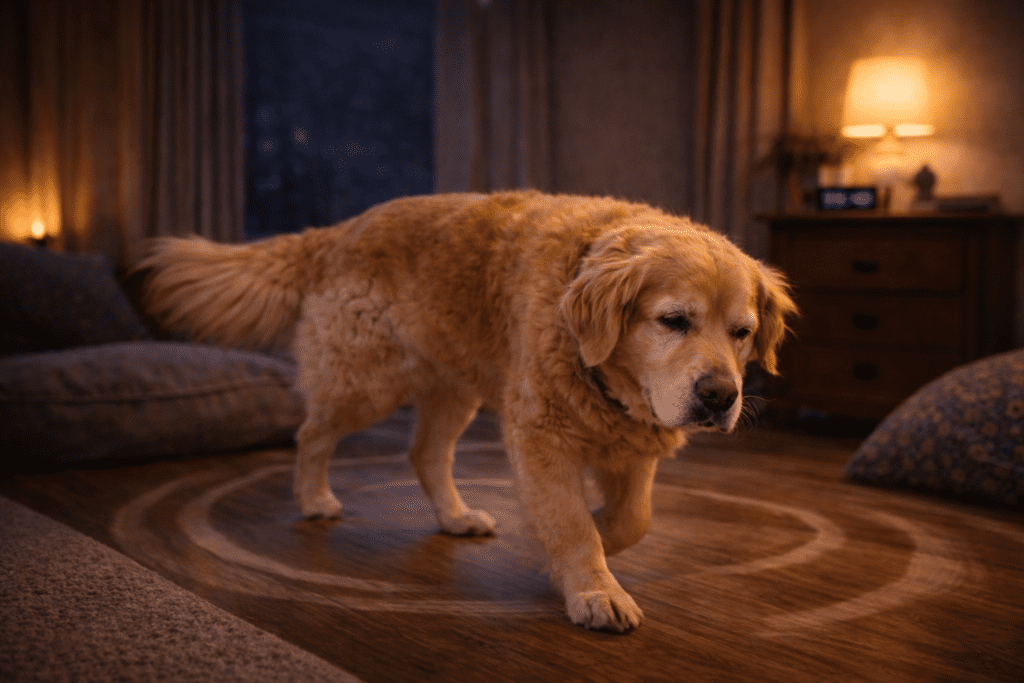
Why I kept calling it “something else”
I used softer labels:
“He’s just attached.”
“He just likes being close.”
“He’ll grow out of it.”
Those labels felt easier.
They didn’t require action.
But they also delayed understanding.
The moment things started to make sense
Everything clicked when I noticed this:
The anxiety followed a pattern.
• First: following me everywhere
• Then: tension when I left the room
• Then: distress during departures
• Later: trouble settling at night
It wasn’t random behavior.
It was progression.
What I wish I had understood sooner
Separation anxiety isn’t a switch.
It’s a buildup.
And early stages don’t look like emergencies.
They look like attachment.
They look like sensitivity.
They look easy to ignore.
Until they’re not.
Why early awareness matters so much
At this stage,
nothing was “out of control.”
My dog was still reachable.
Still responsive.
Still learning.
That window matters.
Because separation anxiety is much easier to support
before panic takes over.
Final thoughts
I didn’t miss the signs because I didn’t care.
I missed them because
I expected anxiety to look different.
Louder.
Messier.
More obvious.
But separation anxiety doesn’t start by screaming.
It starts by staying close.
And if I’ve learned anything,
it’s this:
Listening early
changes everything later.