

 By
By (What I Stopped Expecting – and What Finally Worked)
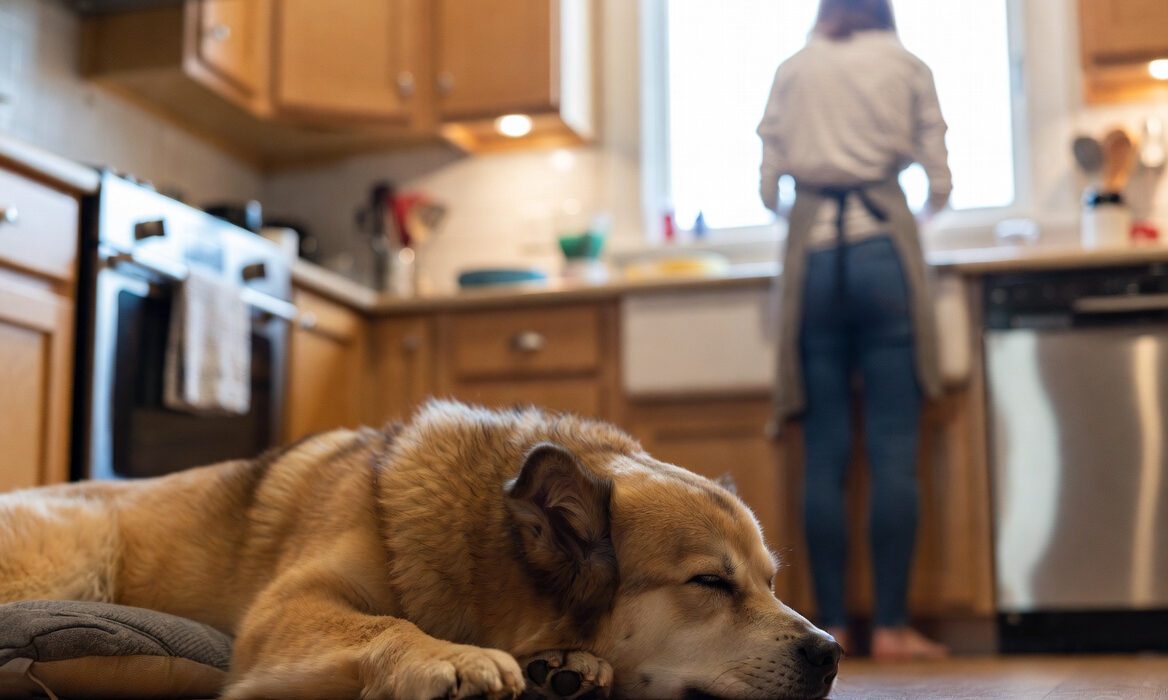
For a long time, I thought I knew exactly what a calm dog day looked like.
No barking.
No pacing.
No whining.
No “problems.”
Basically… silence.
And that belief quietly sabotaged everything.
Because when you live with an anxious dog, calm doesn’t look like perfection.
It looks like absence of urgency.
I didn’t understand that at first.
So I kept chasing a picture of calm that was never realistic – and never helpful.
What I Thought a Calm Day Should Look Like
In my head, a calm day meant:
• My dog sleeps most of the day
• He doesn’t follow me room to room
• He doesn’t react to sounds
• He feels “easy” to live with
So every time my dog:
• checked on me
• shifted positions
• watched the door
• got up when I stood up
I thought, “He’s still anxious.”
And I kept trying to fix those behaviors.
That was the mistake.
What I Didn’t Understand About Calm Dogs
Calm dogs are not inactive.
They are regulated.
They still move.
They still notice things.
They still engage with the world.
The difference isn’t what they do –
it’s how fast their nervous system responds and recovers.
A calm dog doesn’t live in freeze.
An anxious dog doesn’t live in motion.
The difference is flexibility.
That one realization changed how I started reading my dog’s day.
What a Calm Dog Day Actually Looks Like (Real Life)
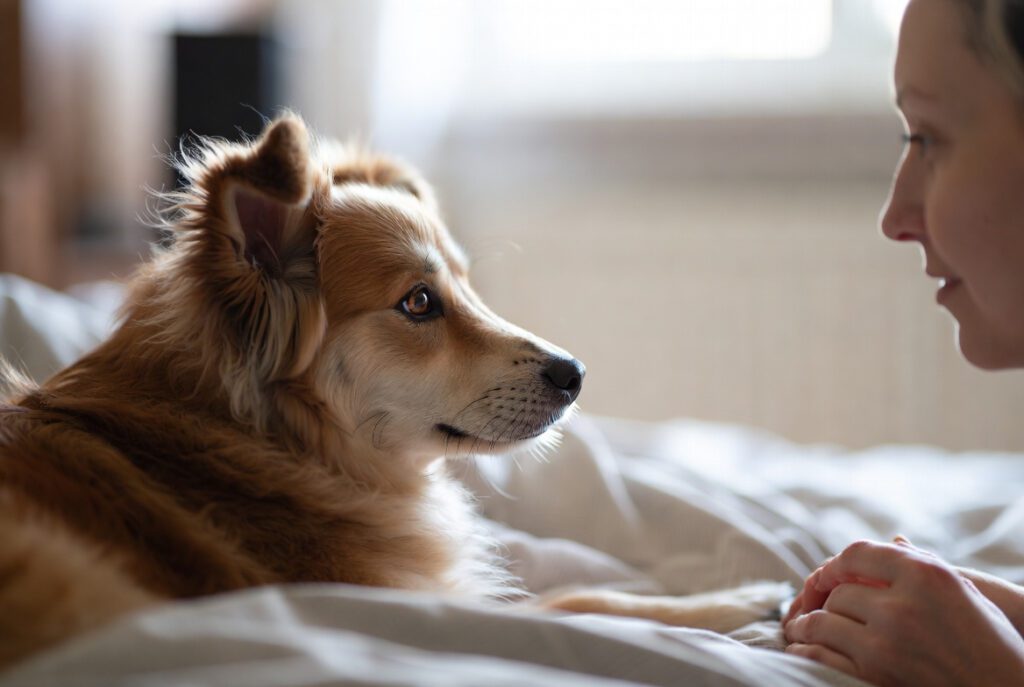
Not perfect.
Not silent.
Just stable.
Morning: Predictable, Not Exciting
A calm day starts quietly.
Not with stimulation.
Not with hype.
Not with rushing.
Our mornings became:
• the same wake-up pattern
• the same bathroom routine
• the same low-key start
No loud voices.
No sudden energy spikes.
I stopped trying to burn energy first thing in the morning.
I started trying to set tone.
That alone reduced morning anxiety more than extra walks ever did.
Midday: Engagement Without Pressure
This part surprised me the most.
A calm dog day isn’t empty – it’s balanced.
My dog had:
• short mental engagement
• simple enrichment
• time alone without expectation
Not constant play.
Not constant attention.
Not constant training.
Just moments where nothing was required of him.
Calm grew when he learned:
“Nothing is expected of me right now.”
An anxious nervous system needs permission to exist without performing.
Afternoon: Movement Without Urgency
Yes – walks still mattered.
But they stopped being the solution.
Instead of long, exhausting walks, we focused on:
• relaxed pace
• sniffing freedom
• no destination pressure
When walks stopped feeling like a job,
my dog stopped coming home overstimulated.
That’s when anxiety actually started decreasing.
Movement didn’t create calm.
Calm showed up inside movement.
Evening: The Most Important Window
Evenings used to be the hardest part of our day.
That’s when anxiety showed up as:
• pacing
• restlessness
• shadowing
• whining
I used to fight it.
Now, I prepare for it.
A calm dog evening includes:
• predictable lighting
• consistent background sounds
• familiar order of events
• fewer choices and fewer decisions
Not commands.
Not correction.
Not “relax.”
Just signals that the day is winding down.
That predictability mattered more than anything I said or did.
The Biggest Shift: I Stopped Monitoring Calm
This was uncomfortable to admit.
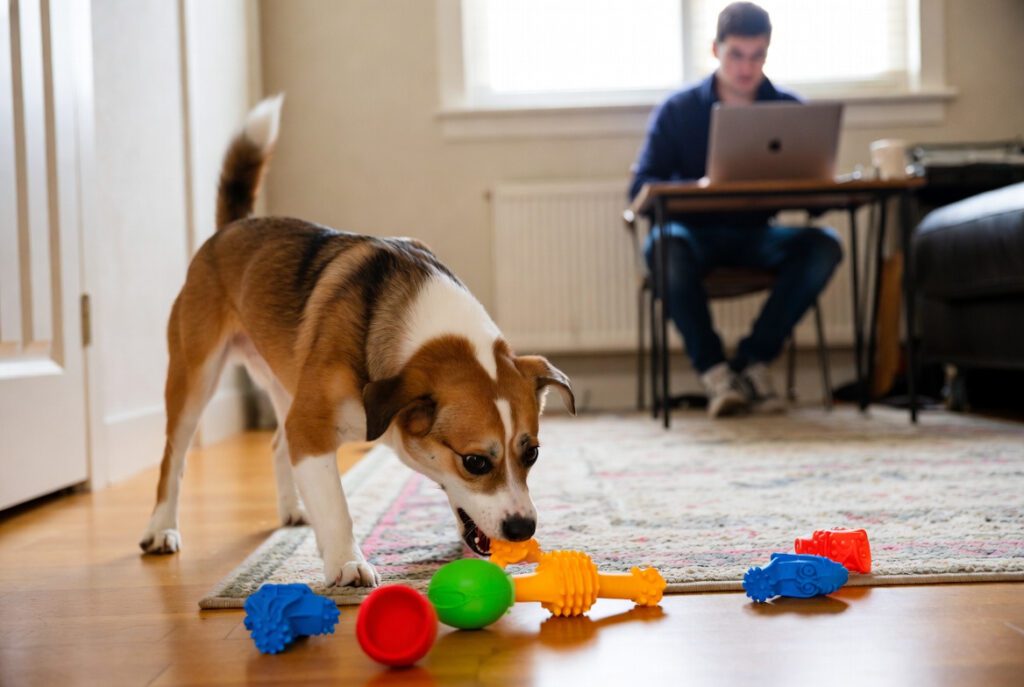
I used to watch my dog constantly.
Checking:
“Is he calm?”
“Is he settled?”
“Is he anxious again?”
That attention alone kept his nervous system alert.
When I stopped tracking calm –
calm started appearing on its own.
Calm doesn’t arrive when it’s monitored.
It arrives when it’s allowed.
Calm Doesn’t Mean Nothing Happens
This part matters more than people realize.
A calm day still includes:
• brief alert moments
• curiosity
• engagement
• small reactions
The difference?
They pass.
A calm dog recovers quickly.
An anxious dog gets stuck.
Recovery – not stillness – is the real goal.
Why Chasing Calm Often Backfires
Here’s the truth most people don’t talk about:
When you try to make a dog calm,
you often communicate that something is wrong.
Calm isn’t installed.
It’s supported.
It shows up when:
• pressure is reduced
• expectations are predictable
• safety signals are consistent
The more I tried to control calm,
the further it moved away.
What Finally Changed Everything for Us
When I stopped asking:
“How do I calm my dog today?”
and started asking:
“How do I make today feel safe and familiar?”
everything shifted.
Calm stopped being an outcome.
It became a by-product.
Reader Questions I Had During This Phase
“If my dog seems mostly okay during the day but gets restless in the evening, does that mean he isn’t actually calm?”
Not necessarily. Evening restlessness often means the nervous system is tired, not that regulation has failed. Calm doesn’t mean anxiety never shows up – it means your dog can settle again after it does.
“My dog still follows me around the house, but there’s no panic. Is that still anxiety?”
Connection and anxiety aren’t the same thing. Calm dogs still check in with their people. The difference is in the quality – anxious following feels tense, calm following feels soft and optional.
“Does a calm day mean my dog should sleep most of the time?”
No. Calm doesn’t equal sleep. Calm means your dog can move, pause and then settle again without spiraling.
“If I stop monitoring whether my dog is calm, won’t I miss signs of anxiety?”
Awareness is different from constant monitoring. When every movement is evaluated, the nervous system stays alert. Calm grows when safety is present, not when behavior is constantly checked.
Final Thoughts
A calm dog day doesn’t look impressive.
It doesn’t look Instagram-perfect.
It doesn’t look like obedience.
It doesn’t look like control.
It looks boring.
And boring is exactly what an anxious nervous system needs.
This experience is part of my journey with Pet Calm Care —
learning that calm isn’t something you demand from anxious dogs.
It’s something you quietly make room for,
one predictable day at a time.
If your dog’s day still includes movement, curiosity or small reactions –
that doesn’t mean you’re doing it wrong.
It might mean you’re finally building the kind of calm that lasts.