

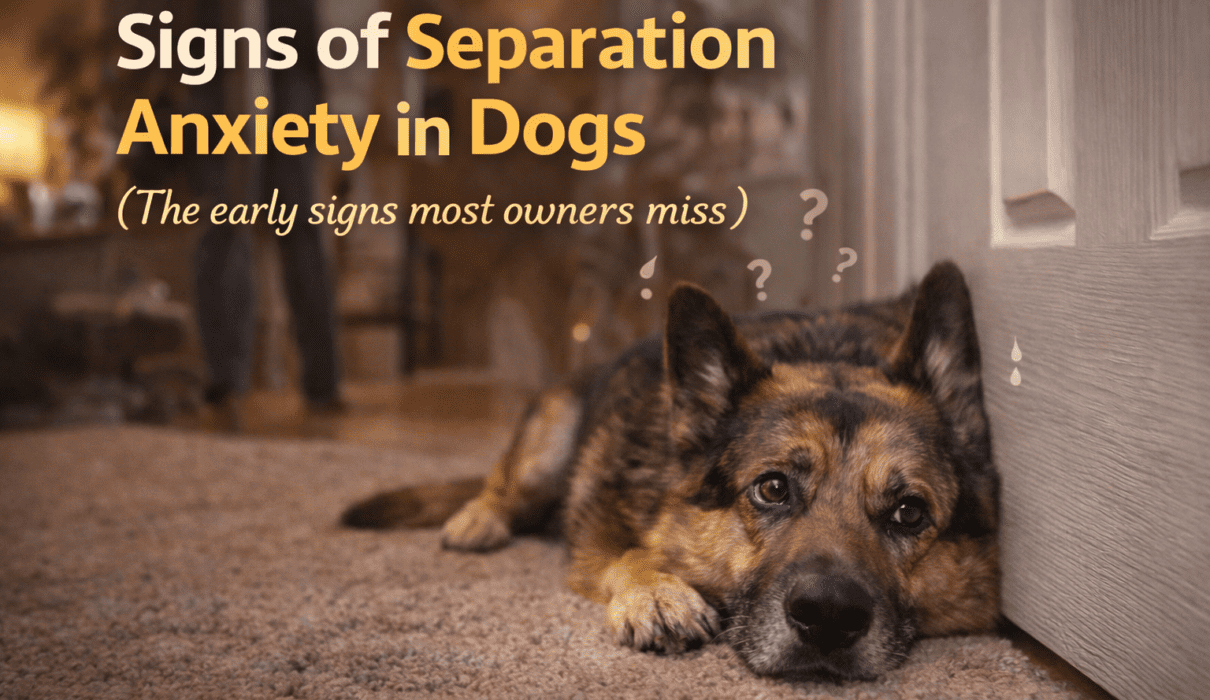
 By
By (The early signs I didn’t understand at first)
For a long time, I misunderstood separation anxiety.
I thought it looked dramatic.
Crying.
Howling.
Destroying things.
But when I finally understood it,
I realized something uncomfortable.
Separation anxiety often starts quietly.
And that’s why it’s missed.
Separation anxiety doesn’t begin when you leave
This was my biggest misunderstanding.
I thought:
“If my dog is fine while I’m home, there’s no separation anxiety.”
That assumption was wrong.
In many dogs, separation anxiety starts before separation even happens.
The first signs didn’t look like a problem
Looking back, the early signs were subtle.
Things I brushed off as “normal”:
• Following me everywhere
• Getting restless when I picked up keys
• Watching me closely instead of resting
• Standing near doors for no reason
• Losing interest when I moved away
• Difficulty settling when I changed rooms
At the time, I thought:
“He’s just attached.”
Now I know better.
One question changed how I saw everything
I started asking myself this:
Is my dog choosing to be close…
or does he look uncomfortable when I’m not?
That difference matters more than people realize.
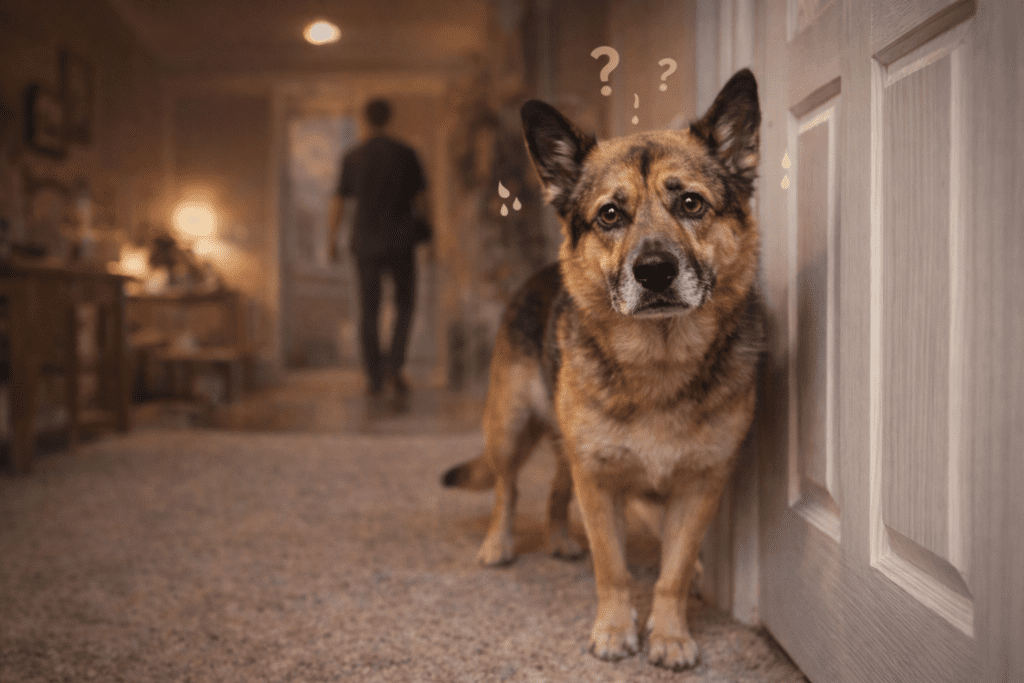
Closeness vs anxiety (they look similar, but feel different)
This distinction is critical.
Normal attachment looks like:
• Relaxed following
• Comfortable distance
• Ability to rest alone
• Calm body language
Anxiety-driven attachment looks like:
• Constant monitoring
• Tension when distance increases
• Inability to relax alone
• Alert posture even at rest
The dog isn’t enjoying closeness.
He’s depending on it to feel safe.
Subtle signs most people miss completely
These signs often appear before destructive behavior.
• Getting uneasy when routines change
• Pacing when you prepare to leave
• Sitting near exits
• Sudden interest in your movements
• Whining softly instead of loudly
• Refusing to settle when alone in another room
None of these look alarming on their own.
Together, they tell a story.
Separation anxiety can show up even when you’re home
This surprises most people.
I noticed anxiety when:
• I closed a door
• I worked in another room
• I took phone calls
• I changed my daily rhythm
My dog wasn’t reacting to absence.
He was reacting to distance and uncertainty.
That’s an early stage many owners never recognize.
Why separation anxiety builds slowly
Separation anxiety doesn’t appear overnight.
It builds when:
• A dog relies heavily on predictability
• Emotional security depends on presence
• The nervous system doesn’t self-regulate
Each small stress adds up.
By the time extreme behaviors appear,
the anxiety has already been there for a long time.
The body language that made me pause
This mattered more than behavior.
I started noticing:
• Tense muscles
• Shallow breathing
• Ears constantly alert
• Eyes tracking my movement
• Inability to fully relax
Even while lying down,
the body wasn’t resting.
That’s anxiety.
Why many dogs with separation anxiety sleep poorly
This connection surprised me.
Dogs with separation anxiety often struggle:
• At night
• During transitions
• When routines shift
Because their nervous system never truly switches off.
That’s why separation anxiety often overlaps with:
• Night pacing
• Evening restlessness
• Difficulty settling
It’s all connected.
What separation anxiety is NOT
This is important to say clearly.
Separation anxiety is not:
• Disobedience
• Stubbornness
• “Being spoiled”
• Bad training
It’s an emotional response to insecurity.
Once I understood that,
my entire approach changed.
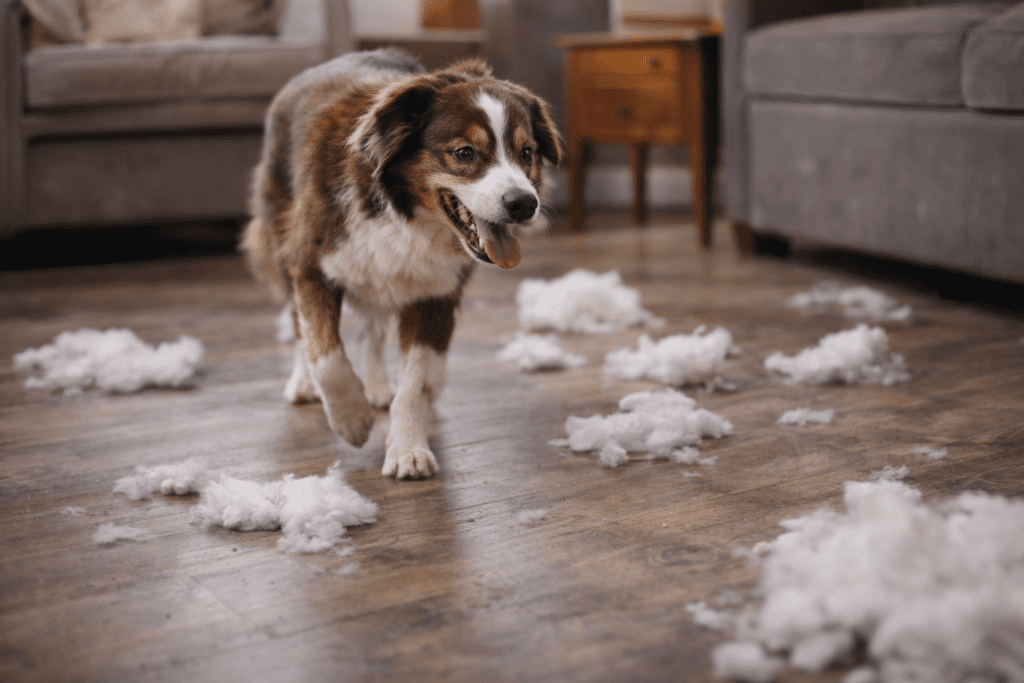
When these signs deserve attention
Early signs matter.
If your dog:
• Struggles to be alone even briefly
• Becomes uneasy with distance
• Shows growing dependence
• Gets worse over time
That’s not something to ignore.
Early awareness prevents severe anxiety later.
Final thoughts
Separation anxiety doesn’t start with destruction.
It starts with discomfort.
With tension.
With waiting.
With watching.
I wish I had recognized those early signs sooner.
Not to panic.
But to understand.
Because understanding anxiety early
is always easier than fixing it later.