

 By
By (How I learned to tell the difference)
For a long time,
I told myself it was just attachment.
My dog liked being close.
That didn’t sound like a problem.
He followed me.
He waited for me.
He preferred being near me.
I thought,
“This is normal. He’s just bonded.”
But something didn’t feel right.
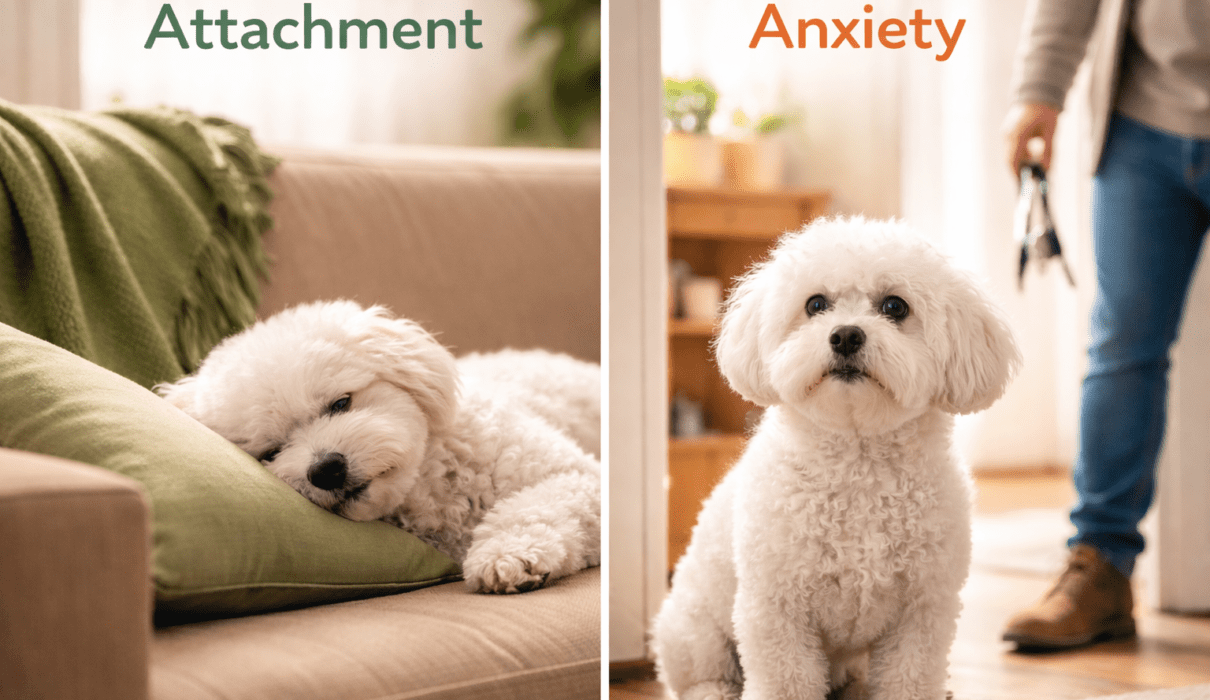
Attachment feels calm. Anxiety doesn’t.
This was the first difference I noticed.
When my dog was simply attached,
his body was relaxed.
He could lie down.
He could nap.
He could stay put.
But during other moments,
his closeness felt different.
Tighter.
More watchful.
Less settled.
I noticed how my dog behaved when I stopped moving
This small detail changed everything.
If I sat down and stayed still,
he relaxed.
But the moment I stood up,
he stood up.
Even if he was half asleep.
That wasn’t affection.
That was vigilance.
Attachment doesn’t need constant monitoring
This took time to understand.
A securely attached dog can be close
without being alert.
An anxious dog stays close
because they’re scanning for change.
My dog wasn’t enjoying my presence.
He was guarding against my absence.
The reaction to small separations mattered more than closeness
I paid attention to short moments.
When I stepped into another room.
When I closed a door briefly.
When I moved out of sight.
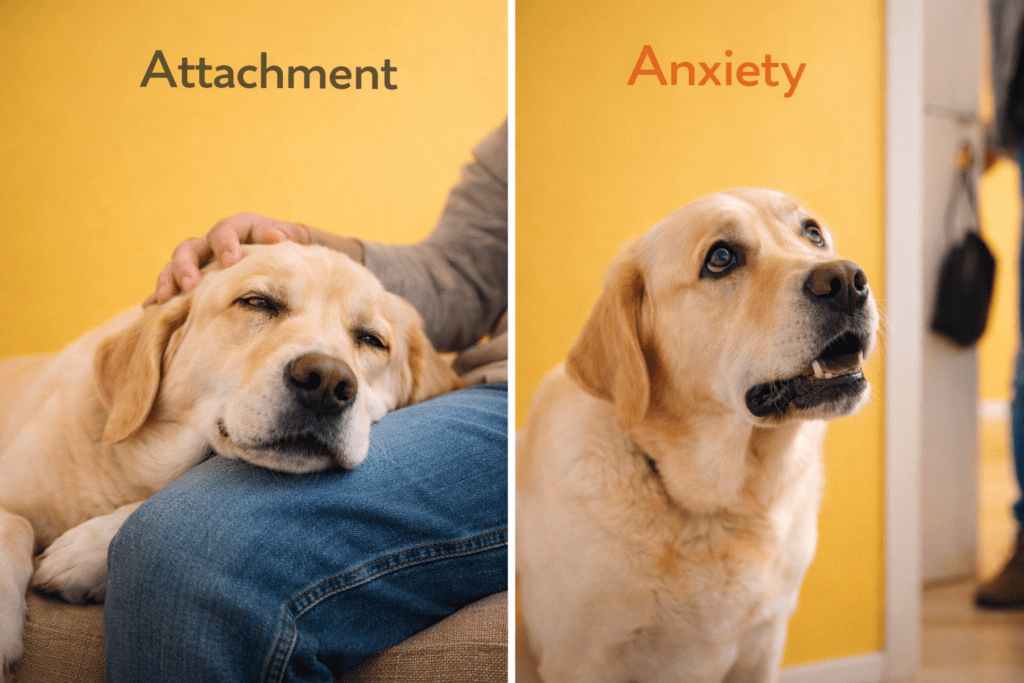
Attachment stayed calm.
Anxiety showed up as:
• Tension
• Following immediately (following me from room to room)
• Waiting near the door
• Difficulty settling
The separation didn’t have to be long.
It just had to be uncertain.
I used to think attachment turned into anxiety later
That wasn’t true.
What I saw instead was this:
Attachment and anxiety look similar
on the surface.
But underneath,
they come from different emotional states.
One comes from safety.
The other comes from fear of losing safety.
My dog wasn’t choosing closeness. He needed it.
This was hard to accept.
Because it meant
he wasn’t just being affectionate.
He was relying on me
to regulate his nervous system.
That’s not attachment.
That’s dependence.
The biggest difference showed up during routine changes
Attachment adapts.
Anxiety reacts.
When routines changed,
my dog didn’t just notice.
He unraveled.
Even small shifts caused:
• Restlessness
• Watching behavior
• Difficulty settling
• Increased need for proximity
That’s when I stopped calling it “just attachment.”
Attachment feels flexible. Anxiety feels rigid.
This distinction helped me the most.
A securely attached dog can handle distance
when needed.
An anxious dog can’t.
Not because they don’t want to.
But because their body doesn’t feel safe.
Why I kept confusing the two
Because anxiety doesn’t always look dramatic.
My dog wasn’t destructive.
He wasn’t loud.
He wasn’t out of control.
He was quiet.
Tense.
Always ready.
That’s easy to miss.
When attachment becomes anxiety
It’s not about how close your dog stays.
It’s about how they feel when they can’t stay close.
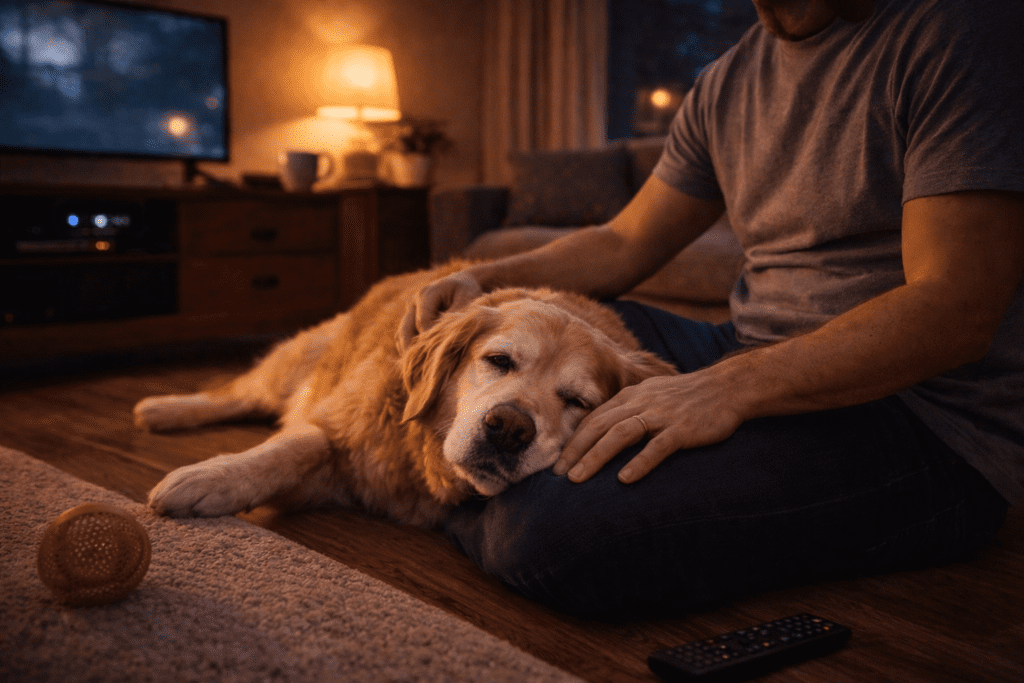
If closeness brings calm,
it’s attachment.
If closeness prevents panic,
it’s anxiety.
This realization changed how I responded
I stopped expecting independence
before safety.
I stopped pushing distance
before regulation.
And I stopped labeling behavior
without listening to what the body was saying.
Looking back
My dog wasn’t “too attached.”
He was struggling to feel secure
without constant access to me.
Once I understood that difference,
everything else started to make sense.
Not all closeness is the same.
And knowing why your dog stays close
matters more than how close they stay.
Over time, I realized this wasn’t the end of the pattern –
it was only the beginning and it later
showed up as crying when I left home.