

 By
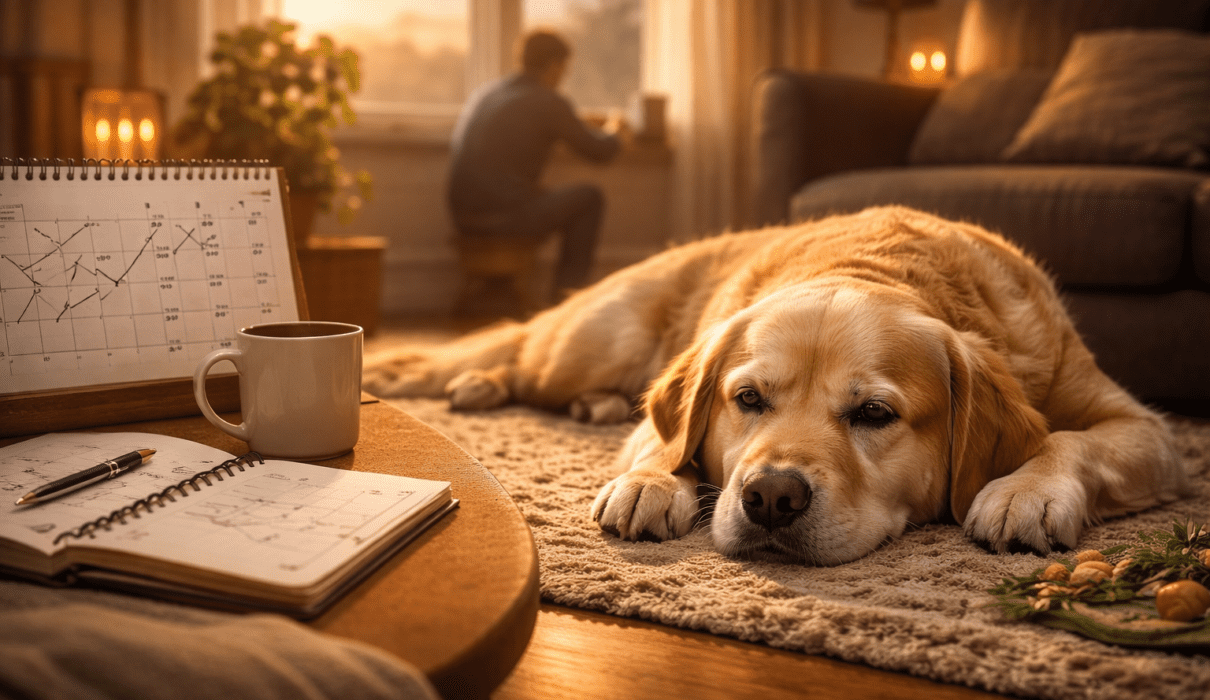
By (And Why I Had to Stop Watching the Calendar)
If I’m being honest, this is the question I was afraid to answer for a long time.
“How long will this take?”
When my dog was anxious, that question lived in my head.
Sometimes quietly.
Sometimes every single day.
I wasn’t looking for a miracle.
I just wanted reassurance that something anything was working.
What I didn’t understand back then was this:
Anxiety doesn’t improve on a schedule.
And learning that took longer than I expected.
What I Thought Progress Would Look Like
In the beginning, I imagined improvement would be obvious.
I thought one day I’d wake up and notice:
• no pacing
• no restlessness
• no reactions
• no anxiety behaviors
I assumed calm would arrive all at once.
So when days passed and my dog was still anxious,
I thought I was failing.
What I didn’t know then was this:
Anxiety doesn’t disappear.
It loosens.
And loosening is subtle.
The First Changes I Missed Completely
Looking back, the earliest signs of improvement were easy to ignore.
They weren’t dramatic.
My dog still paced.
Still followed me.
Still reacted to sounds.
But something small changed:
He recovered faster.
A noise would startle him –
and instead of staying stuck for minutes,
he’d settle again in seconds.
At the time, I dismissed that.
I was waiting for anxiety to vanish,
not for it to pass more quickly.
The Timeline No One Talks About
Here’s what improvement actually looked like for us – not exact days, but phases.
The First Few Weeks: Nothing Felt Better
This was the hardest stage.
I was changing routines.
Reducing pressure.
Creating predictability.
And yet… anxiety still showed up.
If anything, I became more aware of it.
That wasn’t regression.
That was contrast.
When calm moments begin appearing, anxious ones feel louder.
Around the One-Month Mark: Recovery Changed
This is where something quietly shifted.
My dog still had anxious moments –
but they didn’t hijack the entire day.
Evenings were still difficult,
but settling no longer felt impossible.
Nothing dramatic happened.
The day just felt lighter.
That’s when I realized improvement wasn’t about fewer triggers –
it was about faster recovery.
A Few Months In: Anxiety Lost Its Authority
Anxiety didn’t disappear.
But it stopped running the day.
My dog could feel uneasy and still function.
He could settle, get up and settle again.
The panic wasn’t gone –
but it no longer controlled everything.
That was real progress.
Why Watching the Clock Made It Worse
For a long time, I tracked progress like a project.
“How many weeks has it been?”
“Why isn’t this better yet?”
“Other people say it takes less time.”
That constant measuring created pressure.
And pressure leaks.
Dogs feel it in our tone, our movements, our expectations.
When I stopped counting days
and started noticing patterns,
progress felt steadier.
Not because I did more –
but because I stopped rushing calm.
What Actually Slowed Improvement
Progress stalled whenever I:
• expected anxiety to disappear
• tested how “calm” my dog was
• reacted emotionally to every setback
• changed strategies too often
An anxious nervous system needs time to trust that safety is real –
not temporary.
What Actually Helped Anxiety Improve
It wasn’t one technique.
It was a series of quiet, consistent changes:
• predictable daily flow
• fewer emotional reactions from me
• less monitoring
• more acceptance of imperfect days
Once I stopped treating anxiety as something to fix
and started treating it as something to support,
improvement became steady.
This understanding became a core part of my journey with Pet Calm Care —
learning that calm builds when pressure leaves the picture,
not when effort increases.
The Truth I Wish I Knew Earlier
If your dog’s anxiety improves slowly,
that doesn’t mean it isn’t improving.
Fast change often doesn’t last.
Slow change rewires.
Your dog isn’t behind.
He’s learning safety at the speed his nervous system allows.
Reader Questions I Had During This Phase
“If my dog still has anxious days, does that mean nothing is working?”
No. Progress isn’t the absence of anxiety – it’s the ability to recover from it. Anxious days can still happen even as regulation improves.
“How do I know the difference between slow progress and no progress?”
Look at duration, not frequency. If anxiety passes faster or feels less intense, that’s improvement.
“Is it normal for things to feel worse before they feel better?”
Yes. Increased awareness often comes before visible change. Calm moments create contrast at first.
“Should I change my approach if I don’t see quick results?”
Only if something clearly isn’t helping. Constant changes often slow progress by removing predictability.
Final Thoughts
My dog’s anxiety didn’t improve on a timeline I could control.
It improved when I stopped asking,
“How long will this take?”
and started asking,
“How safe does today feel?”
Progress didn’t arrive in a straight line.
It arrived in shorter spirals, softer reactions, easier recoveries.
And one day, without a clear milestone, I realized:
We weren’t fighting anxiety anymore.
We were living around it.
That’s when calm became real.