

 By
By (What actually reduced the panic around departures)
For a long time,
leaving the house felt heavier than it should have.
Not because I didn’t want to go.
But because of what it did to my dog.
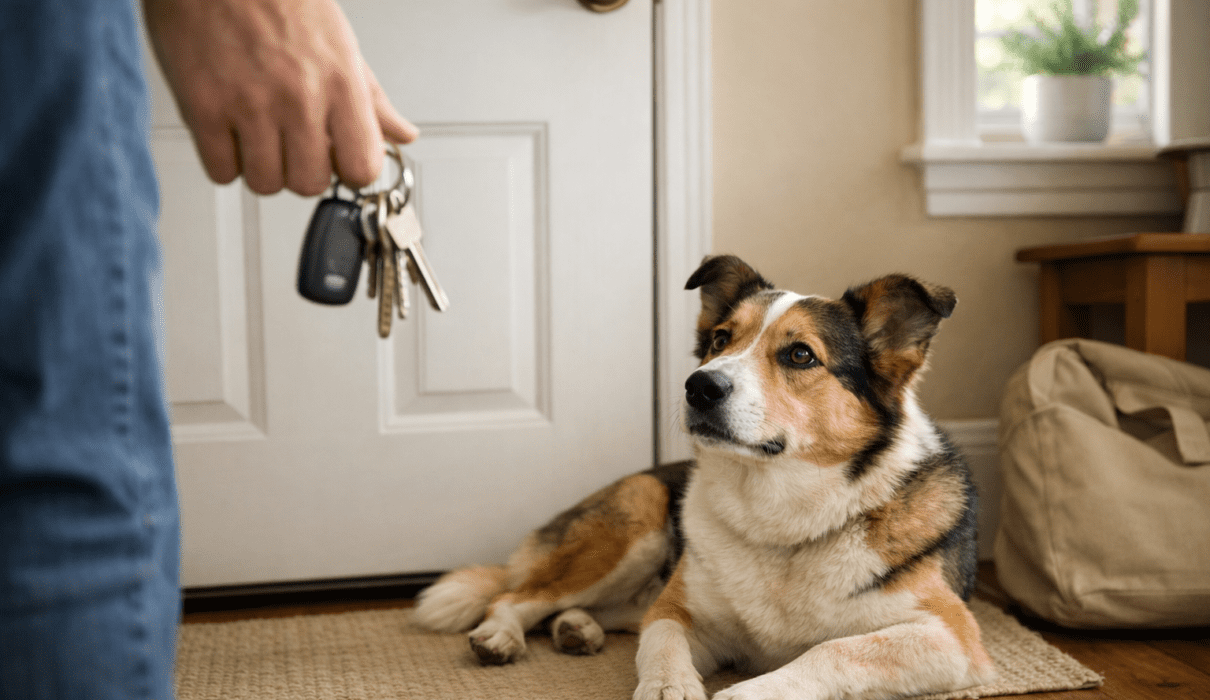
Keys in hand.
Shoes on.
Door handle touched.
And his body would change.
Tense.
Alert.
Watching every move.
I used to think:
If I just leave confidently, he’ll get used to it.
He didn’t.
What I misunderstood about leaving normally
I thought safety came from acting casual.
So I tried:
• No goodbyes
• No eye contact
• No reassurance
I treated leaving like it meant nothing.
But for my dog,
it meant everything.
He wasn’t reacting to my absence.
He was reacting to uncertainty.
The shift that changed everything
I stopped trying to teach independence.
I started building predictability.
That sounds small.
It wasn’t.
An anxious dog doesn’t need to be pushed away from you.
He needs to know what comes next.
I separated “leaving” from “emotional pressure”
This was the first real change.
Earlier, leaving looked like this:
• rushing
• tension
• guilt
• mental noise
My dog felt all of it.
So I slowed it down.
Before leaving, I:
• moved more deliberately
• avoided last-second rushing
• kept my body language neutral
No apology energy.
No drama.
Just steady.
I made departures boring on purpose
Not cold.
Not distant.
Just… predictable.
Same steps.
Same order.
Same pace.
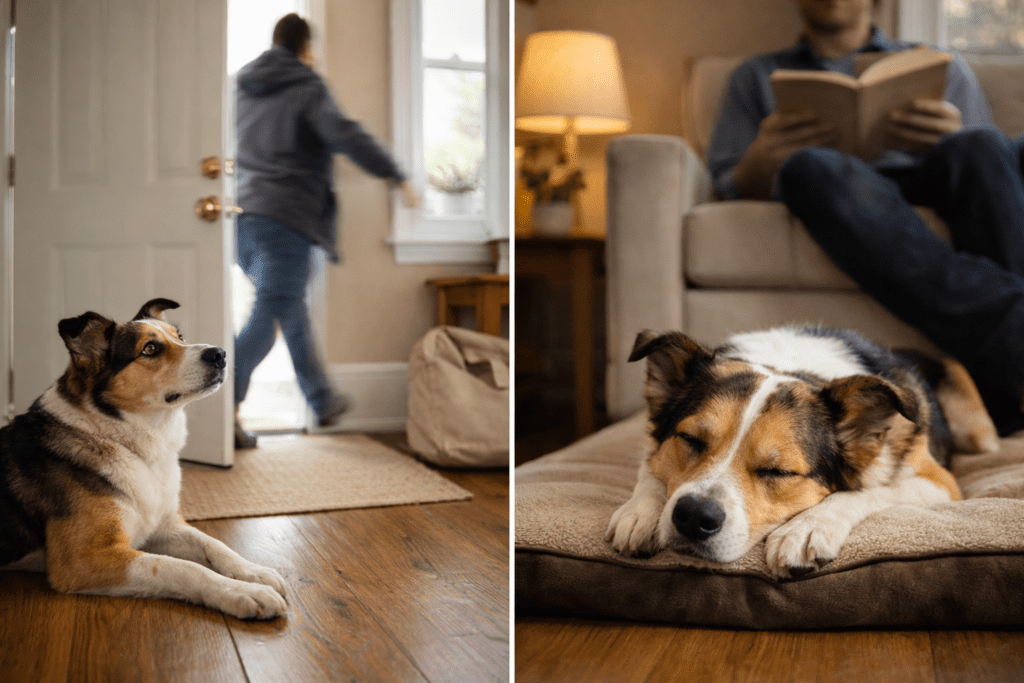
Shoes.
Keys.
Pause.
Door.
No emotional spike.
Over time, my dog stopped scanning me for clues.
Nothing surprising was happening anymore.
I stopped over-focusing on the exact moment of leaving
This part surprised me.
The anxiety didn’t live only at the door.
It lived in:
• how the day flowed
• how evenings settled
• how nights ended
When days were chaotic,
leaving felt harder for him.
When days were calmer,
departures softened on their own.
Safety is cumulative.
I reduced anticipation instead of fighting panic
Earlier, I tried to calm him after anxiety appeared.
That never worked.
Now I focused on:
• lowering overall arousal
• smoothing transitions
• keeping the nervous system steadier
Less build-up meant less explosion.
I let recovery take time (this was hard)
I expected instant relief when I came back.
But anxiety doesn’t reset on logic.
Sometimes:
• he was still alert
• still watching
• still unsettled
I stopped taking that personally.
Instead of thinking,
Why isn’t he calm yet?
I started thinking,
His body needs time to settle.
That patience mattered.
I stopped measuring progress by silence
This was a big mindset change.
Progress didn’t look like:
• no whining
• perfect calm
• zero reaction
It looked like:
• faster settling
• less intensity
• shorter anxious windows
Quiet improvement is still improvement.
The moment I knew things were changing
One day, I picked up my keys.
He looked up.
And then…
he laid back down.
No panic.
No following.
Just awareness.
That moment didn’t come from training.
It came from felt safety.
What helped most (in simple terms)
Not tricks.
Not hacks.
Just:
• predictable routines (Routine mattered more than commands)
• calm energy
• fewer emotional swings
• respect for recovery time
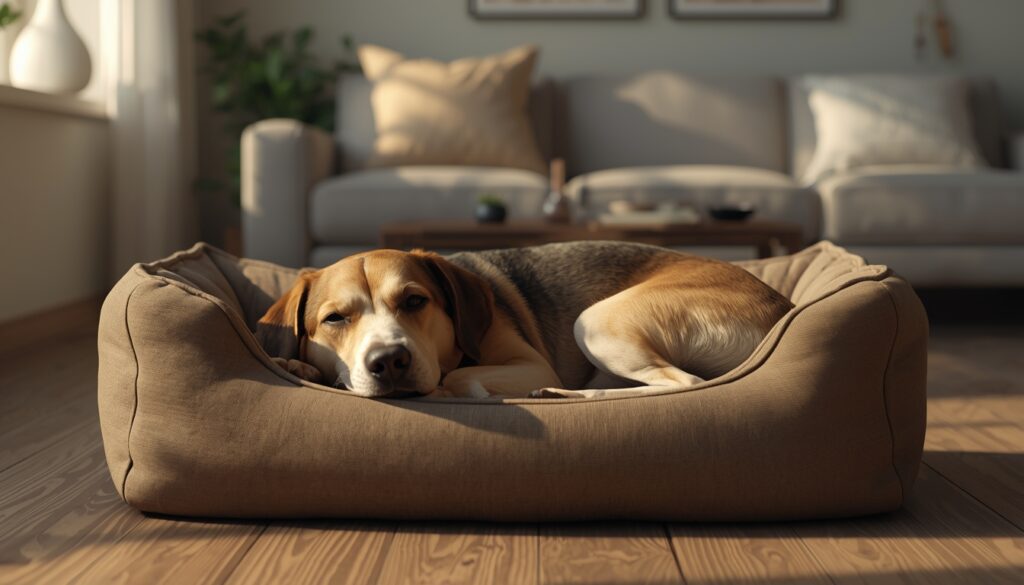
I didn’t make him braver.
I made the environment less confusing.
Reader Questions I Had During This Phase
Why did my dog start panicking before I even left the house?
Because anxiety often builds in anticipation, not absence. Small cues like keys, shoes or changes in movement can signal uncertainty long before the door actually closes.
Does ignoring my dog when I leave really help separation anxiety?
Not always. For some dogs, removing all acknowledgment can increase confusion. What helped more was predictability and calm energy, not emotional distance.
Is it bad if my dog still seems alert when I come back home?
No. Recovery takes time. Anxiety doesn’t switch off instantly just because you’ve returned. Faster settling over time matters more than immediate calm.
How can I tell if departures are actually improving?
Look for subtle shifts: less intensity, shorter anxious periods or your dog choosing to settle sooner. Progress often shows up quietly before it becomes obvious.
Why did working on the whole day help with leaving anxiety?
Because separation anxiety isn’t isolated to the door. When the nervous system stays steadier throughout the day, departures feel less overwhelming.
What if my dog still reacts sometimes even after progress?
That’s normal. Improvement doesn’t mean zero reactions. It means your dog can move through those moments and recover more easily than before.
What I wish I had understood earlier
Leaving doesn’t have to be a test of independence.
For anxious dogs,
it’s a moment of trust.
Once I stopped asking my dog to “handle it”
and started showing him what to expect,
leaving stopped feeling like danger.
Sometimes, safety isn’t taught.
It’s repeated
until the body believes it.
This experience is part of my ongoing journey with Pet Calm Care,
where I’m learning- slowly and honestly-
what actually helps anxious dogs feel safer.
ALSO CHECK: “Ignoring anxiety can also make things worse”