

 By
By (What the evenings started revealing)
For a long time,
I treated day and night as two separate problems.
Daytime anxiety was one thing.
Night restlessness was another.
I tried fixing them separately.
Nothing changed.
I didn’t realize the day was following my dog into the night
During the day,
my dog looked mostly okay.
He ate.
He rested.
He followed me around quietly.
Nothing dramatic.
So I assumed the anxiety was “managed.”
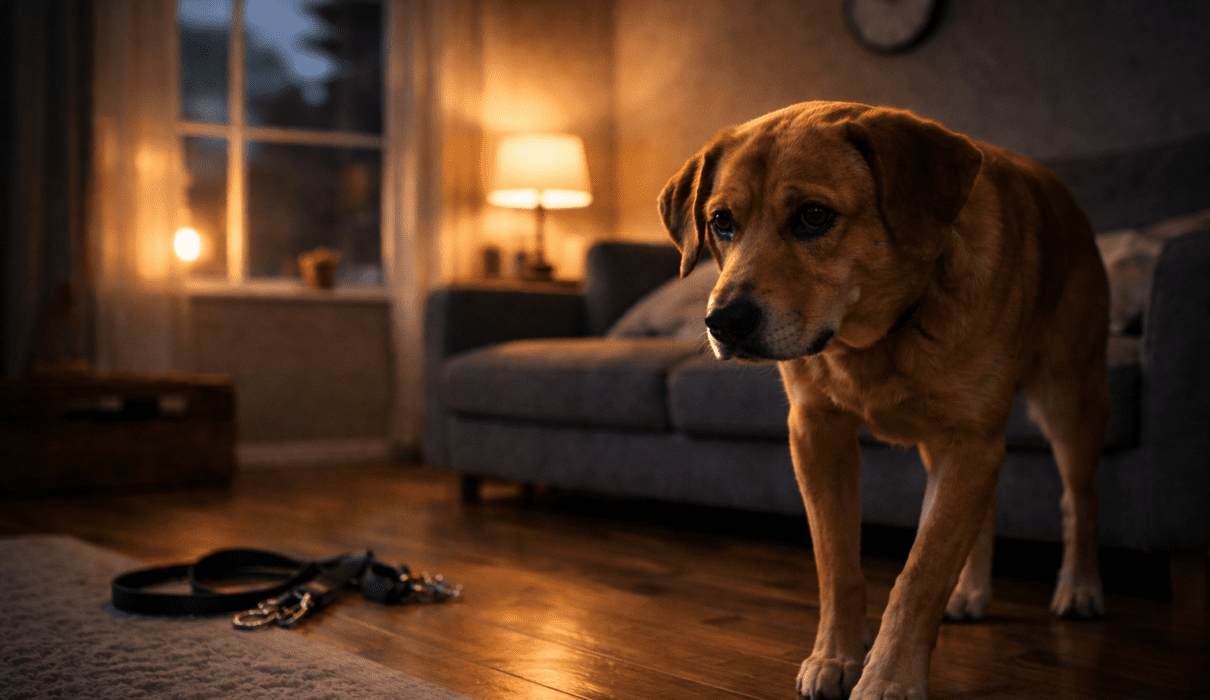
But when night came,
everything surfaced.
Pacing.
Restlessness.
Difficulty settling.
That’s when I understood something important:
Night anxiety isn’t new anxiety.
It’s leftover anxiety.
The body doesn’t reset just because the sun goes down
This was my biggest misunderstanding.
I thought night meant rest.
For an anxious dog,
night often means fewer distractions
and more space for the mind to wander.
When daytime stress isn’t released,
the nervous system stays activated.
Night simply removes the noise
that was masking it.
I started noticing subtle daytime signs I had ignored
Once I paid attention,
the pattern became obvious.
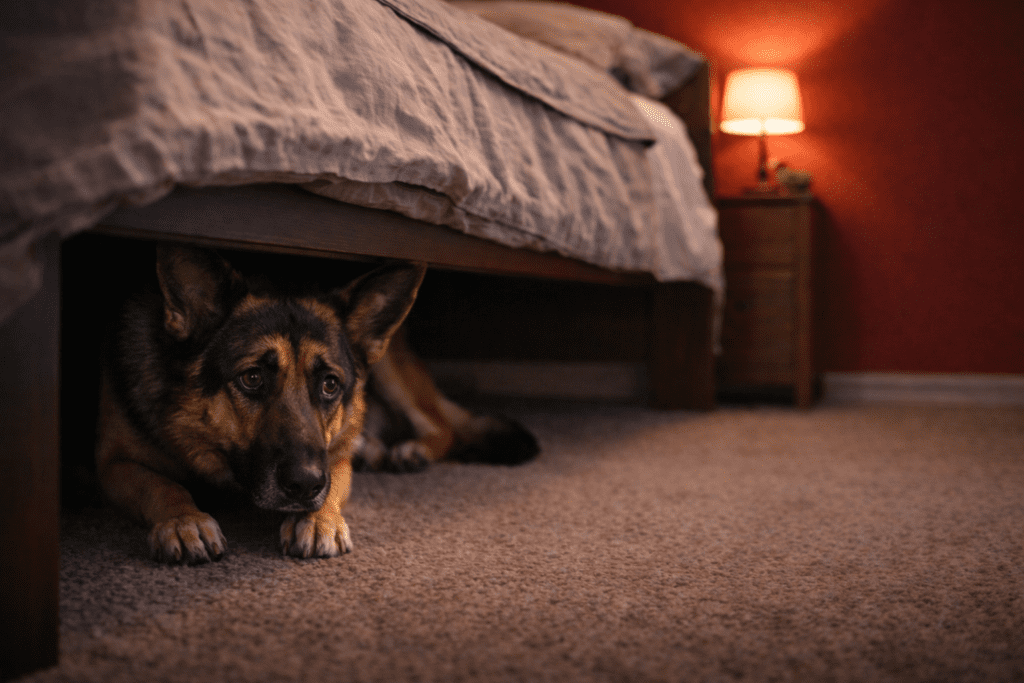
During the day, my dog showed:
• Following me more closely
• Difficulty relaxing unless I was nearby
• Light tension in his body
• Watching instead of resting
• Reacting quickly to small changes
None of this felt urgent.
But it added up.
Separation anxiety doesn’t disappear when you come back
Another thing I missed.
Even after I returned home,
my dog didn’t fully relax.
He stayed alert.
He monitored my movement.
He waited.
That unfinished stress
carried forward into the evening.
By bedtime,
his system was already overloaded.
Evenings became the pressure point
Evening was where everything collided. (“Evening Routine”)
The day slowed down.
The house grew quieter.
Activity dropped suddenly.
For my dog,
this transition felt uncertain.
Nothing else was happening,
but his nervous system didn’t know how to power down.
That uncertainty turned into restlessness.
I used to think night anxiety meant something new was wrong
I worried a lot.
Was he afraid of the dark?
Did he need more exercise?
Was something medical going on?
Sometimes those things matter.
But often,
night anxiety is just the body saying:
“I never fully calmed down today.”
Anxiety looks different when the body is tired
This part surprised me.
At night,
my dog wasn’t hyper.
He was exhausted.
And exhausted anxiety looks quieter,
but heavier.
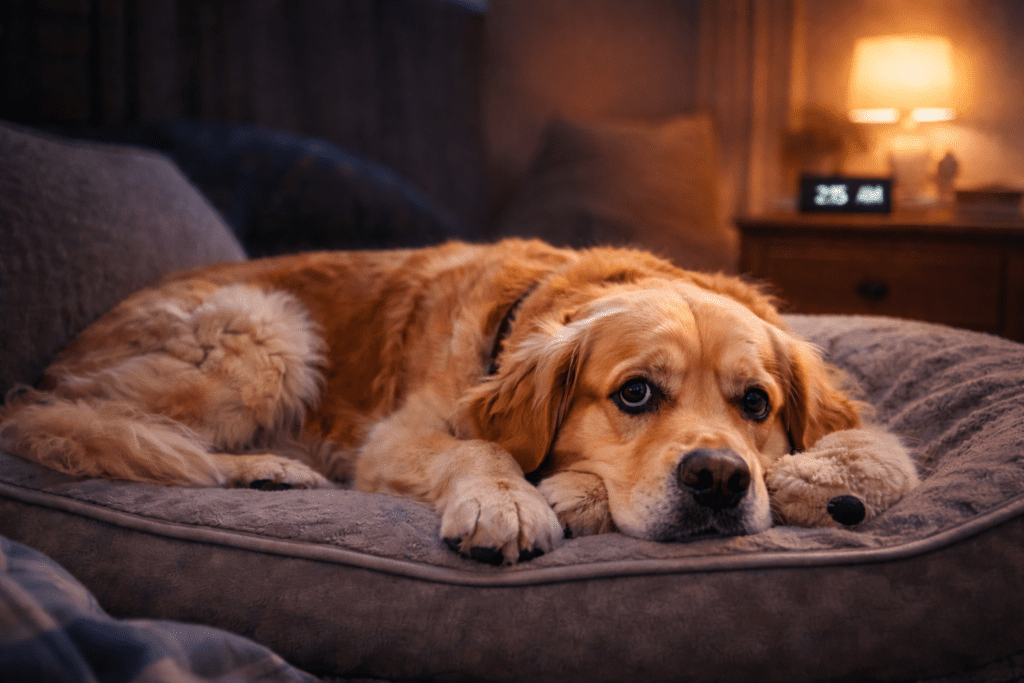
It shows up as:
• Wandering
• Repeated getting up
• Sighing
• Inability to settle
Not panic.
Just unease.
Why fixing bedtime alone didn’t work
I tried everything at bedtime.
Lights off.
Calm voice.
Comfort.
It helped a little,
but not enough.
Because bedtime was too late.
The anxiety had already spent the whole day building.
The shift that finally helped
Everything changed when I stopped asking:
“Why won’t my dog sleep?”
And started asking:
“What didn’t release during the day?”
That question connected everything.
Day anxiety.
Evening restlessness.
Night pacing.
They weren’t separate issues.
They were one continuous cycle.
What improvement actually looked like
Not suddenly.
But gradually, I noticed:
• Easier evenings
• Less pacing at night
• Faster settling
• Softer body language
Most importantly,
my dog stopped carrying the whole day
into the night.
When night anxiety is a warning, not the problem
This is important.
Night anxiety isn’t the enemy.
It’s information.
It tells you:
• Something stayed unresolved
• The nervous system didn’t feel safe enough to relax
• Calm never fully arrived
Once I listened to that message,
I stopped chasing nighttime fixes
and started supporting the whole day.
What this phase taught me
Night didn’t create my dog’s anxiety.
It revealed it.
In the quiet,
without distraction,
the body finally spoke.
And once I understood that,
nights became easier.
Not perfect.
Not silent.
But calmer.
Because calm wasn’t being forced at bedtime anymore.
It was being built all day long.