
 By
By (Anxiety or Attachment? How I learned the difference)
For a long time, I felt proud of this behavior.
My dog followed me everywhere.
Kitchen.
Bedroom.
Bathroom.
Even when I stood up for water.
I told myself,
“He just loves me.”
And honestly, that felt good.
But slowly, something started bothering me.
This didn’t feel relaxed.
It felt… tense.
That’s when I realized I had to ask a harder question:
Is this attachment…
or is this anxiety?
Why this behavior confuses almost every dog owner
Dogs are social animals.
So following you around can be completely normal.
That’s why this topic is tricky.
The behavior looks the same on the surface,
but the emotion behind it is very different.
And that emotion is what matters.
What normal attachment actually looks like
I had to relearn this.
Healthy attachment usually looks like this:
• The dog follows you calmly
• He can stop and rest even if you move
• He doesn’t panic when you leave the room
• His body stays relaxed
• He chooses closeness, not demands it
Most importantly:
👉 He can be alone without distress.
That’s attachment.
What anxiety-driven following looks like
This felt different once I noticed it.
Anxiety-based following looks like:
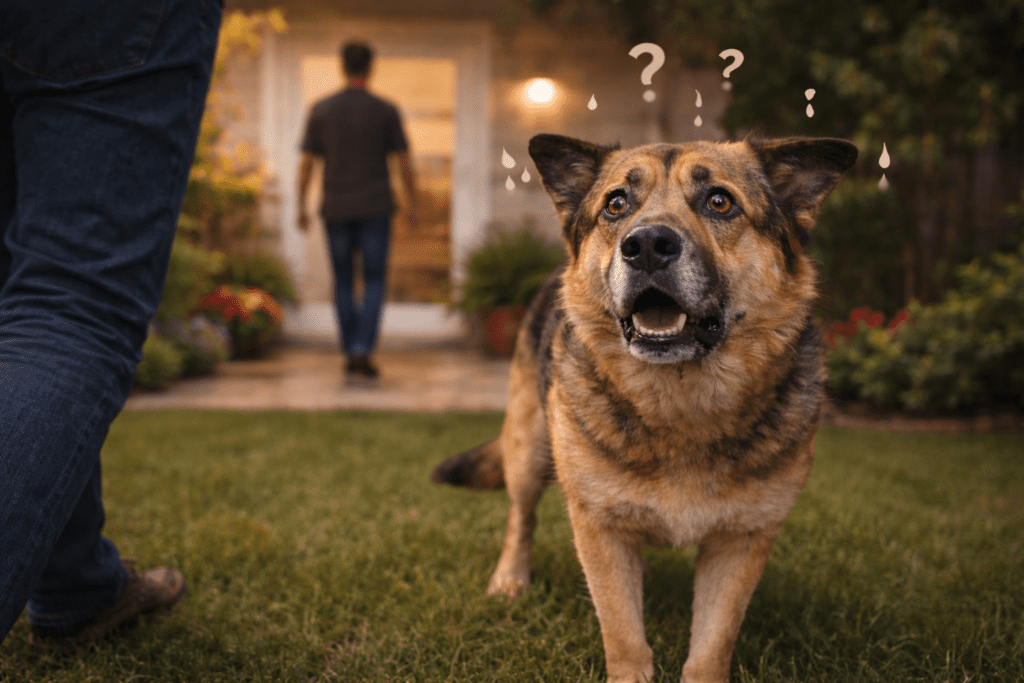
• Constant tracking of your movement
• Getting up immediately when you stand
• Tension when you walk away
• Inability to relax unless you’re visible
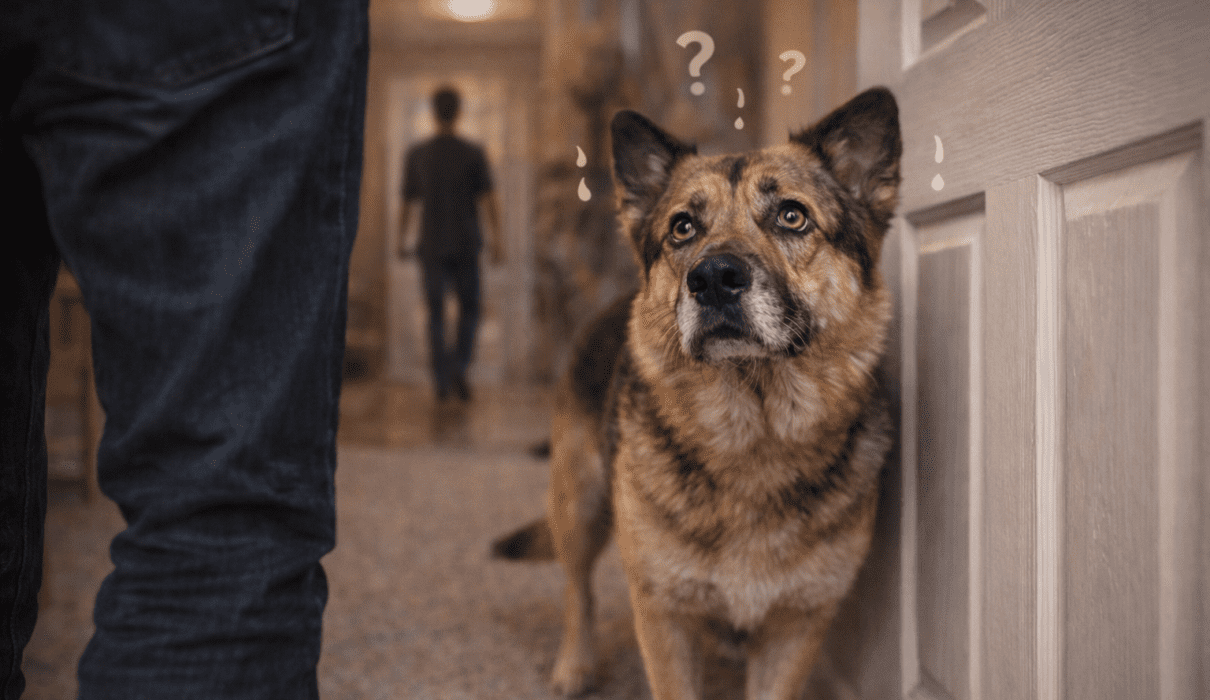
• Waiting near doors or hallways
• Alert posture even when “resting”
The dog isn’t enjoying closeness.
He’s using it to feel safe.
One small detail that changed everything for me
I noticed my dog wasn’t following me…
He was monitoring me.
His eyes stayed locked.
His body stayed ready.
That’s not comfort.
That’s vigilance.
And vigilance comes from anxiety.
Why dogs with early separation anxiety follow owners everywhere
This part helped me understand a lot.
Dogs that struggle with separation anxiety often:
• Don’t trust distance
• Don’t predict absence well
• Feel safe only when you’re present
• Struggle with uncertainty
Following you everywhere becomes a coping strategy.
Not love.
Not obedience.
Coping.
How I tested whether it was anxiety or attachment
I didn’t force anything.
I just observed.
I asked myself:
• Can my dog stay relaxed when I leave the room?
• Does he settle when I’m not visible?
• Does his body relax when I stop moving?
When the answer was “no” again and again,
I had my clarity.
Why this behavior often gets worse slowly
This doesn’t escalate overnight.
It builds quietly.
First:
• Following calmly
Then:
• Following closely
Then:
• Getting uneasy when you leave
Then:
• Stress reactions to separation
That’s why early awareness matters so much.
What this behavior is NOT
I want to be very clear here.
This behavior is not:
• Being spoiled
• Being over-loved
• Bad training
• Stubbornness
It’s an emotional response to insecurity.
Once I understood that,
I stopped feeling annoyed
and started feeling responsible.
Why night anxiety and daytime anxiety connect here
This surprised me.
Dogs that follow everywhere often:
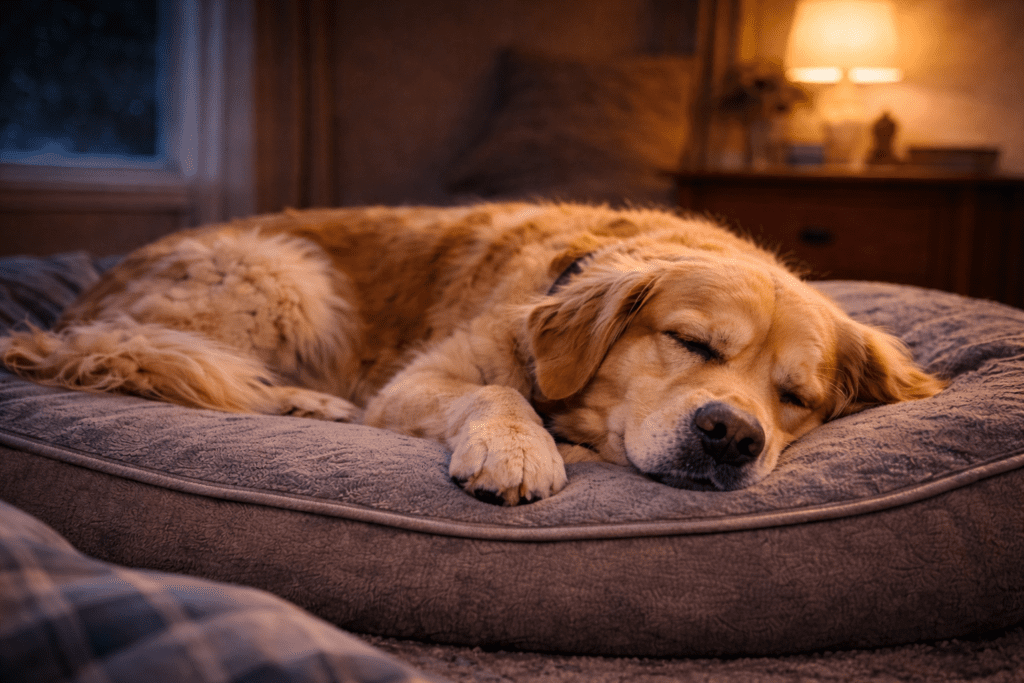
• Struggle to settle at night
• Get restless during transitions
• React strongly to routine changes
Because their nervous system never fully relaxes.
They are always “on.”
CHECK: Dog Restless at Night for No Reason
What helped me respond differently
(Not fixing yet – just supporting)
At this stage, I didn’t try to “fix” anything.
I focused on reducing pressure.
• I stopped reacting to every follow
• I didn’t scold or encourage
• I stayed predictable
• I avoided sudden disappearances
Support comes before solutions.
When following behavior deserves attention
If your dog:
• Cannot relax unless you’re present
• Becomes distressed with distance
• Follows with tension, not comfort
• Gets worse over time
That’s not something to ignore.
It’s an early signal.
And early signals are gifts.
Final thoughts
A dog following you everywhere
can mean love.
But it can also mean fear.
The difference isn’t in the feet.
It’s in the body language.
The breathing.
The ability to rest.
Once I learned to see that difference,
I stopped feeling flattered
and started feeling more aware.
And awareness always comes first.