

 By
By (What I didn’t understand at first – and what it was really telling me)
The first time it happened,
I thought it was normal.
I picked up my keys.
Put on my shoes.
Opened the door.
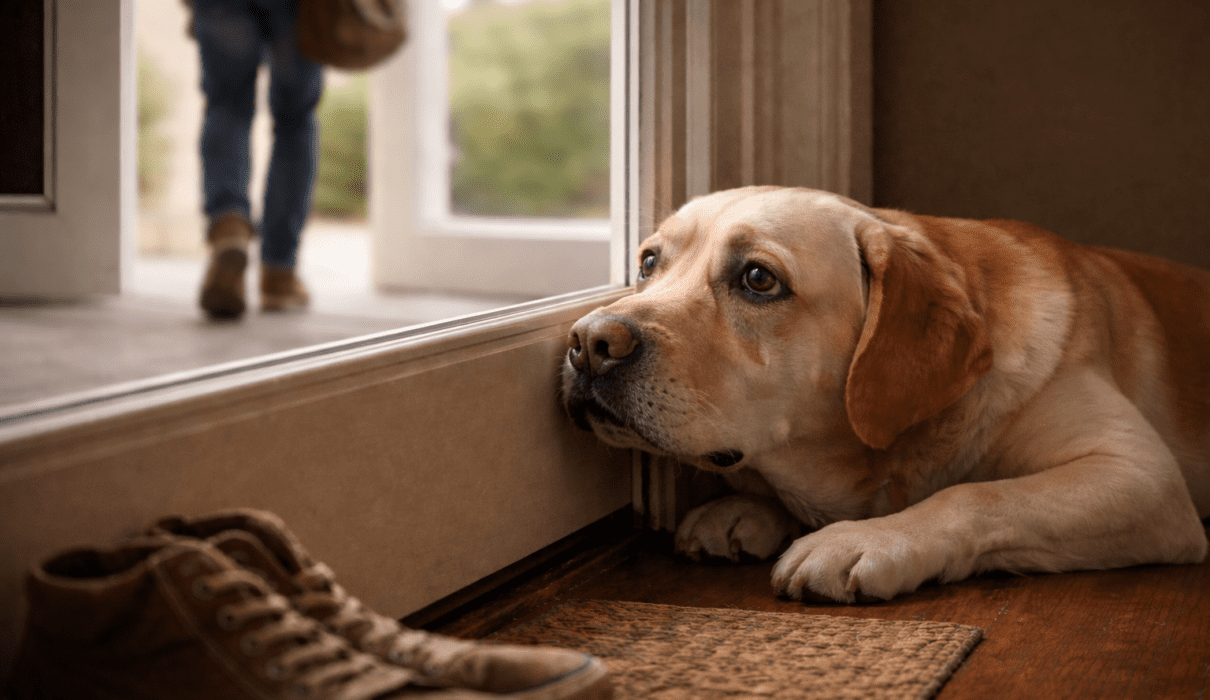
And my dog started crying.
Not loud.
Not dramatic.
Just… distressed.
I told myself,
“He’ll stop in a minute.”
But that minute didn’t come easily.
This kind of crying feels different
I’ve heard dogs bark before.
I’ve heard dogs whine for attention.
This wasn’t that.
This crying had:
• Urgency
• Tension
• Panic behind it
It wasn’t about wanting something.
It was about losing something.
When crying starts before you even leave
This was the part I missed at first.
The crying didn’t begin
after I left.
It began when I:
• Picked up keys
• Put on shoes
• Grabbed my bag
• Moved toward the door
My dog wasn’t reacting to absence.
He was reacting to anticipation.
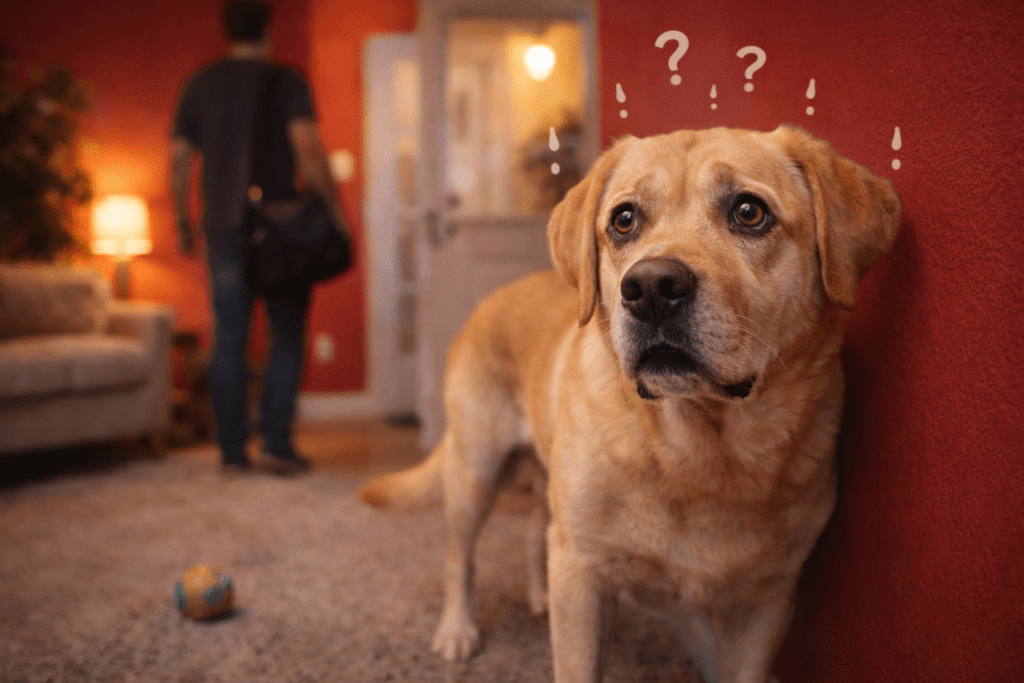
Why dogs cry when owners leave home
For dogs with separation anxiety,
leaving doesn’t feel temporary.
It feels like:
Something is changing
Something is wrong
Something is out of control
They don’t think in time frames.
They feel in safety cues.
And when those cues disappear,
the nervous system reacts.
Crying is communication, not misbehavior
This was important for me to accept.
My dog wasn’t being dramatic.
He wasn’t being stubborn.
He was saying:
“I don’t feel safe right now.”
Once I understood that,
my frustration disappeared.
How this stage fits into separation anxiety
Crying when you leave home usually comes after:
• Following everywhere
• Anxiety when you leave the room
And before:
• Destruction
• Panic behaviors
• Extreme stress responses
It’s a middle stage.
Still manageable.
Still reversible.
But only if you notice it.
What the body language showed me
The crying wasn’t the only signal.
I noticed:
• Tense body
• Pinned ears
• Shallow breathing
• Waiting near the door
• Difficulty settling even after I left
The body stayed “on.”
That’s anxiety.
Why ignoring this crying makes things worse
I tried ignoring it.
Many people told me:
“Don’t react or it’ll stop.”
But what actually happened was this:
The crying reduced slightly,
but the anxiety moved elsewhere.
Later, it showed up as:
• Restlessness
• Night pacing
• Difficulty being alone
Ignoring the emotion
didn’t remove the emotion.
What I changed once I understood the message
At this stage,
I didn’t try to “fix” separation anxiety.
I focused on reducing emotional pressure.
Here’s what helped:
• I stopped making exits dramatic
• I kept departures calm and predictable
• I avoided rushing out suddenly
• I stayed emotionally neutral
• I didn’t scold or comfort excessively
The goal wasn’t silence.
The goal was safety.
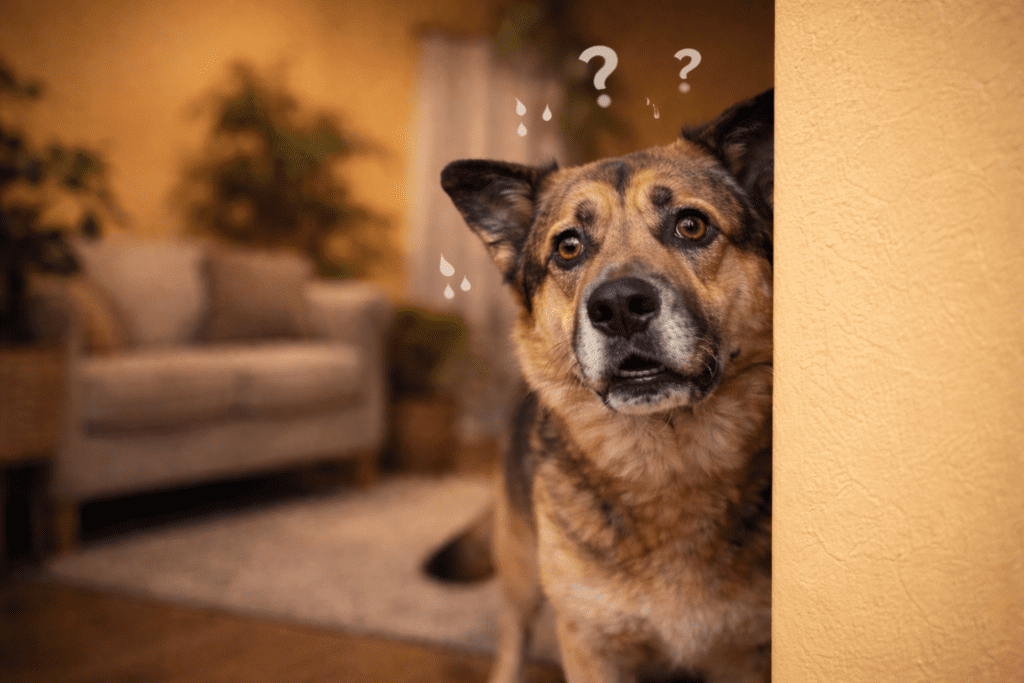
What not to do when your dog cries as you leave
These things made anxiety worse:
• Yelling to stop crying
• Coming back repeatedly
• Making goodbyes emotional
• Sneaking out suddenly
• Acting guilty
Anxious dogs read energy faster than words.
Why this crying often connects to night anxiety
This surprised me.
Dogs that cry when you leave home
often struggle later with:
• Evening restlessness
• Night pacing
• Difficulty settling
Because their nervous system stays activated.
Day stress doesn’t disappear at night.
When crying deserves serious attention
If your dog:
• Cries intensely when you leave
• Takes long to settle
• Gets worse over time
• Starts crying earlier and earlier
That’s not something to “wait out.”
It’s an anxiety signal asking for support.
Final thoughts
A dog crying when you leave home
isn’t trying to manipulate you.
He’s reacting to fear of separation.
I wish I had understood this sooner.
Not to panic.
Not to label.
But to listen.
Because separation anxiety doesn’t shout at first.
It cries.
And those early cries
are the easiest ones to help.