

 By
By (Signs I didn’t notice at first – but wish I had)
For a long time, I believed something very simple.
If my dog slept badly at night,
then anxiety must be a night problem.
Daytime felt… normal.
No crying.
No hiding.
No shaking.
But once I started paying closer attention,
I realized something uncomfortable.
The anxiety was already there during the day.
I just didn’t recognize it.
CHECK HERE: Dog Restless at Night for No Reason
Daytime anxiety is quieter than night anxiety
This is the biggest reason it gets missed.
At night, anxiety is obvious.
During the day, it hides behind “normal behavior.”
Dogs are active during the day.
They move.
They follow.
They react.
So it’s easy to say:
“He’s just being a dog.”
That’s what I said too.
What daytime anxiety actually looked like in my dog
Not dramatic.
Not extreme.
Just… off.
Here are the signs I noticed only later:
• Restlessness even after walks
• Difficulty relaxing during the day
• Following me constantly, but not playfully
• Reacting to small, harmless sounds
• Always watching, rarely resting deeply
• Settling down, then getting up again
• Never fully switching off
At first glance, this looks harmless.
But the key detail was this:
There was no true relaxation.
One question that helped me identify daytime anxiety
Whenever I felt unsure, I asked myself:
“Is my dog resting…
or is he just pausing between alerts?”
That question changed everything.
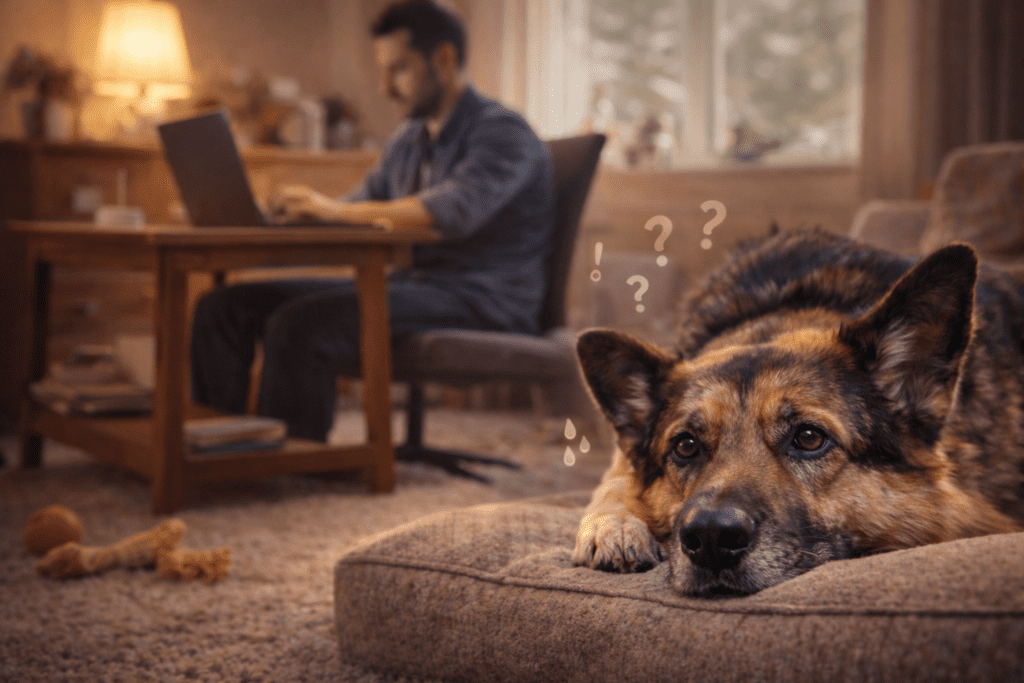
Normal daytime behavior vs anxiety (simple difference)
Normal daytime behavior includes:
• Periods of activity
• Periods of rest
• Curiosity without tension
• Relaxed body language
Anxiety-driven daytime behavior feels different:
• Alert even during rest
• Body always slightly tense
• Ears and eyes constantly scanning
• No deep, uninterrupted rest
The body never fully lets go.
Why daytime anxiety often goes unnoticed
A few reasons I learned the hard way:
• Daytime has distractions
• Humans are busy
• Anxiety blends into routine
• Dogs try to cope silently
By the time night comes,
the nervous system is already overloaded.
That’s why nights become so hard.
Common daytime triggers I didn’t realize were triggers
These things felt small – but added up.
• Irregular schedules
• Too much stimulation without recovery
• Constant background noise
• Lack of mental rest
• Unpredictable human movement
• No clear “off” time
None of these alone caused anxiety.
Together, they created it.
How daytime anxiety feeds night anxiety
This part is important.
Daytime anxiety doesn’t disappear at sunset.
It carries forward.
By evening:
• The body is tired
• The mind is still alert
That mismatch is exactly what causes:
• Evening restlessness
• Night pacing
• Difficulty settling
Fixing night anxiety without addressing daytime anxiety never worked fully for me.
What helped reduce daytime anxiety
(This made nights easier without touching bedtime)
I didn’t overhaul everything.
I adjusted gently.
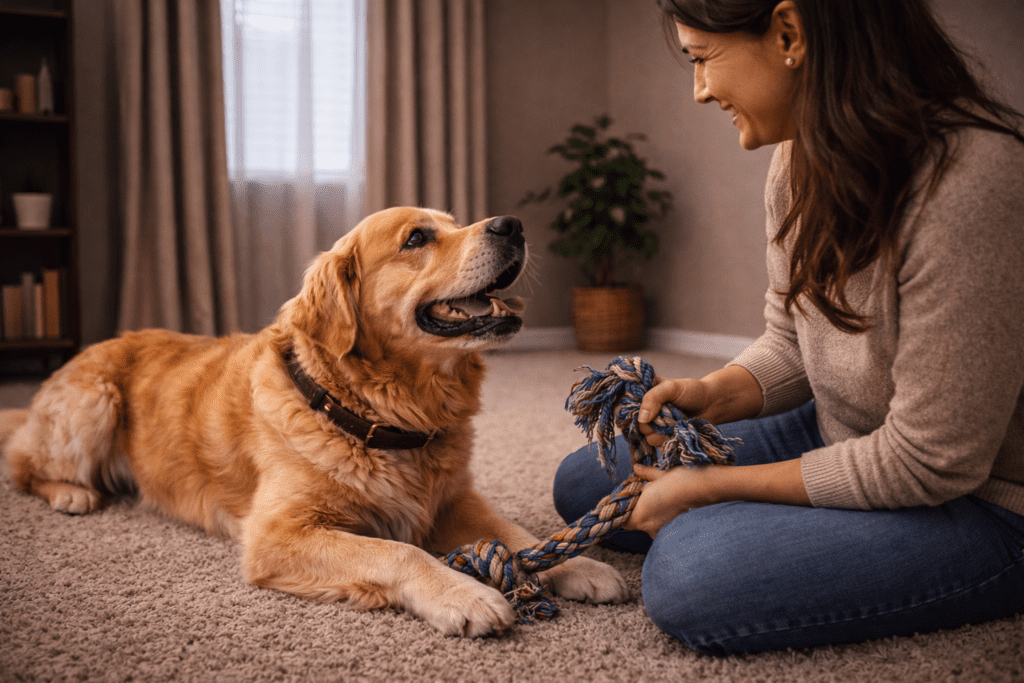
1. I allowed real daytime rest
Not just lying down.
Real rest meant:
• Quiet space
• No constant interruption
• No expectation to react
At first, my dog didn’t know how to rest.
That itself was a sign of anxiety.
2. I reduced unnecessary stimulation
I didn’t remove stimulation.
I removed constant stimulation.
• Less background noise
• Fewer sudden movements
• More predictable activity
Calm is built by what you remove, not add.
3. I stopped mistaking closeness for calm
This was eye-opening.
Following me everywhere looked affectionate.
But the tension in his body told a different story.
Closeness driven by anxiety feels different from comfort-driven closeness.
4. I added mental pauses, not more activity
Instead of adding more exercise,
I added pauses.
• Sniffing breaks
• Calm observation
• Stillness without expectation
The nervous system needs space to settle.
What changed once daytime anxiety reduced
Not overnight.
But gradually:
• Deeper daytime naps
• Less scanning
• Easier evenings
• Smoother transitions
• Calmer nights
The chain reaction surprised me.
Fixing the day softened the night.
When daytime anxiety needs serious attention
If your dog:
• Rarely rests during the day
• Seems constantly alert
• Gets worse over time
• Shows anxiety both day and night
That’s a sign anxiety is deeply rooted.
Professional guidance can help in these cases.
Final thoughts
Daytime anxiety doesn’t shout.
It whispers.
And because it whispers,
it’s easy to miss.
But once I learned to see it,
everything made more sense.
Night anxiety wasn’t starting at night.
It was simply revealing
what had been building all day.
Understanding that
changed how I supported my dog – completely.
ALSO CHECK:
Why Dogs Pace at Night and Can’t Settle