

 By
By (The Quiet Changes I Almost Missed)
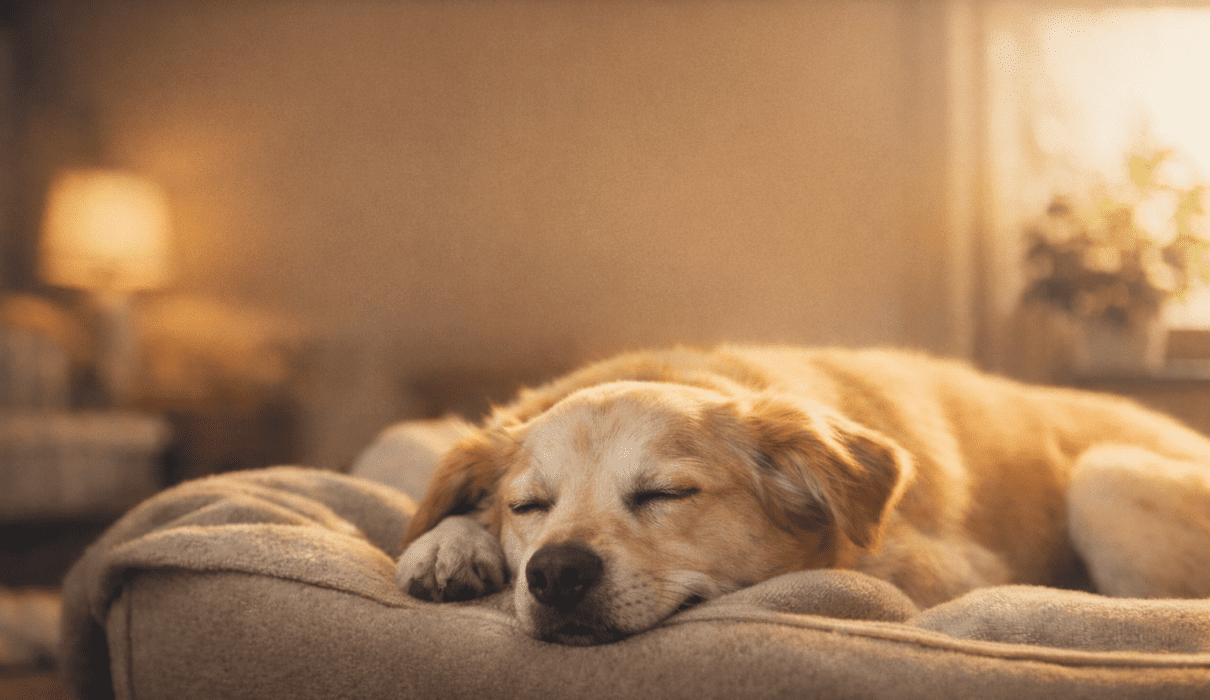
For a long time, I was waiting for a big moment.
The day my dog would suddenly be calm.
The day anxiety would just… stop.
That day never came.
Instead, safety arrived quietly.
So quietly that I almost missed it.
Because when an anxious dog starts feeling safer, it doesn’t look dramatic.
It looks subtle. Ordinary. Easy to overlook.
And that’s what makes this stage so confusing.
The Mistake I Made While Looking for Progress
At first, I thought progress would mean:
No pacing.
No reactions.
No following.
No anxiety behaviors at all.
So when my dog still moved around, still noticed sounds, still checked in with me,
I assumed nothing had changed.
What I didn’t understand yet was this:
Safety doesn’t erase behavior.
It changes the quality of it.
Once I learned to look for that shift, everything made more sense.
Sign #1: Your Dog Recovers Faster
This was the first real sign, even though I didn’t recognize it at the time.
My dog still startled at noises.
Still reacted to unexpected movement.
But the difference was what happened after.
Instead of staying tense for minutes, he settled again in seconds.
Sometimes without any help from me.
That recovery mattered more than the reaction itself.
An anxious dog gets stuck.
A dog who feels safer moves through it.
Sign #2: Movement Becomes Softer
Before, my dog’s movements felt sharp.
Quick head turns.
Sudden standing.
Constant scanning.
As safety grew, his body language softened.
He still moved, but more slowly.
He got up, then lay back down.
He followed me, then chose to stop.
There was less urgency in his body.
That softness was regulation showing up physically.
Sign #3: Your Dog Can Be Bored Without Panicking
This one surprised me.
Earlier, when nothing was happening, anxiety rushed in.
Silence made him restless.
But once he started feeling safer, boredom didn’t trigger panic anymore.
He could lie around without needing constant engagement.
He could watch the room without scanning it.
Nothing happening stopped feeling threatening.
That’s a huge nervous system shift.
Sign #4: Transitions Stop Feeling So Heavy
Transitions used to be hard.
Morning to afternoon.
Day to evening.
Home to leaving.
Every shift felt like something bad might happen.
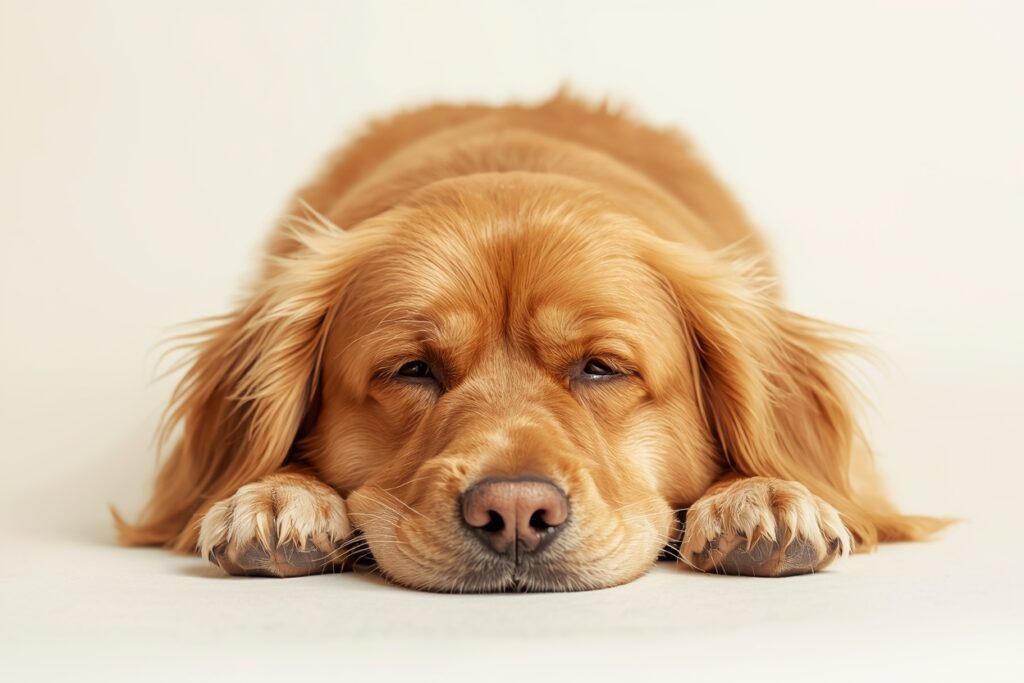
When safety started building, transitions softened.
Not perfect.
Just easier.
The evening no longer felt like a cliff.
Leaving didn’t feel like an emergency.
Predictability finally started working.
Sign #5: Your Dog Checks In – Then Disengages
This was one of the clearest signs.
My dog still checked on me.
Still looked up when I moved.
But he didn’t stay glued.
He’d look… and then relax again.
That told me he wasn’t searching for reassurance anymore.
He was just staying connected.
Connection without desperation is a sign of safety.
Sign #6: Calm Returns on Its Own
This one took me a while to trust.
At some point, I noticed I wasn’t doing as much.
I wasn’t managing every moment.
I wasn’t guiding him constantly.
And yet, calm kept returning.
Not because I asked for it.
Not because I trained it.
But because his nervous system knew how to settle again.
That’s when I realized safety had started living inside him, not just around him.
Why These Signs Are Easy to Miss
Here’s the problem.
Most of us are watching for the wrong things.
We look for silence.
Stillness.
Perfect behavior.
But safety shows up as flexibility, not perfection.
Your dog may still have anxious moments.
Still have off days.
Safety doesn’t mean anxiety never appears.
It means anxiety no longer controls the day.
What Helped Safety Build (Without Forcing It)
For us, safety didn’t come from one trick.
It came from:
Predictable daily flow
Calmer transitions
Less emotional pressure
More permission to just exist
I stopped trying to make my dog braver.
I focused on making his world easier to understand.
This shift became central to my journey with Pet Calm Care —
learning that real calm isn’t taught through effort,
it’s built through consistency and emotional safety.
Reader Questions I Had During This Phase
My dog still reacts sometimes. Does that mean he isn’t actually feeling safer?
No. Safety doesn’t eliminate reactions. It changes recovery. If your dog settles faster or needs less help afterward, safety is growing.
How long does it take for these signs to show up?
There’s no fixed timeline. For us, the earliest signs showed up quietly after weeks of consistency, not overnight.
Can these signs come and go?
Yes. Progress isn’t linear. Stressful days or changes can bring old behaviors back temporarily. That doesn’t erase the safety already built.
What if I’m not sure whether what I’m seeing is real progress?
Look at patterns, not moments. One calm evening doesn’t mean everything is fixed. Repeated easier recoveries usually mean something real is changing.
Should I push more independence once I see these signs?
No need. Safety grows best when it isn’t tested. Let it strengthen naturally through routine and predictability.
Final Thoughts
The biggest lesson I learned was this:
Safety doesn’t announce itself.
It shows up quietly –
in softer movements,
shorter spirals,
and moments where your dog chooses calm on his own.
If you’re waiting for anxiety to disappear completely, you might miss it.
But if you start watching how your dog moves through the day,
you may realize safety is already taking root.
And once it does,
everything else gets easier.
Slowly.
Honestly.
And in a way that actually lasts.
