

 By
By (What I learned when “training harder” stopped working)
For a long time, I believed something very common.
If my dog was anxious,
he needed better training.
More commands.
More structure.
More control.
So I did what most of us do.
Sit.
Stay.
Place.
Down.
He knew the commands.
But his anxiety didn’t care.
That’s when I learned a hard truth:
An anxious dog isn’t struggling with obedience.
He’s struggling with predictability.
And commands don’t create predictability.
Routine does.
Commands work on the brain.
Routine works on the nervous system.
This difference changed everything for me.
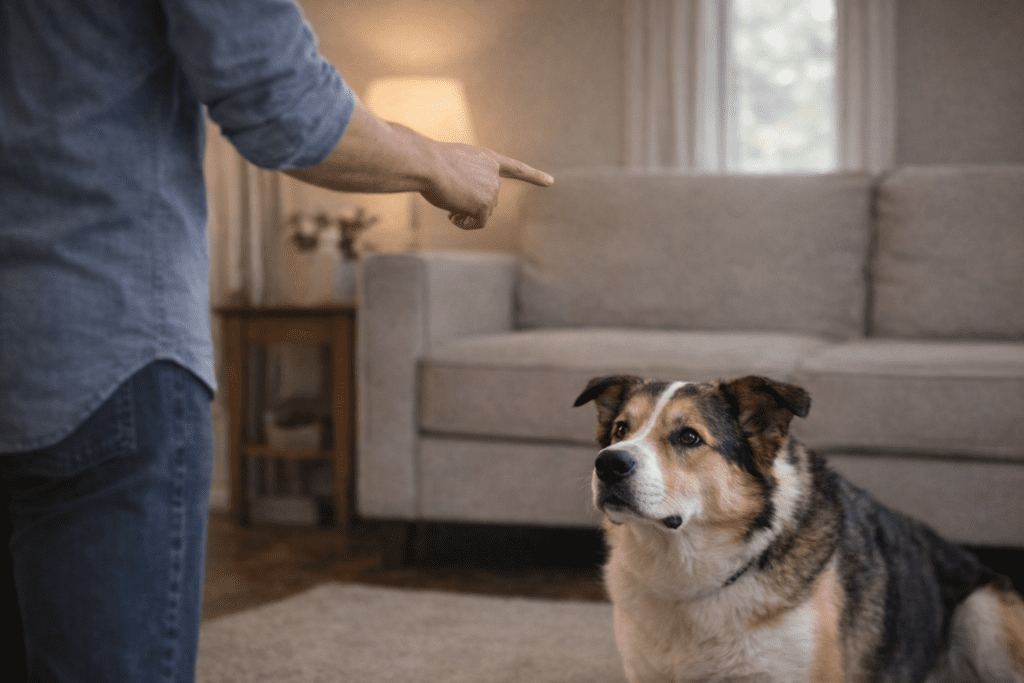
Commands ask a dog to do something.
Routine tells a dog what to expect.
An anxious dog isn’t asking:
“What should I do?”
He’s asking:
“What’s about to happen?”
When that question doesn’t have a clear answer,
the nervous system stays alert.
That’s why you can have a dog who:
- Sits perfectly on cue
- Walks nicely on leash
- Knows every command
…and still panics when:
- You move differently
- The evening feels “off”
- The day doesn’t follow the usual flow
Why commands often fail anxious dogs
This was uncomfortable to admit.
I was proud of how trained my dog was.
But anxiety kept showing up anyway.
Here’s why commands didn’t help in those moments:
• Commands happen after anxiety appears
• Commands require focus (which anxiety blocks)
• Commands feel like pressure when the dog is already overwhelmed
An anxious nervous system doesn’t want instructions.
It wants safety signals.
And safety comes from patterns, not words.
Routine reduces anxiety before it appears
This was the biggest shift.
Instead of asking:
“How do I calm him when he’s anxious?”
I started asking:
“How do I make his day feel predictable enough that anxiety doesn’t spike?”
Routine does three powerful things:
- It lowers uncertainty
- It reduces decision-making stress
- It tells the body what phase of the day it’s in
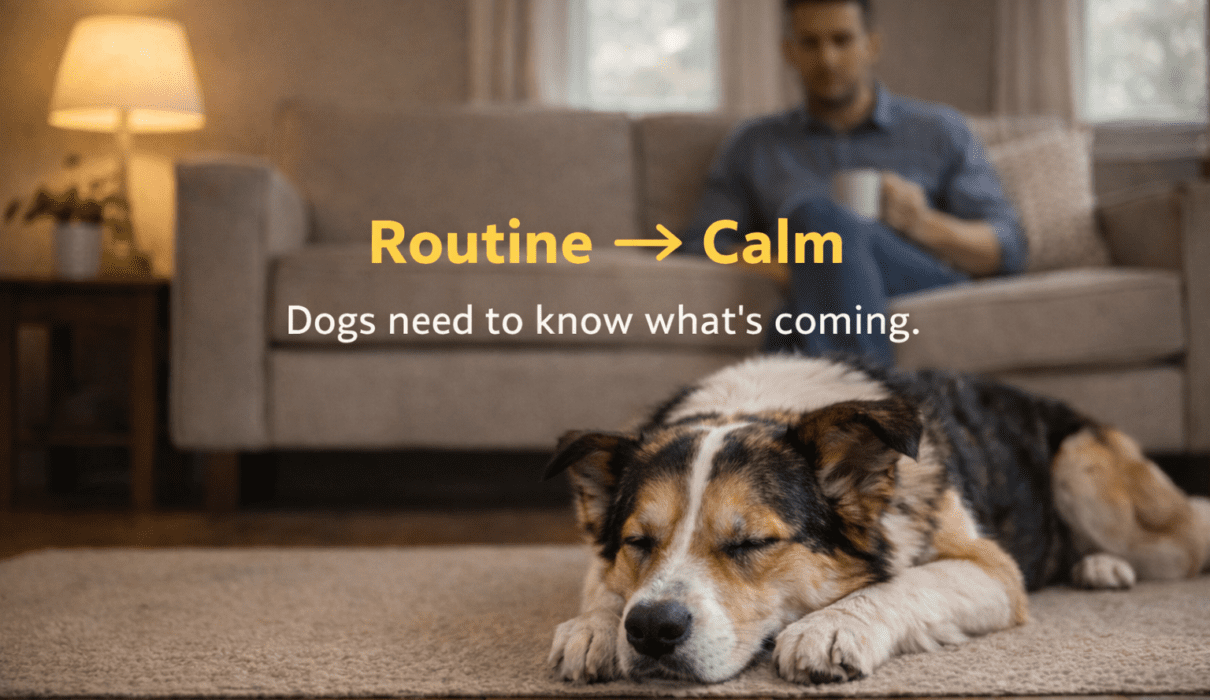
Dogs don’t read clocks.
They read sequences.
What routine actually means (not a strict schedule)
This part matters.
Routine is not:
❌ Military-style timing
❌ Rigid hours
❌ Same minute, same action
Real routine is about order, not time.
For example:
- Calm walk → quiet indoor time → evening wind-down
- Wake up → bathroom → food → rest
- Owner movement patterns that stay consistent
When the order stays familiar,
small timing changes stop triggering anxiety.
The mistake I made : using commands instead of cues
I used to say things like:
- “Go lie down”
- “Relax”
- “It’s okay”
But my dog wasn’t ignoring me.
He just didn’t understand what phase we were in.
Once I replaced commands with environmental cues, things shifted.
Same lights at night.
Same sounds in the evening.
Same calm movements before rest.
No words needed.
Why routine builds confidence (quietly)
This surprised me.
As routine settled in, I noticed:
• Less checking behavior
• Less pacing
• Faster settling
• Fewer reactions to small changes
Not because I trained confidence –
but because uncertainty reduced.
Confidence grows when the nervous system stops asking:
“What now?”
Where commands do belong
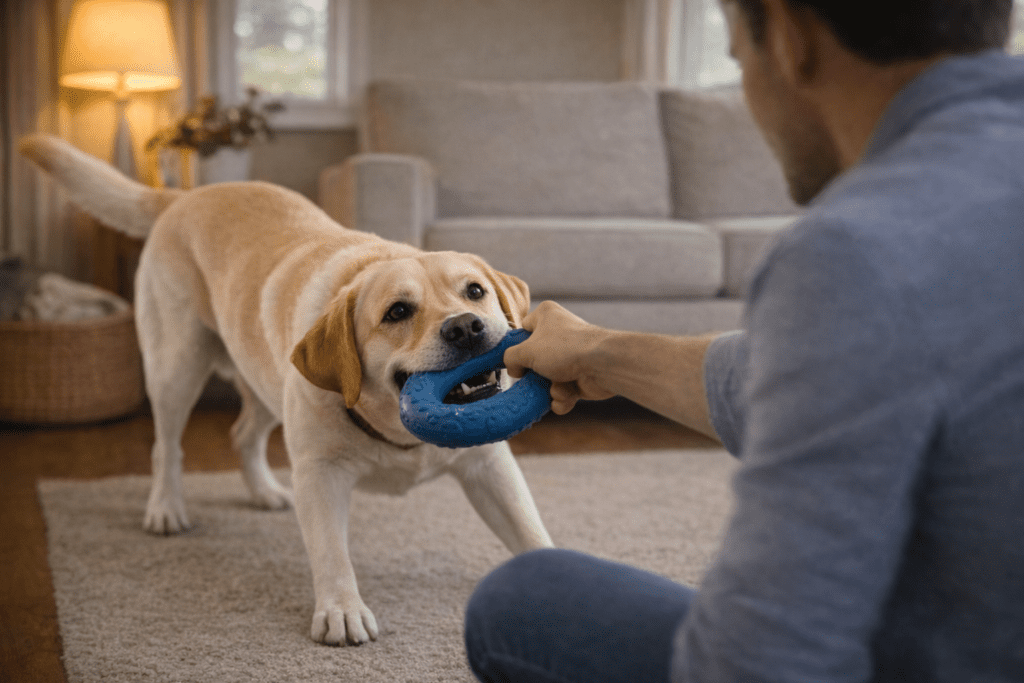
Commands aren’t useless.
They just come after routine is established.
Once a dog feels safe:
- Commands become clear
- Training becomes enjoyable
- Learning happens faster
Routine creates the foundation.
Commands build on top of it.
Not the other way around.
What changed for us
This wasn’t instant.
But over time:
- Evenings became calmer
- Departures felt lighter
- Nights settled faster
Most importantly,
my dog stopped looking lost in familiar situations.
That confusion was anxiety.
Routine removed it.
Reader Questions I Had While Learning This
“If my dog already knows commands, why does he still seem anxious?”
Because obedience and emotional regulation are two different systems. Commands work on cognition. Anxiety lives in the nervous system. A dog can follow cues perfectly and still feel unsafe if the day itself feels unpredictable.
“Should I stop training commands if my dog is anxious?”
No. Commands aren’t the problem – timing is. When routine comes first, commands become clearer and less stressful. Training works best after the dog feels safe within the flow of the day.
“How strict does a routine need to be to actually help anxiety?”
Routine isn’t about exact timing. It’s about familiar order. When events happen in a predictable sequence, the nervous system relaxes even if the clock changes.
“My dog gets anxious when the evening feels ‘off.’ Is that really related to routine?”
Yes. Dogs read transitions, not time. When evening cues change – lighting, sounds, movement patterns – anxious dogs lose their sense of what’s coming next. Routine restores that clarity.
Final thoughts
Anxious dogs don’t need to be controlled more.
They need to understand their world better.
Commands tell a dog what to do.
Routine tells a dog what’s coming.
And when a dog knows what’s coming,
his body finally gets permission to relax.
This experience is part of my journey with Pet Calm Care –
learning that calm isn’t trained into anxious dogs.
It’s built, quietly, through predictability.
