

 By
By (The things that mattered more than any big fix)
For a long time,
I kept looking for one solution.
One routine.
One trick.
One thing that would finally “fix” my dog’s anxiety.
But anxiety didn’t work that way for us.
Nothing dramatic changed my dog.
What changed him were small things – repeated daily, quietly, without pressure.
And the strange part?
At the time, none of them felt important.
I stopped waiting for anxiety to explode before responding
Earlier, I only reacted when anxiety became obvious.
Shaking.
Pacing.
Crying.
Following me everywhere.
By then, my dog was already overwhelmed.
One small change I made was this:
I started paying attention before anxiety showed up.
I noticed:
- Slight restlessness
- Faster breathing
- Eyes scanning instead of resting
That’s when I slowed things down – not when panic started.
This alone reduced intensity more than any “calming trick” I tried later.
I changed how the day flowed, not just what we did
I used to focus on activities.
Walks.
Training.
Playtime.
But anxiety wasn’t coming from lack of activity.
It was coming from how unpredictable the day felt.
So I made the day easier to read.
Same general rhythm.
Same quiet times.
Same slow evenings.
Not strict schedules.
Just familiar flow.
My dog didn’t need excitement.
He needed clarity.
I removed pressure I didn’t know I was adding
This one hurt a little.
I realized I was constantly watching my dog.
Is he okay?
Is he calm?
Why is he moving again?
That attention felt caring to me.
But to him, it felt like something was wrong.
So I stopped monitoring him so closely.
I let calm happen without commenting on it.
That space gave him room to settle on his own.
I stopped trying to “balance” anxiety with effort
Earlier, bad days made me do more.
More walks.
More interaction.
More fixing.
But anxious dogs don’t need more input on hard days.
They need less.
So on anxious days, I reduced:
- Stimulation
- Expectations
- Transitions
And added:
- Quiet presence
- Predictability
- Simple, boring moments
This shift changed recovery time dramatically.
I adjusted my energy before adjusting his behavior
I thought anxiety lived inside my dog.
It didn’t.
It lived between us.
When I rushed, he rushed.
When I worried, he stayed alert.
When I softened, he softened.
So I worked on:
- Slower movements
- Neutral voice
- No emotional spikes during exits or returns
This wasn’t training.
This was regulation.
And it worked.
I respected small progress instead of waiting for “normal”
Earlier, I only counted success if anxiety disappeared.
That never happened overnight.
But once I started noticing:
- Faster settling
- Shorter anxious moments
- Fewer intense reactions
I realized something important:
Anxiety wasn’t gone –
but it was loosening its grip.
That’s real progress.
I stopped changing things too often
This is underrated.
Every time anxiety showed up, I wanted to try something new.
New routine.
New idea.
New approach.
That constant change kept my dog guessing.
So I committed to fewer changes – and stayed consistent longer.
Predictability became safety.
What actually changed over time
Not suddenly.
Not perfectly.
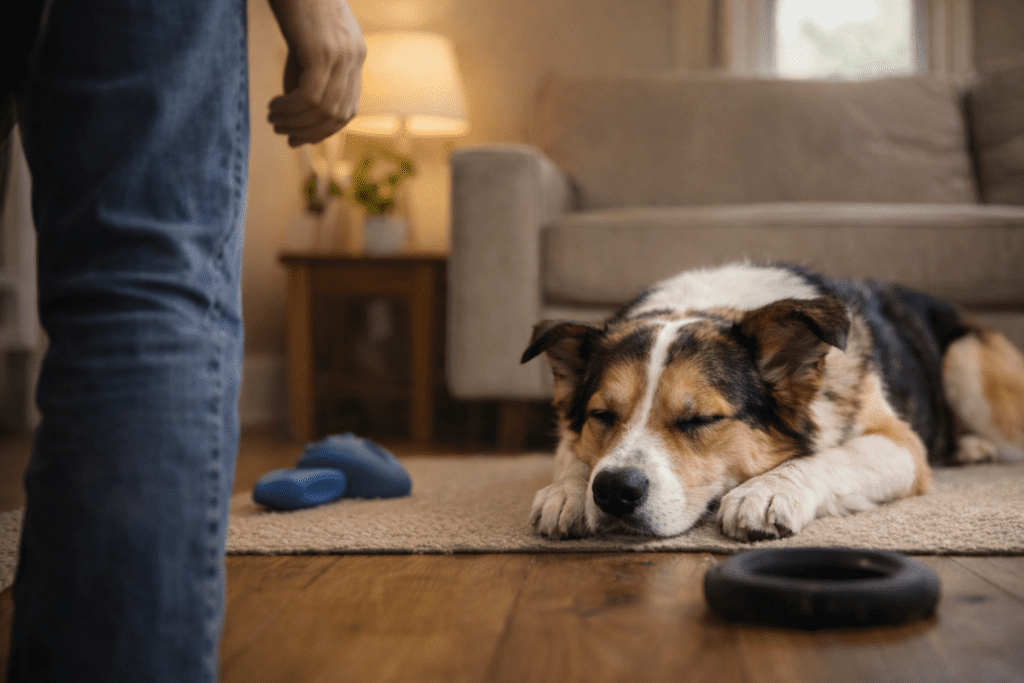
But slowly, I noticed:
- Calmer mornings
- Easier evenings
- Less hyper-vigilance
- More rest without asking
My dog didn’t become fearless.
He became secure enough.
This wasn’t about doing more
That’s the part most people miss.
I didn’t fix anxiety by adding effort.
I reduced it by removing pressure.
Small changes.
Daily repetition.
No rush.
This experience is part of my journey with Pet Calm Care,
where I focus on understanding anxiety instead of fighting it.
Before you move on
If your dog is anxious,
you don’t need a perfect plan.
You need patience with small things.
An anxious nervous system doesn’t heal through force.
It heals through safety – repeated quietly, every day.
And that’s something most people underestimate.
ALSO CHECK: How I Helped My Dog Feel Safe When I Leave
