

 By
By (What I overlooked before it became obvious)
For a long time,
I didn’t think my dog had separation anxiety.
I thought separation anxiety looked extreme.
Destroyed furniture.
Endless howling.
Total panic.
My dog didn’t do those things.
So I assumed we were fine.
That assumption delayed everything.
The problem wasn’t the behavior
It was what I was paying attention to.
I kept watching for big reactions.
What I missed were the quiet ones.
The ones that didn’t feel urgent.
The ones that felt easy to explain away.
The first sign I ignored completely
My dog followed me everywhere.
Not sometimes.
Not playfully.
Everywhere.
Room to room.
Kitchen to bathroom.
Bedroom to hallway.
At first, it felt sweet.
“He just loves me.”
I didn’t realize then
that this wasn’t closeness.
It was regulation.
He couldn’t settle unless I was visible
This was subtle.
If I sat down,
he relaxed.
If I stood up,
he stood up.
If I moved,
he tracked me.
Even when he was tired,
his body stayed alert.
That constant readiness
wasn’t loyalty.
It was nervous system tension.
The anxiety showed up before I ever left
This part took me the longest to understand.
The stress didn’t start
after I left home.
It started when I:
• Picked up my keys
• Put on my shoes
• Grabbed my bag
• Moved toward the door
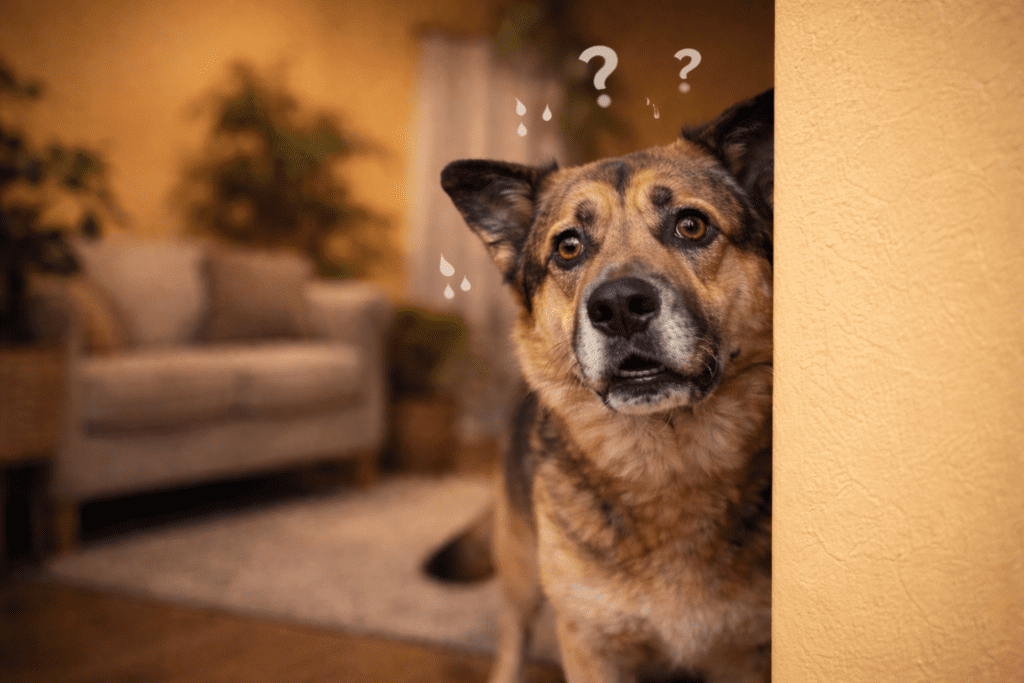
My dog reacted to signals,
not absence.
That’s anticipation anxiety.
And it’s one of the earliest signs people miss.
I thought crying was the first “real” sign
It wasn’t.
Crying came later.
Before that, there were quieter signals:
• Watching the door instead of resting
• Following without engaging
• Needing reassurance but not asking for attention
• Settling only when I was nearby
These didn’t look dramatic.
But they were consistent.
Consistency matters more than intensity.
The body language told the truth
Behavior can lie.
The body usually doesn’t.
Looking back, I remember:
• Tense posture
• Shallow breathing
• Ears pulled back
• Waiting instead of relaxing
• Difficulty calming down even after I returned
His body stayed “on.”
That’s anxiety.
I kept calling it something else
Because “separation anxiety” felt too serious.
I used softer words:
“He’s just attached.”
“He’s sensitive.”
“He’ll grow out of it.”
Those labels felt comfortable.
They also kept me from responding early.
Separation anxiety doesn’t start as panic
This is the part most people don’t understand.
Separation anxiety doesn’t begin with destruction.
It begins with dependence.
With the inability to self-soothe.
With needing constant access to safety cues.
And for many dogs,
we are the safety cue.
Why early signs are easy to miss
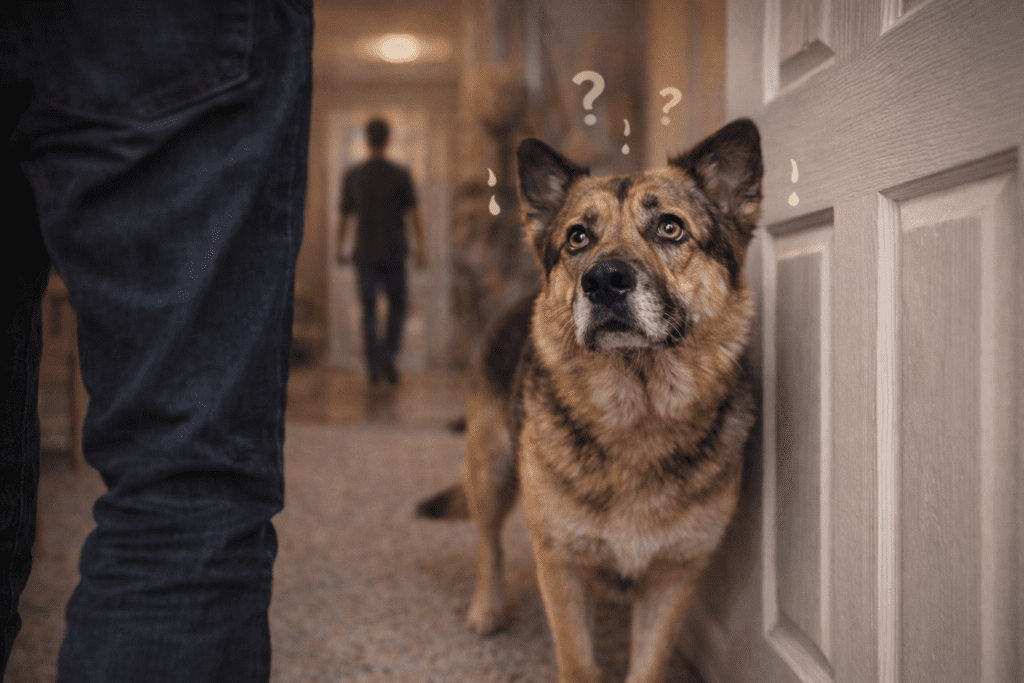
Because anxious dogs can still:
• Eat
• Play
• Sleep
• Obey commands
They don’t look “out of control.”
They look functional.
But they’re managing stress,
not feeling calm.
There’s a difference.
The pattern became clear only in hindsight
When I connected everything,
it followed a progression:
• Following everywhere
• Stress when I left the room
• Distress during departures
• Crying when I left home
• Trouble settling at night
It wasn’t random.
It was building.
This stage is the most important window
At this point,
nothing was extreme yet.
My dog was still reachable.
Still responsive.
Still learning.
That window matters.
Because separation anxiety is far easier to support
before fear turns into panic.
What I wish someone had told me sooner
Don’t wait for it to look “bad enough.”
If your dog:
• Needs constant proximity to feel calm
• Becomes tense when routines change
• Reacts before you even leave
• Struggles to settle when alone
That’s already information.
You don’t need a diagnosis
to start listening.
Looking back
I didn’t miss the early signs
because I didn’t care.
I missed them
because I didn’t know what to look for.
Separation anxiety doesn’t announce itself loudly.
It whispers.
Through behavior that feels small.
Through patterns that feel normal.
And the earlier you listen,
the more options you have.
Because by the time anxiety screams,
it’s already been asking for a while.
